
GitOps brought a shift in how software and infrastructure are managed with Git as the central hub for managing and automating the entire lifecycle of applications and infrastructure.
Here’s a simplified visual guide (from my favourite blog, bytebytego)
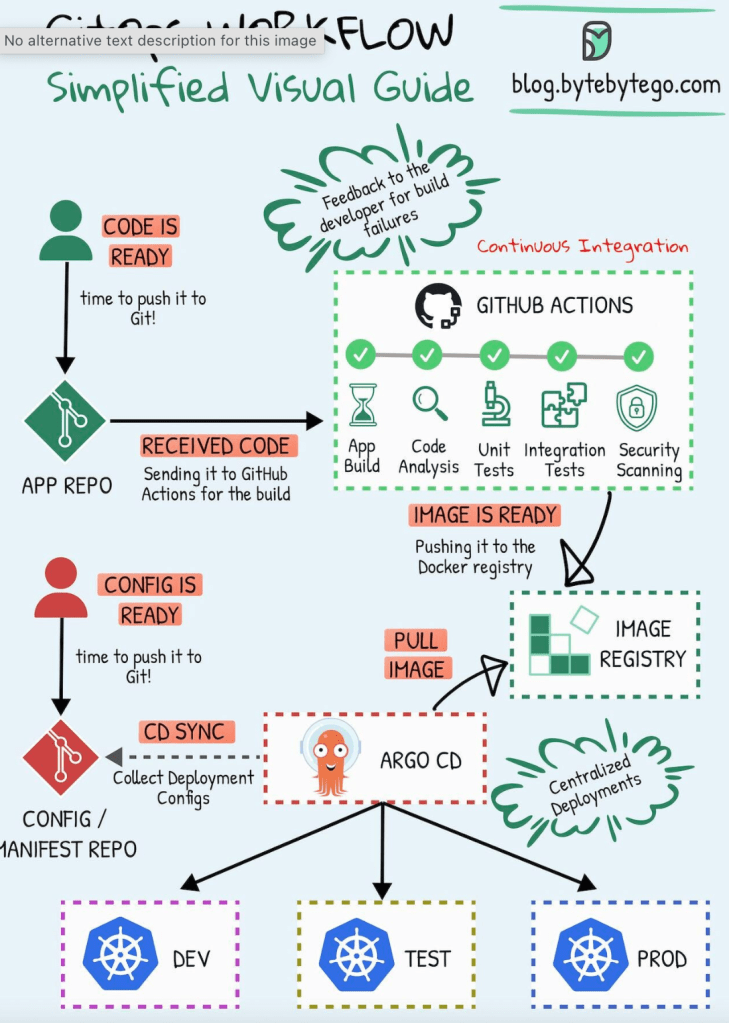
It’s built on the principles of version control, collaboration, and continuous integration and deployment (CI/CD).
Key features include:
- Version Control and Collaboration:
Centralizing code, configurations, and infrastructure in Git for control and collaboration. - Declarative System:
Describing the system’s desired state for easier version control. - Automated Delivery:
Automating deployment through Git-triggered processes, closely integrated with CI/CD pipelines. - Immutable Infrastructure:
Making changes via Git instead of directly in the live environment to prevent inconsistencies. - Observability and Feedback:
Monitoring systems in real-time to align the actual state with Git’s declared state. - Security and Compliance:
Tracking changes in Git for security and compliance, with role-based access for added control.
Over to you: Do you see GitOps’ declarative approach speeding up your deployments?
 Kenrick Vaz