
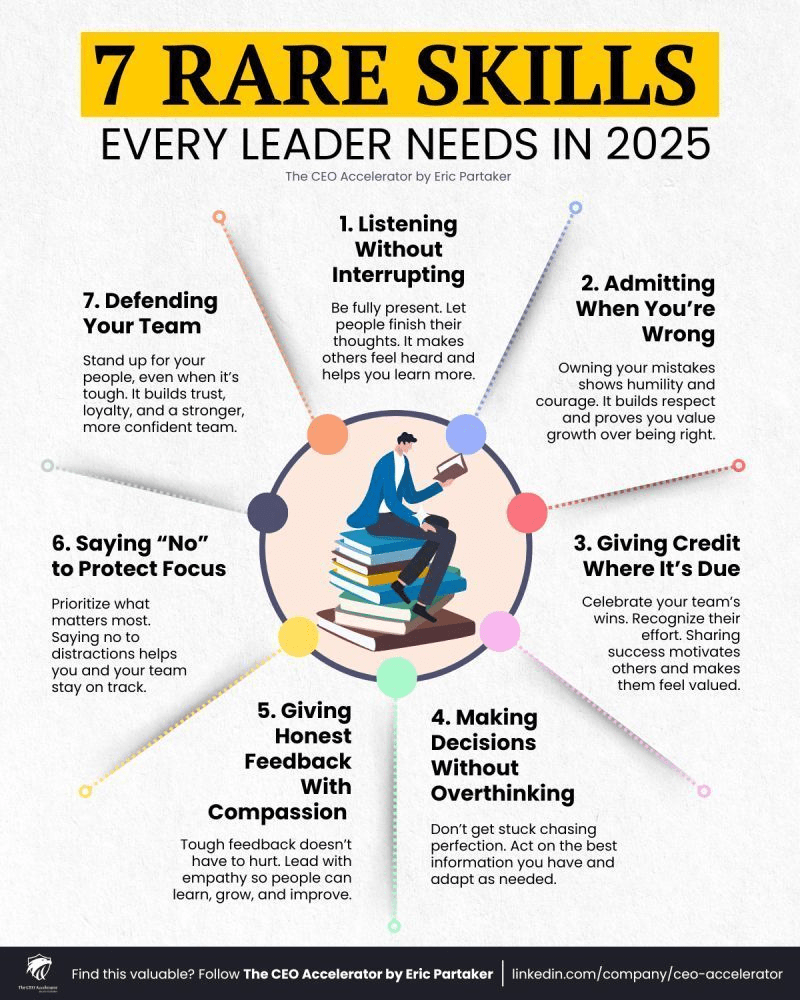
These 7 skills separate the best leaders from the rest.
And in 2025, they’re becoming rarer than ever.
After two decades of working with leaders, I’ve noticed something surprising:
👉 Everyone talks about these skills, but very few actually master them.
Whether you’re leading a team today or striving to become a leader tomorrow, these skills are game-changers.
And to help you level-up in 2025, I’ve included an actionable framework or tool to help you develop each skill below:
1️⃣ Listening Without Interrupting
In a world of constant noise, true listening builds trust and uncovers insights others miss.
Pro tips:
* Use the 3-Second Rule: Pause for 3 seconds before responding to ensure the other person has fully finished speaking.
* Summarize What You Heard: “What I’m hearing is…” shows you’re engaged and clarifies understanding.
2️⃣ Admitting When You’re Wrong
Nothing builds accountability faster than owning your mistakes.
Try this:
* Use “I Statements”: Say “I made a mistake” rather than deflecting responsibility.
* Model Vulnerability: Share lessons learned from your mistakes in meetings to normalize growth over perfection.
3️⃣ Giving Credit Where It’s Due
Recognizing contributions amplifies motivation and morale.
I suggest:
* Shoutouts in Meetings: Start each meeting by acknowledging individual or team wins.
* Be Specific: Instead of “Great job,” say, “Your creativity on [project] made all the difference.”
4️⃣ Making Decisions Without Overthinking
Analysis paralysis kills momentum and delays results.
How to Fix It:
* Set a Decision Deadline: Commit to making a decision by a certain date.
* Prioritize “Good Enough”: Use the 80/20 rule to focus on the elements that matter most.
5️⃣ Giving Honest Feedback With Compassion
The right feedback improves performance and builds trust.
How to Master It:
* Use the SBI Model: Focus on Situation, Behavior, and Impact to structure feedback constructively.
* Keep It Balanced: Aim for a 3:1 ratio of positive to constructive feedback to maintain morale.
6️⃣ Saying “No” to Protect Focus
Every “yes” adds to the workload and dilutes focus.
Do this:
* Use a Priority Framework: Tools like OKRs (Objectives and Key Results) help evaluate requests against strategic goals.
* Explain the “why”: Explain the reasoning behind your “no” to build understanding and trust.
7️⃣ Defending Your Team
Teams thrive when they feel protected and supported.
Remember to:
* Be Their Advocate: Speak up for your team in meetings or with leadership.
* Address Criticism Privately: Handle mistakes privately rather than publicly shaming.
The harsh reality is…
These skills are rare because many of them come with discomfort.
 Kenrick Vaz