
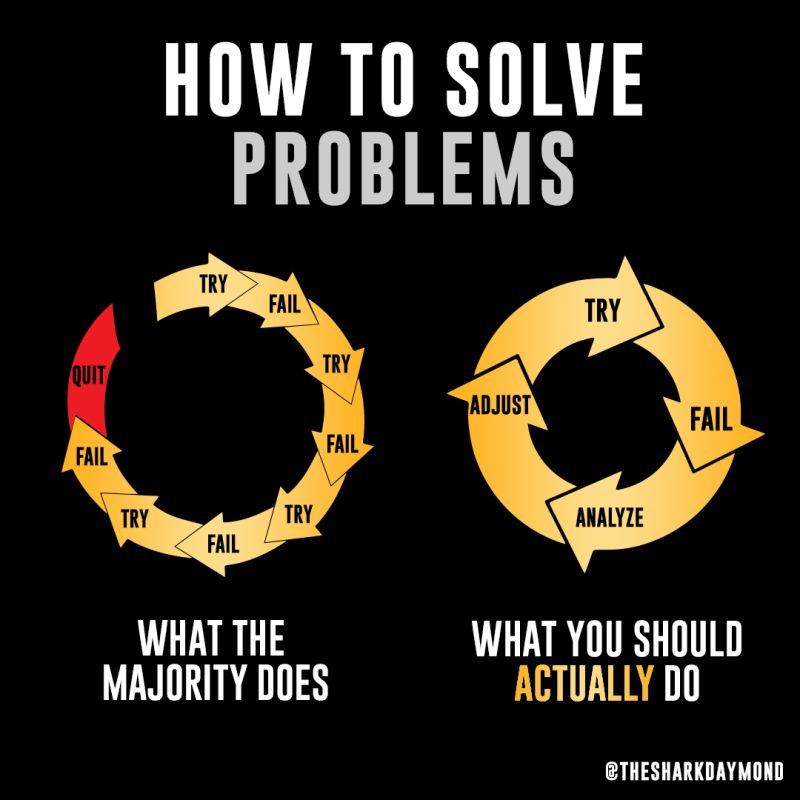
We’ve all heard the phrase, “fail fast, fail often.” It encourages experimentation, innovation, and bold thinking. But too often, we glorify the “fail” and forget the follow-through.
In today’s fast-moving world—especially in tech, product, and business—we don’t just need people who try. We need people who analyze, learn, and adjust.
Trying Isn’t Enough
Solving problems isn’t a game of chance. It’s a game of pattern recognition.
When something doesn’t work, the real question is:
“Why didn’t it work, and what are we doing differently next time?”
Trying and failing without reflection is just randomness. But trying, failing, reflecting, and adapting—that’s how mastery is built.
The Adjust Loop
Here’s a simple loop that separates effective problem-solvers:
- Try – Take a calculated first shot.
- Observe – Track what worked and what didn’t.
- Analyze – Understand the root cause, not just the symptoms.
- Adjust – Tweak your approach based on the insight.
- Repeat – Try again with version 2.0.
This mindset applies whether you’re debugging code, designing products, leading teams, or navigating life.
In Tech, This Matters More Than Ever
We work in a world of uncertainty—shifting requirements, moving goals, and unpredictable systems.
Trying alone won’t cut it.
We need:
- Engineers who debug deeply
- Product owners who listen and refine
- Leaders who inspect outcomes, not just effort
Build the Habit of Adjustment
Next time something doesn’t go your way—pause.
Don’t just move on.
Ask yourself:
- What was the hypothesis?
- What assumption failed?
- What signal did we miss?
- What will we do differently now?
That’s how we build resilience, not just speed.
Trying takes courage.
Failing takes humility.
But analyzing and adjusting—that’s where the real impact lies.
Because it’s not the number of attempts that matter—
It’s what we learn and how we evolve from each one.
 Kenrick Vaz