
I recently had the pleasure of working with a leader who truly cared about their team’s success. They were not only kind and steady, but they also focused on nurturing strong relationships. However, the team seemed to be stuck in a bit of a challenging spot—things weren’t flowing smoothly, accountability was lacking, and some unhelpful micro-behaviors were being quietly accepted.
Initially, this leader couldn’t see their role in it. Not because they were disengaged or harmful—far from it. But because they were so focused on managing relationships that they avoided anything that might disrupt those connections.
They believed that keeping the peace was a sign of effective leadership. But in reality, they were preserving dysfunction. Relationship management had become the goal, not the means to move the team forward.
It reminded me of something I recently read from Charles Sull’s research on toxic culture:
“Fishes do not care if stuff is wet.”
In his research, he states that toxic leaders often fail to recognize the problem. So, poisonous cultures rarely get addressed because the people leading them don’t perceive an issue.
And when they do get feedback?
Sometimes, they can react a bit defensively, which makes it challenging to foster meaningful change. The reality is that culture truly needs nurturing from non-toxic leadership to flourish. Embracing change often hinges on strong commitment from the top, alongside leaders who genuinely embody the behaviors they wish to promote.
The wonderful news? Toxic cultures are fixable! With the right approach that includes coaching, accountability, identifying enabling factors, and, most importantly, leadership that’s eager to examine the culture they’ve helped create, positive change is possible!
That’s exactly what this leader did! They began to notice those moments when silence allowed the behaviors they wanted to change. Instead of casting blame, they stepped in with clarity and understanding. Over time, the culture began to shift positively!
It’s not necessary to be a “bad” leader to play a part in dysfunction. The essential part is being open to recognizing it, and making changes to improve it.
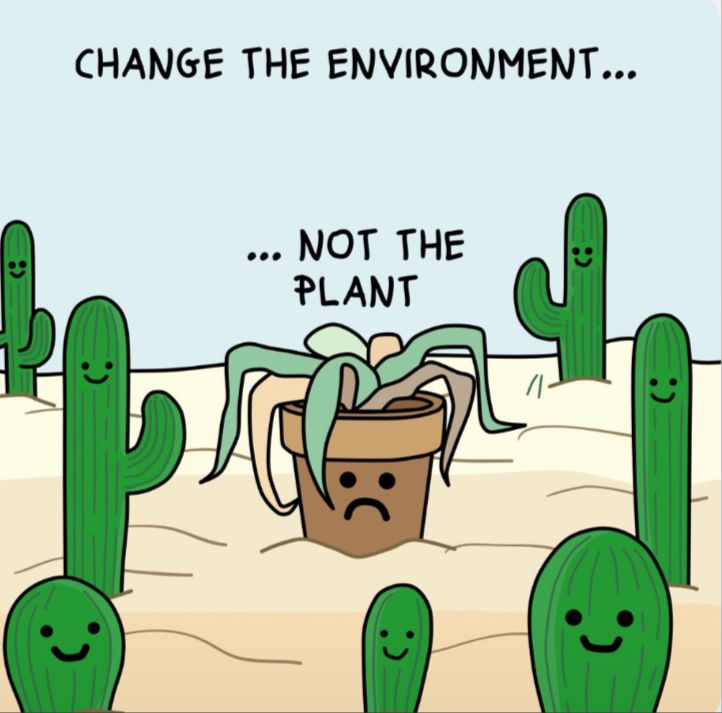
A truly stunning example of this dynamic that I’ve encountered is this beautiful piece of art by Roberto Ferraro
Source: Anna Datskiv
 Kenrick Vaz