
Difficult conversations don’t fall apart because of what’s said.
They fall apart because of how they’re handled.☹️
↳ It’s not about having the perfect script.
↳ It’s about setting the right conditions.
I’ve help hundreds of leaders through tough conversations.
Here’s what actually works (and doesn’t):👇
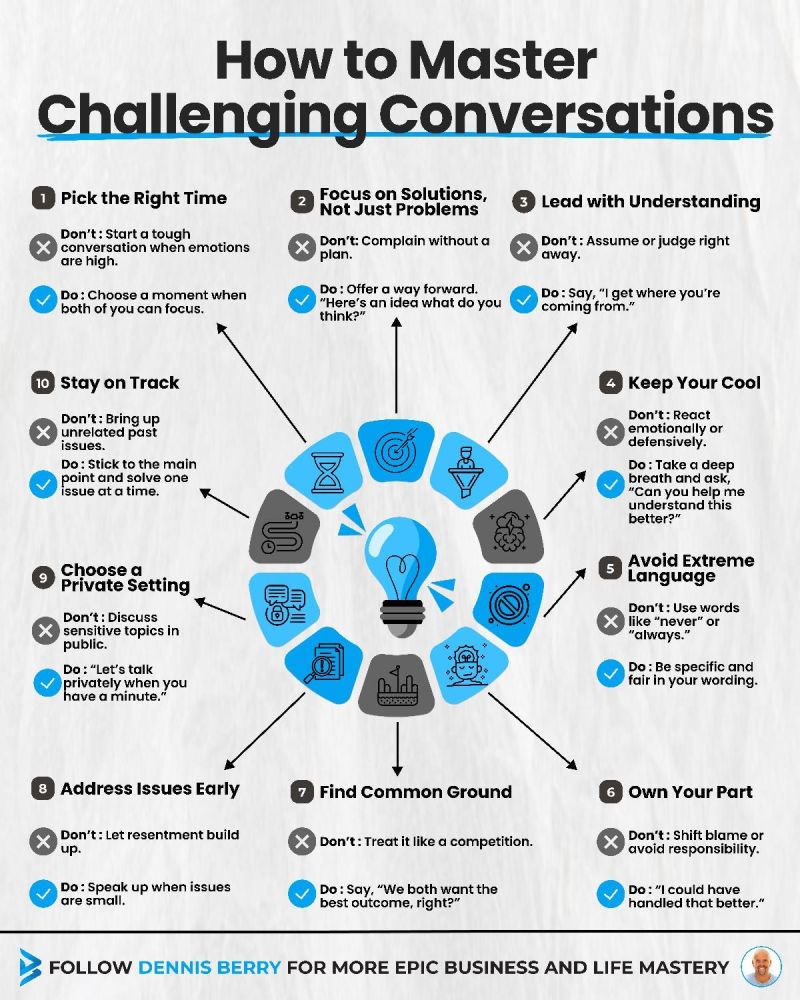
1/ Pick the right time
❌ Jump in when emotions are high or mid-crisis
✅ Choose a calm, private moment when both sides can focus
2/ Focus on solutions, not just problems
❌ Rant about what went wrong without a way forward
✅ Shift toward what can be done next and how to improve
3/ Lead with understanding
❌ Start with accusations or assumptions
✅ Ask questions, listen actively, and empathize
4/ Keep your cool
❌ Raise your voice or get defensive
✅ Stay calm, even when the topic gets heated
5/ Avoid extreme language
❌ Use words like “always” or “never” that escalate tension
✅ Speak in specific, neutral terms that stay grounded
6/ Own your part
❌ Pretend you’re blameless or deflect responsibility
✅ Acknowledge your role honestly and transparently
7/ Find common ground
❌ Turn the conversation into a battle of opposites
✅ Identify shared goals or values to anchor the discussion
8/ Address issues early
❌ Wait until resentment builds and it’s too late
✅ Tackle problems while they’re still small and manageable
9/ Choose a private setting
❌ Confront someone publicly or in a group
✅ Have the conversation in a one-on-one, confidential space
10/ Stay on track
❌ Spiral into unrelated complaints or old arguments
✅ Keep the focus on the issue at hand and the path forward
The reality…
↳ Challenging conversations are inevitable.
But with the right approach,
They can stop being something you dread…
And start being something you lead. 💪
Master Tough Conversations
 Kenrick Vaz