
Many managers delay tough feedback.
Not from neglect, but discomfort.
Credits to Justin Hills, make sure to follow!
_____
These quiet fears shape how feedback
is given or not.
→ Fear of emotional reactions
→ Concern about conflict
→ Doubts about whether it will work
This hesitation is common
but it costs teams clarity, growth, and trust.
Yet research in the Journal of Applied Psychology shows:
Frequent, constructive feedback improves performance 12.5%.
Better performance boosts productivity and profitability.
Feedback doesn’t have to feel risky.
With structure, it becomes simple and constructive.
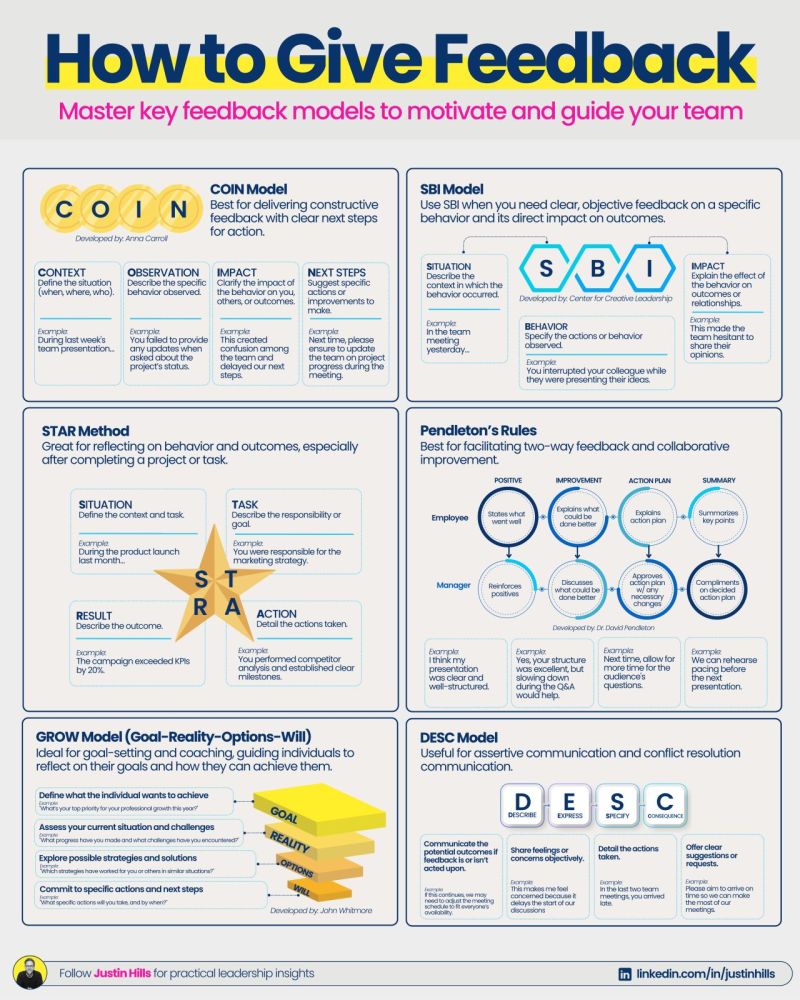
Here are 𝟲 𝗽𝗿𝗼𝘃𝗲𝗻 𝗺𝗼𝗱𝗲𝗹𝘀 𝘁𝗼 𝗺𝗮𝗸𝗲 𝗳𝗲𝗲𝗱𝗯𝗮𝗰𝗸
𝗰𝗹𝗲𝗮𝗿, 𝗮𝗰𝘁𝗶𝗼𝗻𝗮𝗯𝗹𝗲, 𝗮𝗻𝗱 𝘀𝗮𝗳𝗲:
1️⃣ 𝗖𝗢𝗜𝗡 𝗠𝗼𝗱𝗲𝗹 Best for coaching and development.
→ Context: Name when and where it happened.
→ Observation: Share what was seen, stay factual.
✅ Keeps feedback factual and clear
✅ Ends with next steps for improvement
2️⃣ 𝗦𝗧𝗔𝗥 𝗠𝗼𝗱𝗲𝗹 Perfect for reviews or recognition.
→ Situation: Set the context of the event.
→ Task: Define what was expected.
✅ Reinforces what worked well
✅ Builds confidence through specific examples
3️⃣ 𝗚𝗥𝗢𝗪 𝗠𝗼𝗱𝗲𝗹 Helps turn feedback into clear action.
→ Goal: Define what needs to be achieved
→ Reality: Outline what’s happening now
✅ Shows the gap between now and future success
✅ Creates a simple path from feedback to action
4️⃣ 𝗦𝗕𝗜 𝗠𝗼𝗱𝗲𝗹 Perfect for short, specific feedback moments.
→ Situation: Pinpoint the event or context
→ Behavior: Describe the action observed
✅ Makes feedback easy to share often
✅ Removes judgment and confusion
5️⃣ 𝗣𝗲𝗻𝗱𝗹𝗲𝘁𝗼𝗻’𝘀 𝗥𝘂𝗹𝗲𝘀 Great for balanced, two-way feedback.
→ Positives first: Start with what worked well
→ Invite input: Ask what could improve
✅ Encourages dialogue and shared ownership
✅ Makes feedback feel safe and collaborative
6️⃣ 𝗗𝗘𝗦𝗖 𝗠𝗼𝗱𝗲𝗹 Ideal for assertive or tense conversations.
→ Describe: Name what occurred clearly
→ Express: Share the impact it had
✅ Balances clarity with empathy
✅ Concludes with agreed-upon solutions
Clear feedback builds confidence and trust.
It turns tension into coaching and doubt into growth.
 Kenrick Vaz