
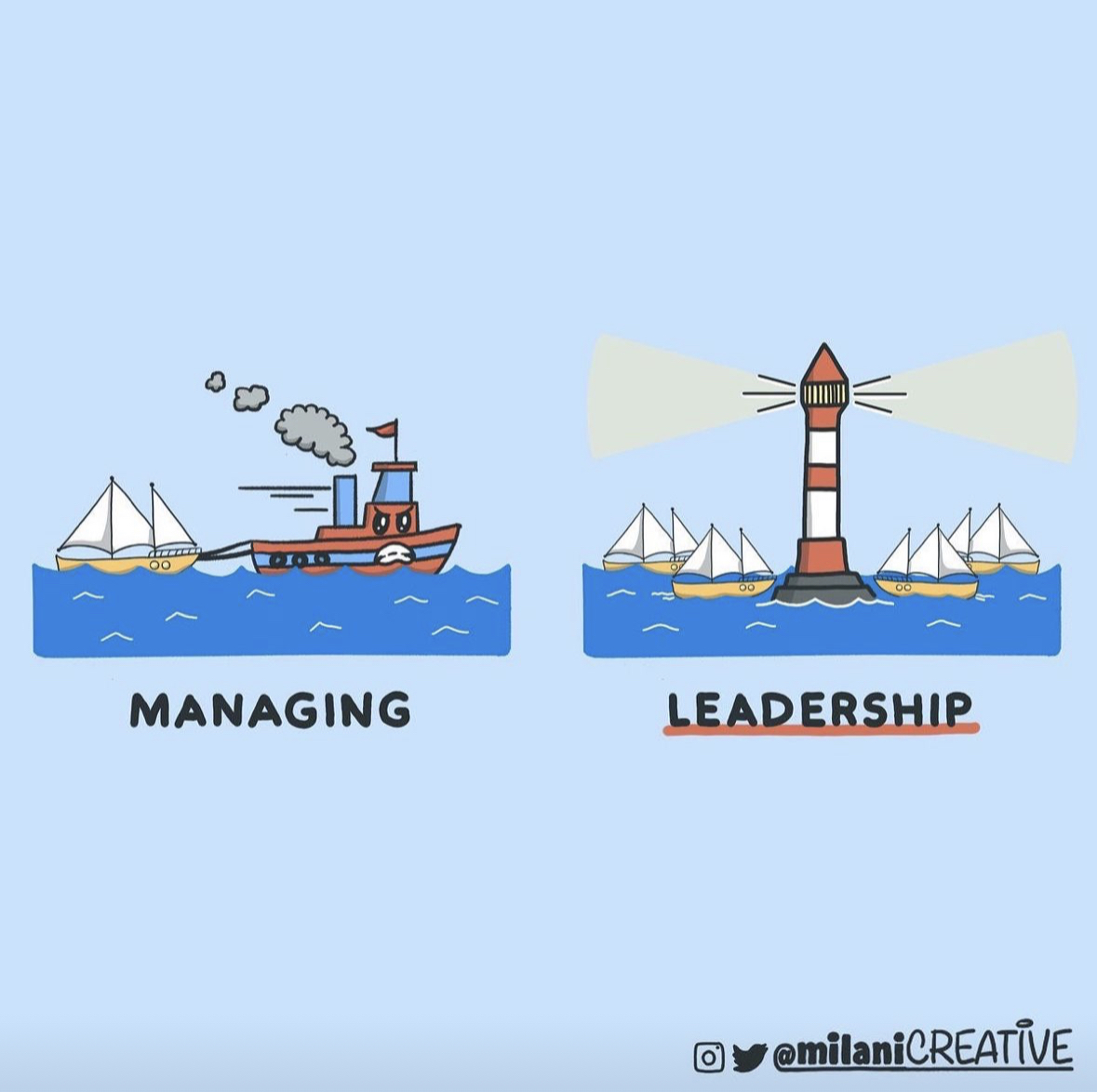
In the realm of organizational dynamics, managing people and leadership are two distinct yet interconnected concepts. While both involve influencing individuals and achieving collective goals, they differ in their approaches, perspectives, and overall impact on the team or organization.
Here are the key differences between the two
- Focus: Managing people revolves around operational efficiency, task completion, and maintaining organizational structure, while leadership emphasizes vision, inspiration, and strategic alignment.
- Authority vs. Influence: Managers often exercise authority based on their positional power, while leaders influence others through their personal qualities, expertise, and ability to connect with individuals on a deeper level.
- Transactional vs. Transformational: Managing people is often transactional, focusing on exchanges and meeting objectives, while leadership is transformational, aimed at inspiring growth, unleashing potential, and driving positive change.
- Short-term vs. Long-term: Managers are typically focused on short-term goals, immediate results, and operational effectiveness, while leaders have a long-term perspective, envisioning the future and guiding the organization towards sustainable success.
- Task vs. Relationship Orientation: Managing people is primarily task-oriented, with a focus on processes and outcomes, while leadership places equal emphasis on building strong relationships, fostering collaboration, and developing individuals.
A compelling example that illustrates the difference between managing people and leadership is the story of Steve Jobs, the co-founder and former CEO of Apple Inc. Jobs was widely recognized as a visionary leader who transformed multiple industries and revolutionized technology.

As a manager, Steve Jobs was known for his attention to detail, insistence on perfection, and ability to drive results. He had a keen eye for design and functionality, and he relentlessly pushed his teams to deliver products of exceptional quality. He was deeply involved in the day-to-day operations of Apple, overseeing every aspect of the company’s products and services. Jobs had a reputation for being demanding and challenging, setting high standards and expecting nothing less than excellence from his employees.
However, what truly set Steve Jobs apart was his leadership style. He was not just focused on managing the company; he had a clear vision and the ability to inspire others to share that vision. Jobs had an unwavering belief in the power of innovation and the impact technology could have on people’s lives. He had a remarkable ability to communicate his vision, captivating his audience with his charisma, passion, and storytelling skills.
Jobs empowered his team members to think creatively, take risks, and push boundaries. He encouraged a culture of collaboration and encouraged diverse perspectives, recognizing that breakthrough ideas often emerged from interdisciplinary teamwork. He challenged his employees to never settle for mediocrity. Jobs was not afraid to make bold decisions and was willing to go against conventional wisdom to pursue his vision.
Steve Jobs’ story exemplifies the difference between managing people and leadership. While Jobs exhibited strong managerial qualities, such as attention to detail and driving results, his true impact came from his exceptional leadership skills. He had a clear vision, inspired others to share that vision, and created a culture of innovation and excellence.
 Kenrick Vaz