
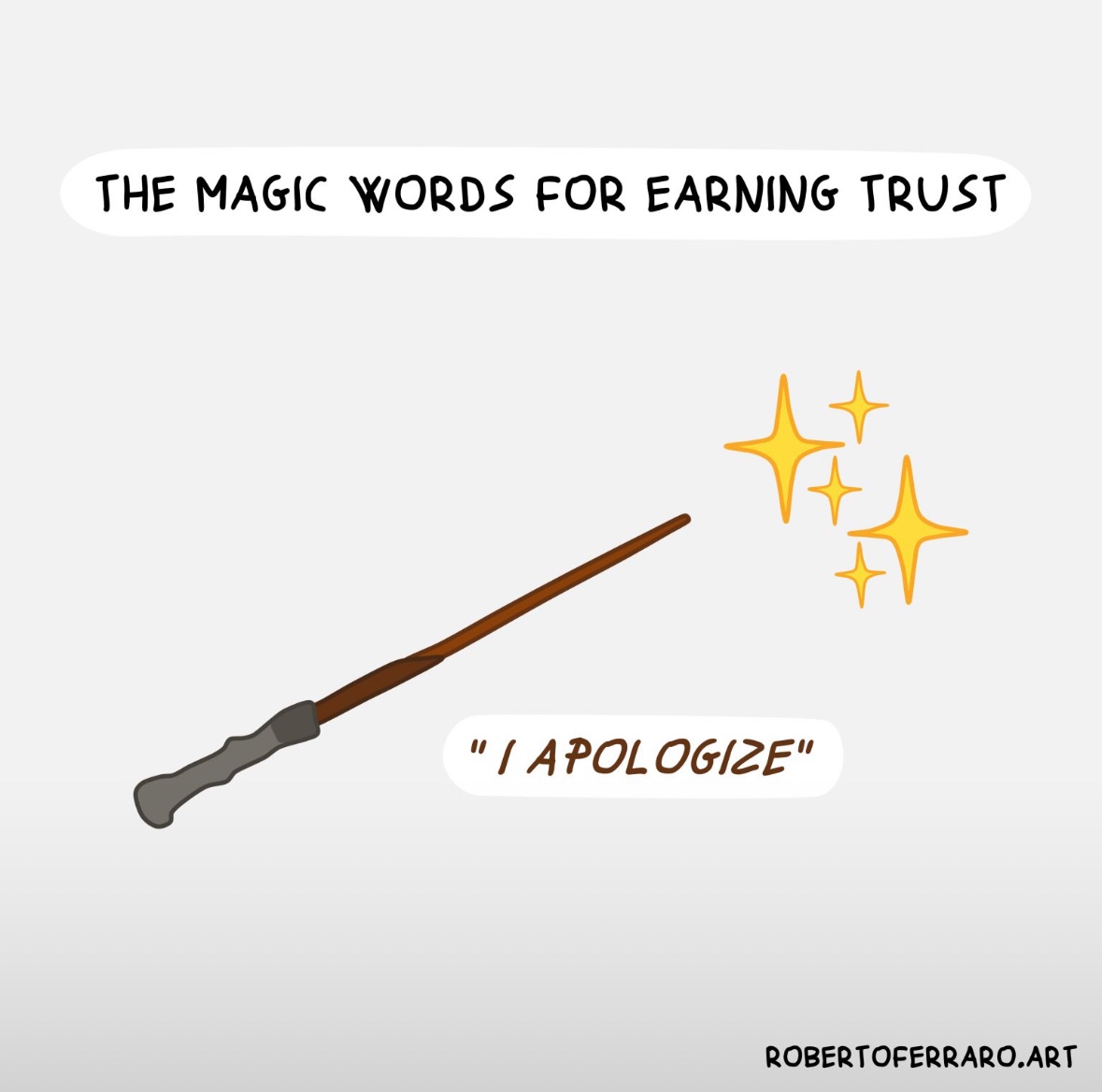
How many times do we say,
“I’m not sure.”
“I made a mistake.”
“I don’t know.”
Not nearly enough — especially in a world that rewards certainty, quick answers, and polished perfection.
Yet, as Rachel Botsman highlights in her timeless article for the Nordic Business Forum, humility is one of the most powerful ways to build trust in today’s rapidly changing world. In fact, being humble may just be the superpower we all need to thrive in the future.
The Trust Paradox
We often associate leadership or expertise with always having the answer. But real trust doesn’t come from perfection — it comes from authenticity. When someone admits they don’t know something or owns up to a mistake, it doesn’t make them seem weaker. It makes them human. Relatable. Trustworthy.
Think about the leaders or colleagues you admire most. Chances are, they don’t pretend to know everything. They ask good questions, listen deeply, and admit when they’re learning. That humility isn’t just refreshing — it’s magnetic.
Why Humility Matters More Than Ever
In a world driven by AI, rapid innovation, and constant change, nobody can know it all. What separates the successful from the stagnant isn’t who has all the answers — it’s who is willing to ask better questions, admit gaps, and learn fast.
Humility becomes a gateway to:
Collaboration – People want to help those who are open, not closed off by ego.
Adaptability – Admitting you don’t know something lets you grow into the person who does.
Trust – Teams feel safer when mistakes are acknowledged and explored, not hidden or denied.
How to Practice “Productive Humility”
This isn’t about downplaying your skills or constantly second-guessing yourself. It’s about practicing what Rachel Botsman calls confident humility — the ability to hold your ground while being open to change.
Try this:
Say “I don’t know… yet.” — Show curiosity, not defeat. Acknowledge mistakes and share what you learned. Ask for help. It shows strength, not weakness. Give credit freely and often.
Saying “I don’t know” isn’t a lack of leadership — it’s the beginning of it. In a noisy world full of certainty and spin, humility stands out. It creates space for others, builds real connection, and earns a kind of trust that no title or degree ever could.
So the next time you’re tempted to fake it or stay silent, remember:
Those simple words — “I don’t know” — might just be the smartest thing you say all day.
 Kenrick Vaz