
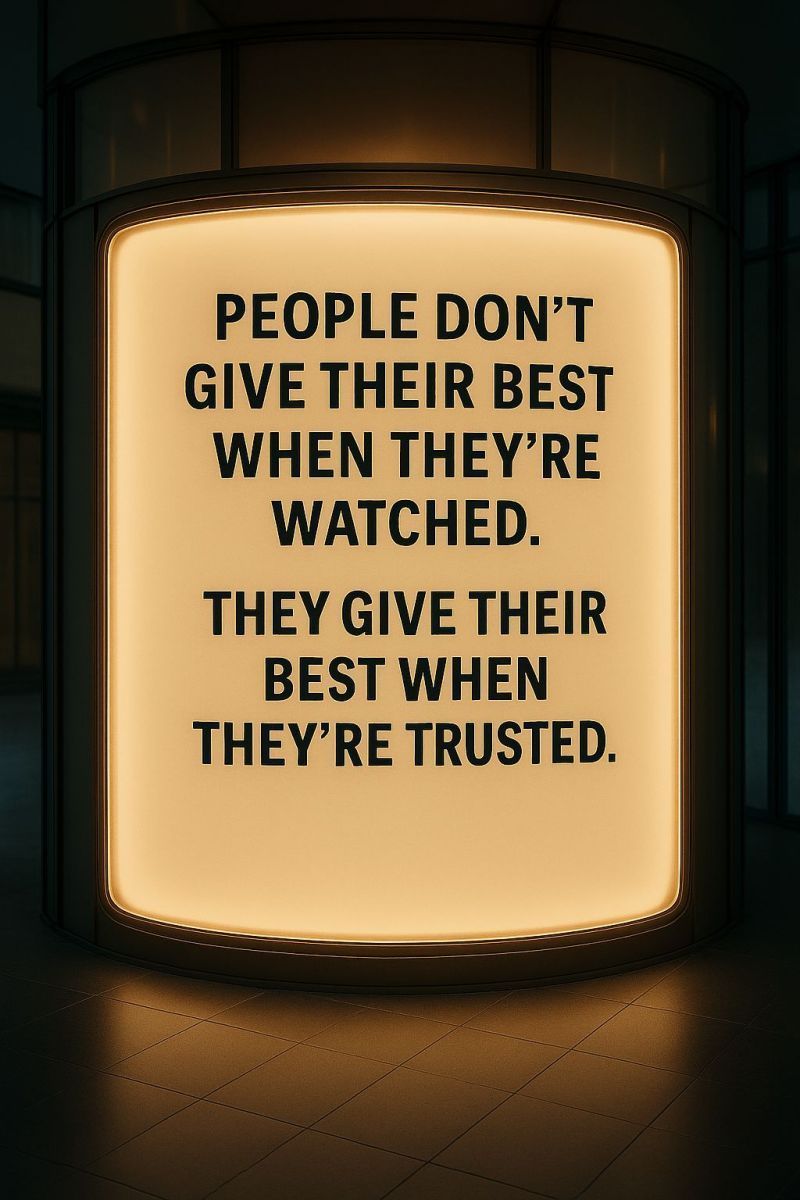
We’ve all been there — the feeling of eyes on you during a task, the pressure to perform, the sense that any mistake will be instantly noticed and judged. While it may create short-term compliance, this kind of oversight rarely inspires greatness. What does? Trust.
The Illusion of Control
Many organizations still operate under the belief that constant monitoring guarantees results. That watching people closely — with dashboards, status reports, surveillance tools — will somehow motivate better performance. But in reality, it often breeds anxiety, fear, and a bare-minimum mindset.
People don’t rise to their potential because someone is watching. They rise when they feel valued, respected, and trusted. When trust replaces micromanagement, something powerful happens: ownership.
Trust Builds Ownership
Trust sends a signal: I believe in you. It tells someone that their judgment, skill, and initiative are not only welcome, but expected. This unleashes creativity, accountability, and self-motivation — things that can never be forced from the outside.
A trusted employee asks, “How can I make this better?”
A monitored employee asks, “What can I do to avoid getting in trouble?”
See the difference?
Culture of Trust = Culture of Excellence
The best teams in the world don’t run on fear. They run on mutual respect and autonomy. Whether in sports, startups, or service industries, trust-based cultures consistently outperform those where people are merely performing for the camera.
Trust doesn’t mean blind faith or lack of accountability. It means setting clear expectations, equipping people with the tools and support they need, and then giving them the space to rise.
Managers, Take Note
If you want your team to give their best:
- Stop hovering.
- Start believing.
- Replace “Did you do this?” with “How can I support you?”
- Recognize effort and initiative, not just output.
Surveillance may get you obedience.
Trust gets you brilliance.
Because in the end, people don’t give their best when watched — they give their best when trusted.
 Kenrick Vaz