
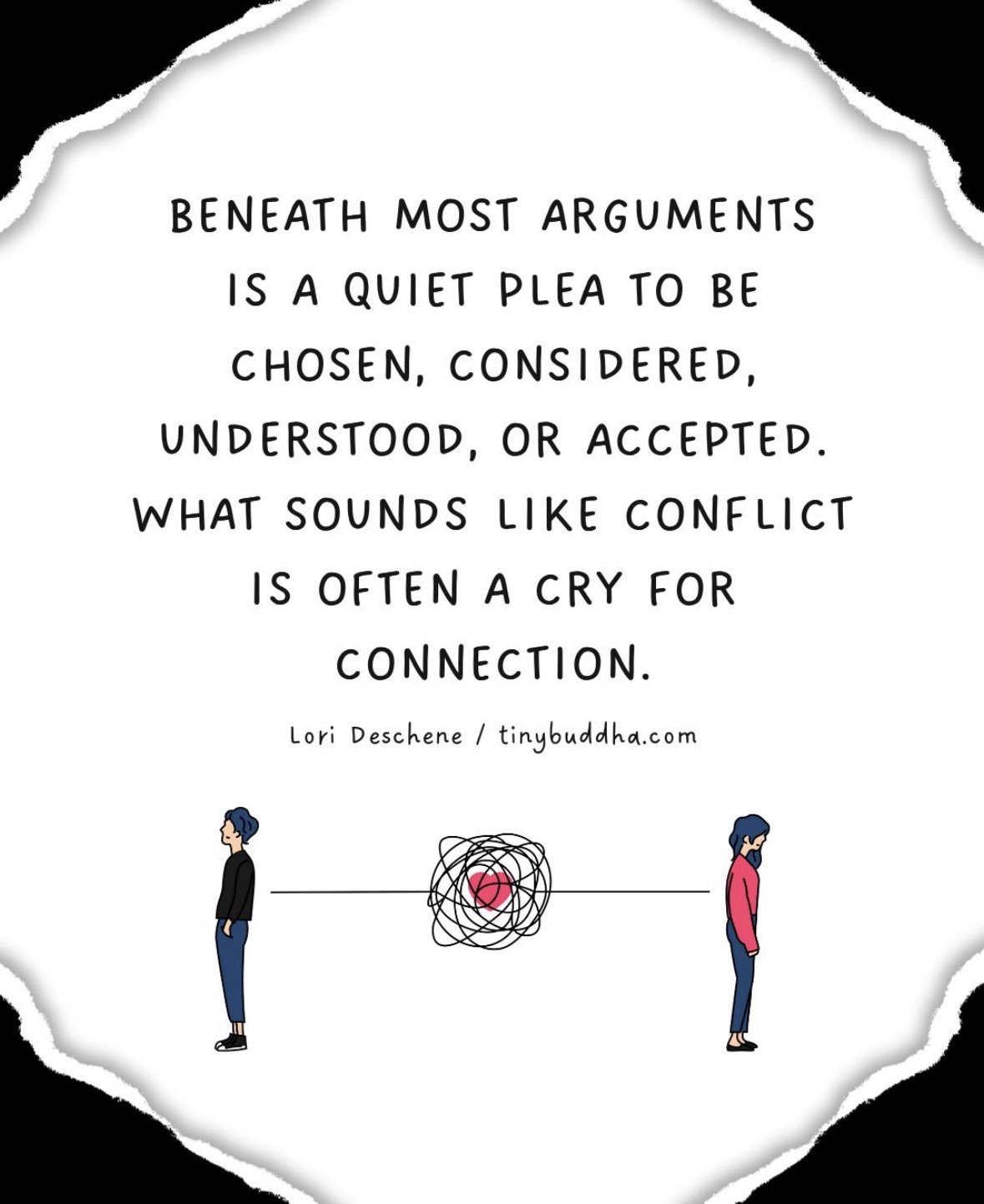
If you listen closely to most arguments, there’s always something softer hiding underneath the sharp edges. We show frustration, we raise our voice, we defend ourselves like we’re in a courtroom—but if you peel back just one layer, the whole thing usually comes down to something far more human. We want to feel chosen. We want to feel considered. We want someone to actually hear us, not just reply to us. And when that doesn’t happen, we push harder, as if volume can deliver what vulnerability could have done more gently.
It’s strange how arguments work. The words we say rarely match what we actually mean. A complaint about plans usually masks a need to feel prioritized. A comment about tone usually hides a desire to feel respected. A defensive reaction often reveals someone who feels misunderstood before a single sentence has even been exchanged. We don’t always know how to ask for connection directly, so we ask for it in the most indirect, chaotic ways possible.
Think about the last time you clashed with someone you care about. In the moment, it probably felt like the conversation was about the thing—the missed call, the forgotten errand, the difference of opinion. But later, with some space, it almost always becomes clear that the real conflict was never about the thing. It was about what the thing represented. Did you think of me? Do I matter to you? Can I trust that you’ll show up for me? Are you hearing me, or just waiting to talk?
We learn over the years that people rarely fight because they don’t care. They fight because they care deeply and feel disconnected. So much of adult communication is really childhood longing wearing grown-up clothes. We crave reassurance, closeness, understanding—but saying those words out loud feels too raw, too exposing. And so we argue. It’s clumsy, but it’s human.
The real magic happens when someone pauses in the middle of tension and remembers that underneath the frustration is a simple, almost childlike need. Suddenly the whole conversation softens. You start listening to the feeling instead of the words. You respond to the need instead of the tone. And just like that, the storm loses its power.
Connections don’t break because of conflict. They break when we forget to look beneath it. When we forget that the person standing across from us—whether it’s a partner, a friend, a sibling, a colleague—just wants to be understood. When we treat arguments like battles instead of invitations. When we react to the surface and ignore the depth.
The more we learn to hear the quiet plea beneath the noise, the easier it becomes to move through tough moments with clarity instead of chaos. Not because arguments disappear—they never will—but because the intention behind them becomes visible. And when you can see the intention, you can respond with compassion instead of defensiveness.
In the end, conflict isn’t the villain we make it out to be. It’s simply a signal that someone is reaching out in the only way they know how at that moment. And if we can meet that reach with awareness, patience, and a willingness to understand, we might discover that the argument wasn’t a breaking point at all—it was a bridge.
 Kenrick Vaz