
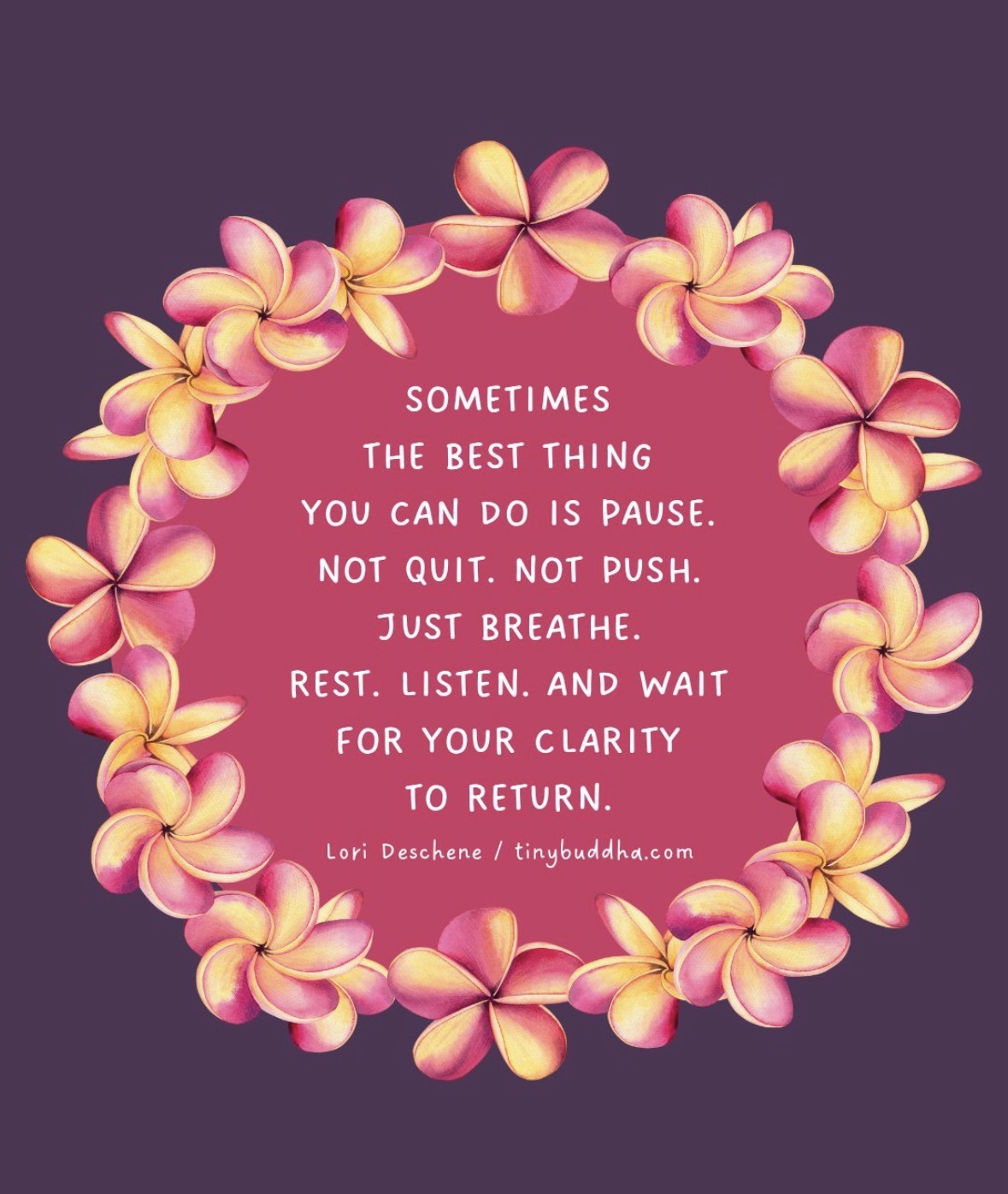
We live in a world that treats momentum like a moral virtue. If you’re not moving forward, you must be falling behind. If you’re tired, the answer is more effort. If you’re unsure, the solution is to decide faster. Push through. Hustle harder. Figure it out on the fly.
But sometimes the bravest, wisest thing you can do is stop.
Not quit. Not give up on the dream or abandon the work you care about. Just pause.
There’s a difference, even though the world loves to blur it. Quitting is walking away because you no longer believe. Pausing is staying because you do—but you recognize that something inside you needs space to breathe.
Most of us don’t pause because we’re lazy. We avoid pausing because we’re afraid of what we’ll feel when things go quiet. Without the noise of productivity and constant motion, the doubts get louder. The fatigue becomes undeniable. The truth you’ve been outrunning taps you on the shoulder and asks to be heard.
So we keep going. We push past the tightness in our chest, the dullness in our thinking, the irritability that shows up in conversations we care about. We tell ourselves rest will come later—after this deadline, this milestone, this phase of life. And somehow, later never arrives.
The problem is that clarity doesn’t respond well to force. You can’t bully your way into insight. You can’t exhaust yourself into wisdom. The harder you push when you’re depleted, the further clarity seems to drift away.
Pausing isn’t doing nothing. It’s doing something very specific and very intentional. It’s choosing to breathe instead of react. To rest instead of prove. To listen instead of fill the silence with noise.
When you pause, you give your nervous system permission to settle. You let your thoughts slow down enough to sort themselves out. You create room for your intuition—the quiet, easily drowned-out voice that usually knows what you need long before your mind catches up.
Think about the moments when things finally made sense for you. The decision that became obvious. The next step that suddenly felt clear. Chances are, it didn’t happen in the middle of frantic activity. It happened in the shower, on a walk, late at night when everything else went still. Clarity tends to arrive when it’s invited, not demanded.
Rest has a bad reputation. It’s often confused with weakness or indulgence. But real rest is disciplined. It requires honesty about your limits and courage to respect them. It means trusting that you don’t have to constantly perform in order to be worthy of progress.
Listening is just as uncomfortable. When you slow down, you might hear that you’ve been saying yes to too many things. Or that you’ve been carrying expectations that aren’t yours. Or that the path forward isn’t wrong—it just needs to be walked at a different pace.
Waiting, too, feels countercultural. We’re taught that waiting is wasted time. But waiting, when done with intention, is active. It’s observing patterns. Noticing what pulls at you even when you stop pushing. Letting the fog thin on its own instead of thrashing around inside it.
This kind of pause doesn’t last forever. It’s not an escape from responsibility. It’s a recalibration. A return to center. And when clarity does come back—and it usually does—it tends to be quieter but stronger. Less frantic. More grounded.
You move again, not because you’re panicking, but because you know. The step feels steadier. The direction feels truer. The effort feels aligned instead of desperate.
So if you’re in a season where everything feels heavy, unclear, or just slightly off, consider the possibility that the answer isn’t more pressure. It might be less.
Pause. Breathe. Rest your mind and body. Listen without rushing to fix. Wait without judging yourself.
You’re not falling behind. You’re giving clarity the time and space it needs to find you again.
 Kenrick Vaz