
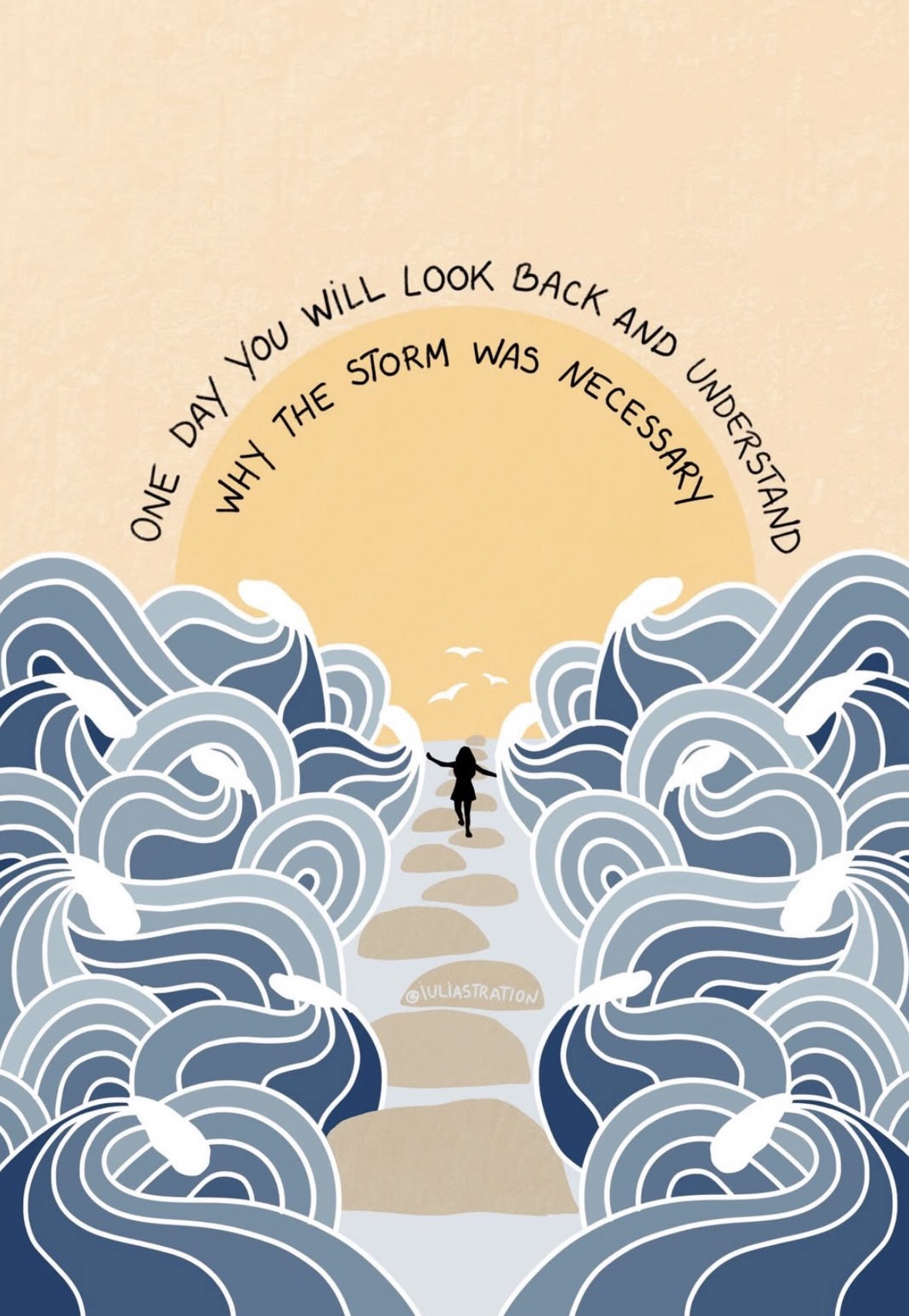
There are seasons in life that don’t make sense while you’re in them. Everything feels loud, messy, and unsettled. You’re doing your best just to keep your footing, wondering what you did wrong, or what you could have done differently to avoid the chaos. When you’re in the middle of a storm, perspective is a luxury you don’t have.
Storms have a way of stripping life down to its basics. They take away the noise you didn’t realize was distracting you. They expose the cracks you learned to live with. They interrupt routines that felt comfortable but quietly kept you from growing. In those moments, it feels unfair. You didn’t ask for the disruption. You didn’t sign up for the confusion or the loss of control. Yet there you are, standing in it.
What makes storms especially hard is that they don’t come with explanations. There’s no clear timeline, no checklist, no promise that things will make sense on the other side. All you can do is move forward, one decision at a time, trusting instincts that feel shakier than usual. It’s exhausting to live without clarity. It’s even harder to keep believing that something meaningful could come from something so uncomfortable.
But storms change things. They force honesty. They make you confront truths you may have been avoiding—about relationships, priorities, habits, even about yourself. They show you what actually matters when everything extra is taken away. And while it doesn’t feel productive at the time, something is quietly happening underneath the surface.
Strength is being built, even when you feel weak. Resilience is forming, even when you’re tired of holding on. Wisdom is growing, even when you feel lost. The storm is shaping you in ways comfort never could. It’s teaching you how to adapt, how to let go, and how to stand up again without the same illusions you had before.
Looking back, this is often the part people forget. They remember the outcome, not the nights filled with doubt. They talk about growth, not the discomfort that made it possible. But growth rarely arrives gently. It usually comes disguised as disruption, as endings, as moments where life forces you to pause and rethink everything you assumed was permanent.
One day, with distance, you’ll see it. You’ll recognize that the storm redirected you when you were stuck. That it cleared space for something healthier, truer, or more aligned with who you were becoming. You’ll notice how certain doors had to close for others to open. How certain versions of you had to be challenged so a stronger one could emerge.
That doesn’t mean the pain was necessary in a simplistic way. It doesn’t mean everything happened for an easy, comforting reason. It means that despite the pain, something meaningful was forged. Meaning often comes later. Understanding usually lags behind experience.
When that day comes, you won’t romanticize the storm. You’ll just respect it. You’ll acknowledge that it changed you, sharpened you, and prepared you in ways calm seasons never could. And maybe you’ll feel a quiet gratitude—not for the struggle itself, but for the clarity, strength, and direction that followed.
Until then, if you’re still in the middle of it, give yourself grace. You don’t need to have it all figured out. Surviving the storm is enough for now. The understanding will come later.
 Kenrick Vaz