
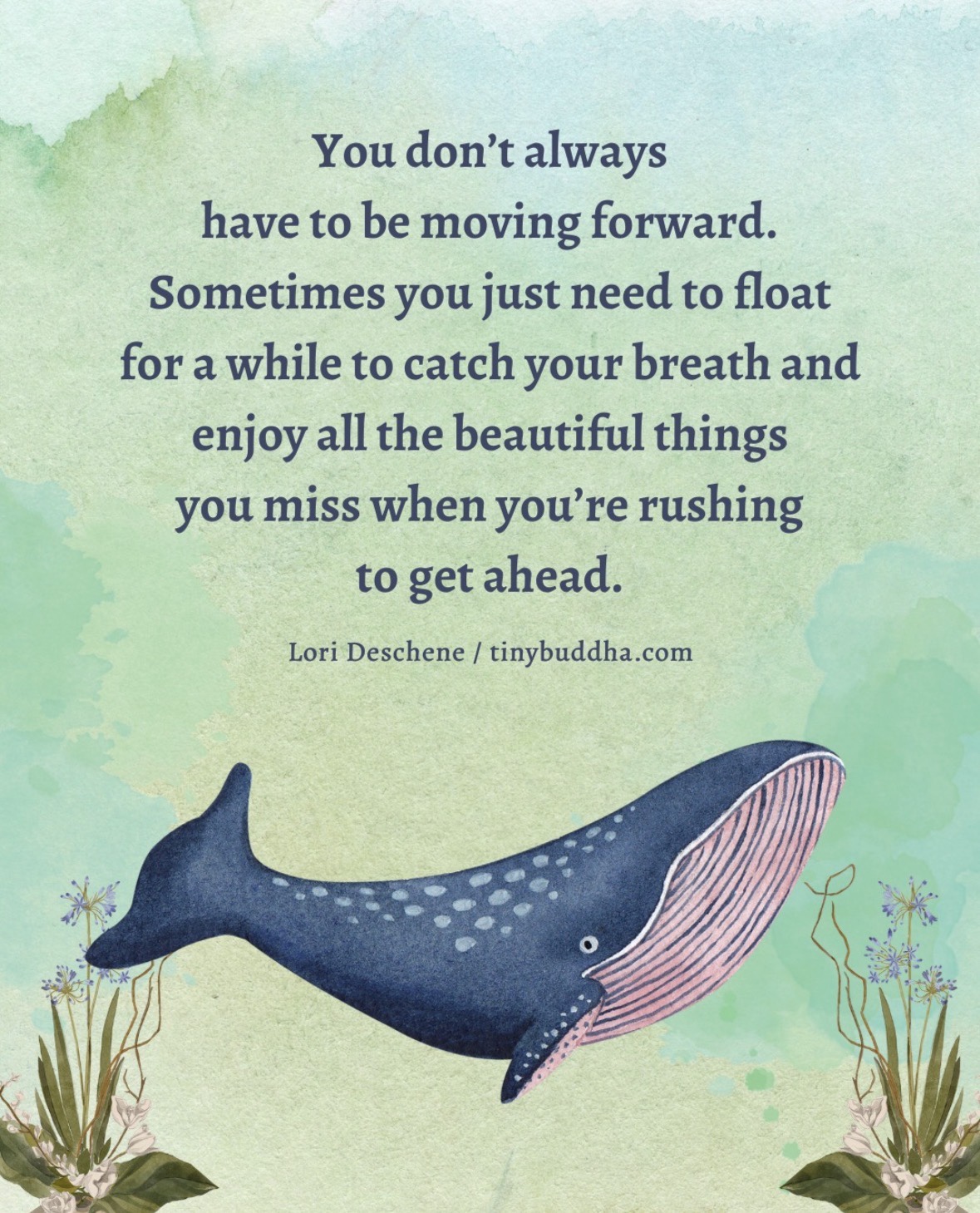
There’s a quiet kind of courage in not pushing. In not optimizing the moment. In not turning every pause into a stepping stone for what comes next. We don’t talk about that enough. We celebrate momentum, progress, hustle, next steps. We praise the people who are always “on it,” always moving, always climbing. But life doesn’t actually feel like that most of the time. It ebbs. It drifts. It asks you to slow down even when your mind is still obsessed with speed.
Some days, moving forward feels heavy. Not because you’re lazy or lost, but because you’ve been carrying too much for too long. Your mind is full. Your body is tired in ways sleep doesn’t quite fix. And yet the instinct is still to push—one more task, one more goal, one more thing checked off the list. As if rest has to be earned. As if pausing is the same as falling behind.
But what if it isn’t?
Floating is different from quitting. Floating doesn’t mean you’ve given up on where you’re headed. It means you trust the water enough to hold you for a moment. It means you’re letting your nervous system unclench. Letting your breath deepen. Letting the noise settle so you can hear yourself think again.
When you’re constantly rushing, you miss things. You miss the way the light shifts in the afternoon. You miss the small wins that don’t look impressive on paper but matter deeply to your soul. You miss conversations because you’re already mentally in the next room, the next meeting, the next version of yourself. You miss joy because you’re too busy chasing fulfillment.
Floating gives those things space to surface.
There’s also something honest that shows up when you stop striving for a bit. Without the distraction of constant progress, you notice what you’ve been avoiding. Sometimes that’s uncomfortable. Sometimes it’s clarifying. Often it’s both. But it’s real. And real beats rushed every time.
We’ve been conditioned to believe that stillness is dangerous—that if we slow down, we’ll lose our edge, our ambition, our relevance. But look closely at the people who sustain the longest, who burn steady instead of burning out. They know when to swim and when to float. They understand that rest isn’t the opposite of growth; it’s part of it.
Floating is where perspective comes back. It’s where you remember why you started in the first place. It’s where creativity sneaks in, unannounced, because it finally has room. It’s where gratitude shows up—not the forced kind, but the quiet realization that there’s beauty here, right now, even without the next milestone.
And no, floating doesn’t last forever. It’s not meant to. Eventually, you’ll feel the pull again. Direction will return. Energy will build. But it will be cleaner then. More intentional. Less frantic. You’ll move forward not because you’re afraid of standing still, but because you’re ready.
So if you’re in a season where everything feels a bit slower, a bit softer, a bit less defined—don’t rush to label it as wasted time. You might just be catching your breath. You might be recalibrating. You might be noticing all the beautiful things that only appear when you stop racing past them.
Sometimes progress looks like floating. And that’s not weakness. That’s wisdom.
 Kenrick Vaz