
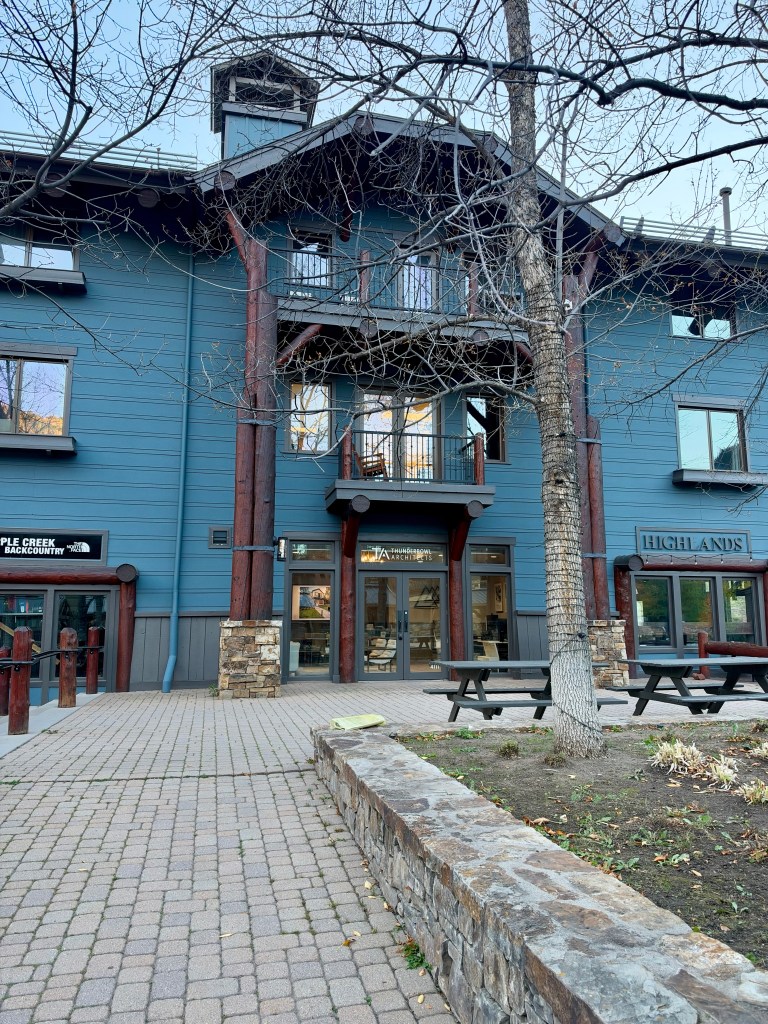
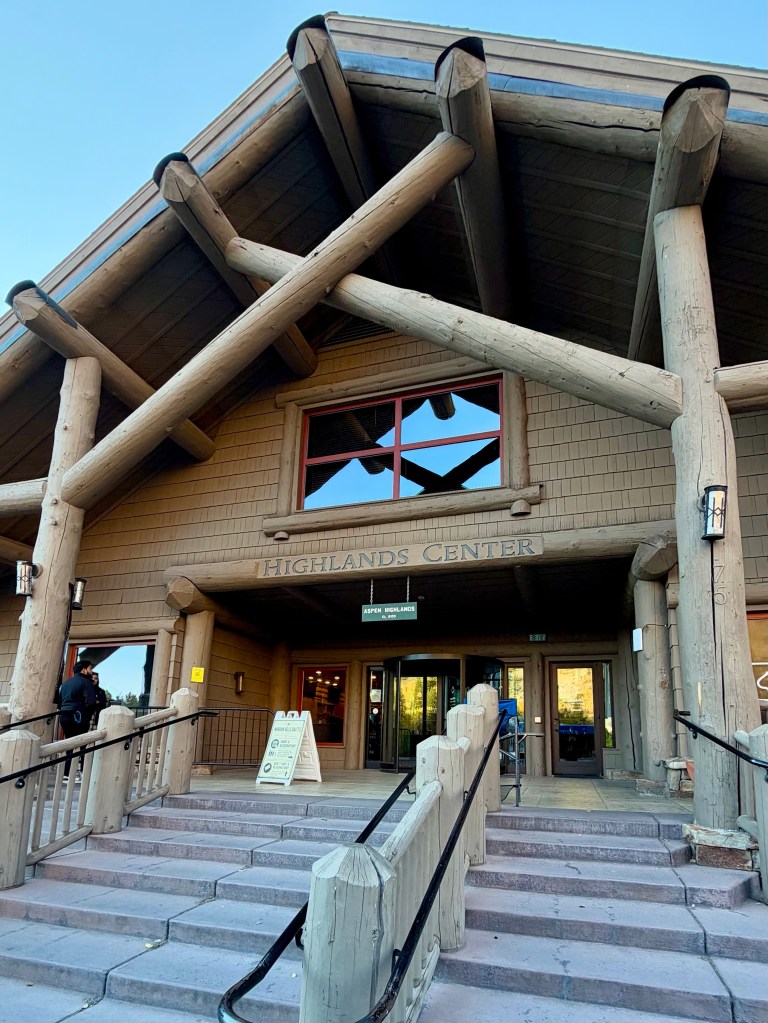
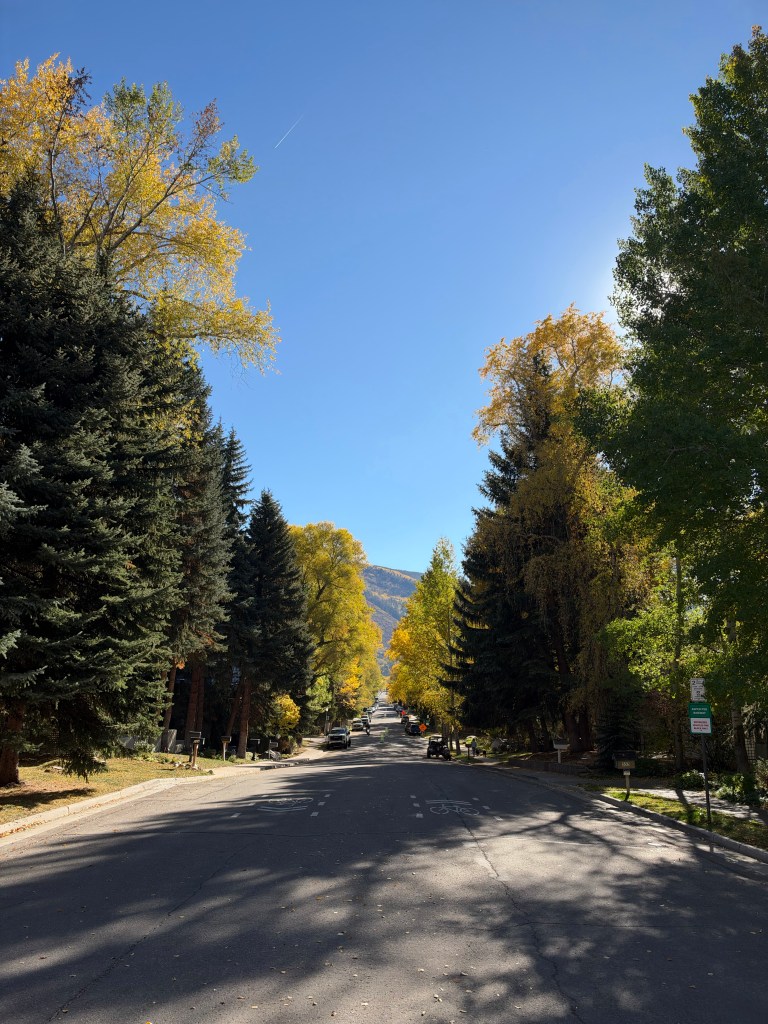
We started early from Aspen this morning, walking over to catch the free city bus toward Aspen Highlands. One thing we’ve loved about Aspen is how easy they make it to get around without a car. From Highlands, we switched to the shuttle that would take us up Maroon Creek Road toward Maroon Lake.

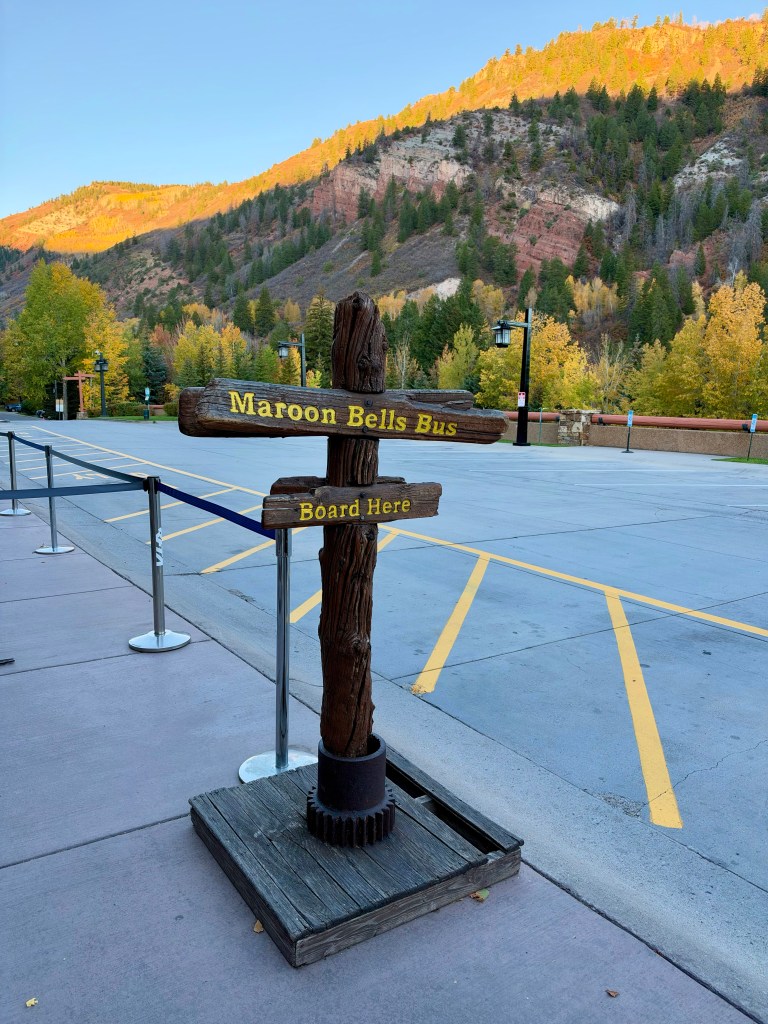
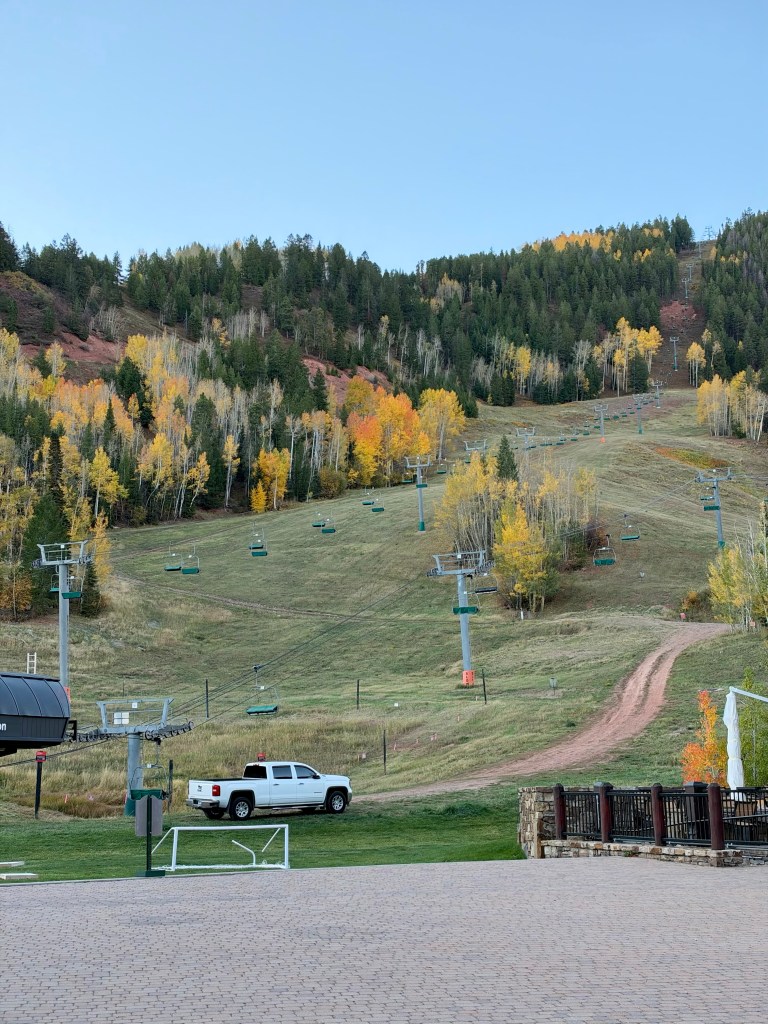
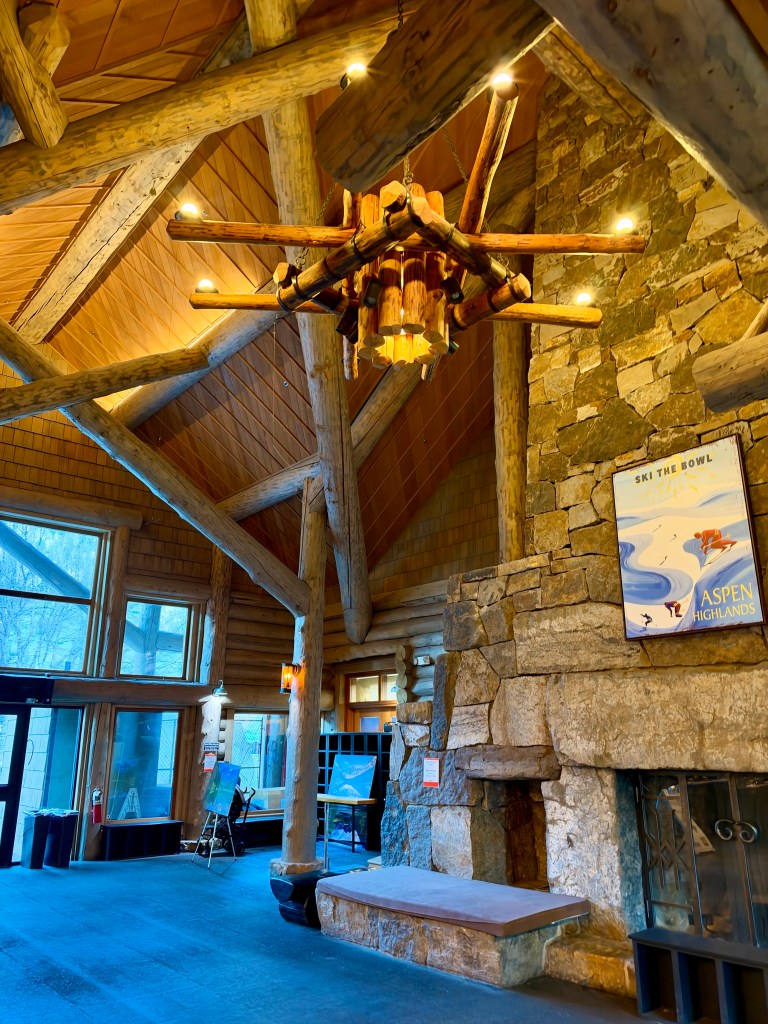
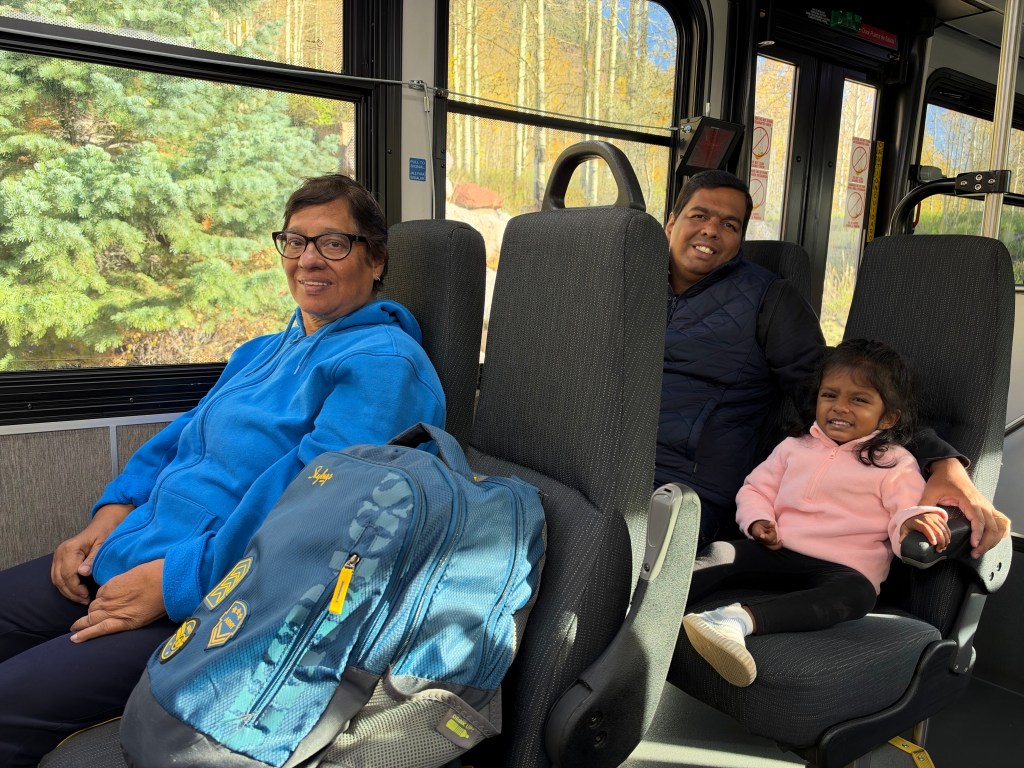
The shuttle ride itself turned out to be part of the experience.
Our driver shared stories about Aspen and the surrounding mountains along the way. Aspen began as a silver-mining town in the late 1800s, booming after rich silver deposits were discovered nearby. When the silver market collapsed in the 1890s, the town went through decades of decline before reinventing itself in the 20th century as the ski and cultural destination we know today.
It was fascinating hearing about that history while looking out at a place now associated with ski resorts, beautiful homes and some of the most expensive real estate in America.
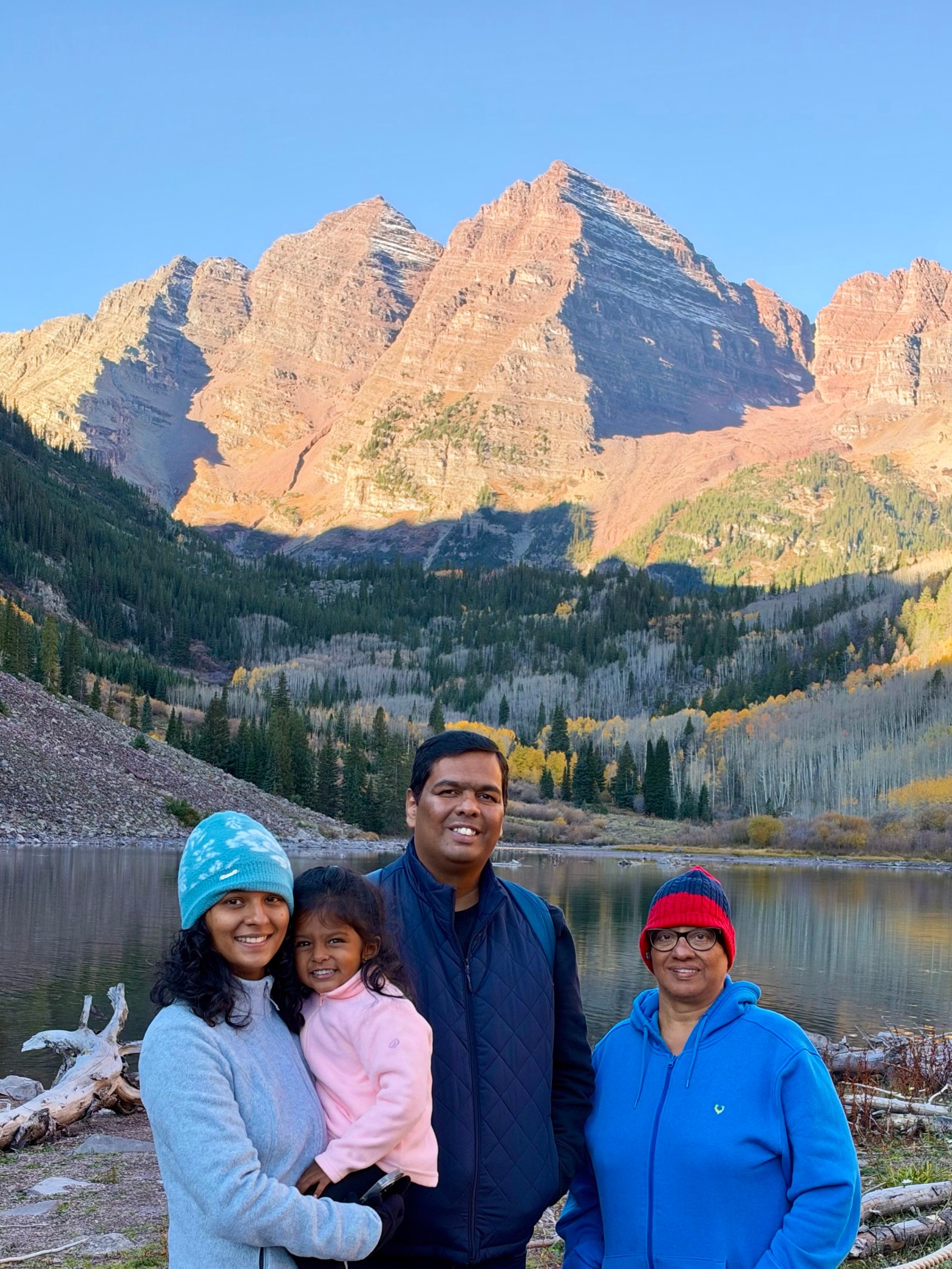
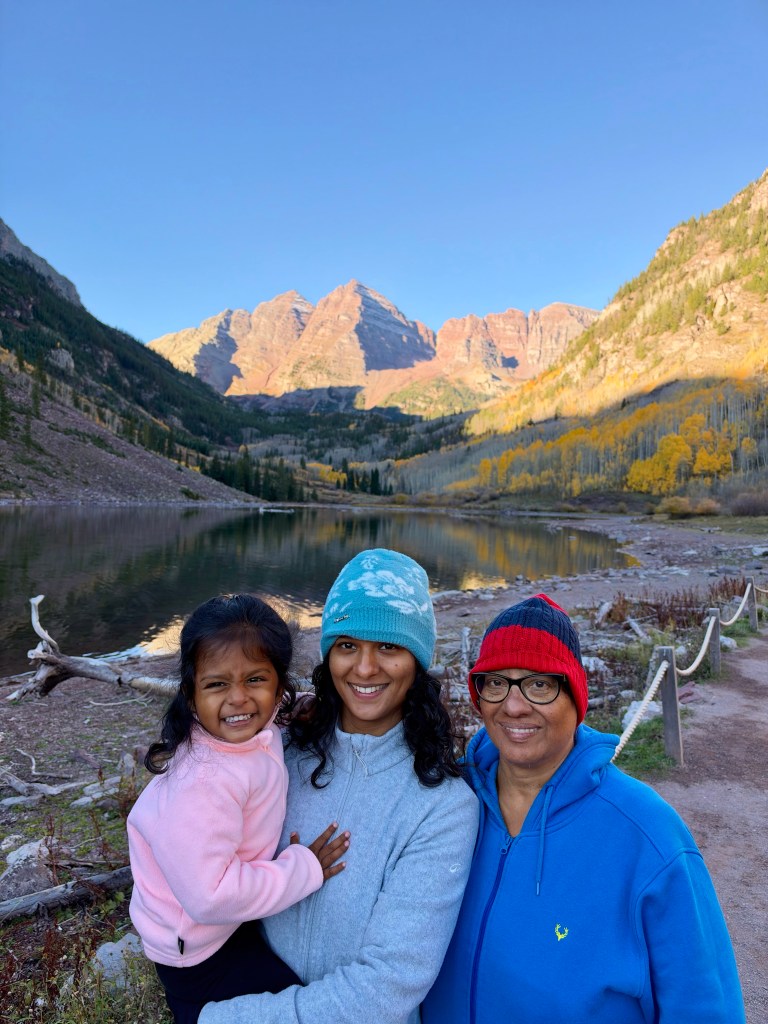
And then we reached Maroon Lake.
The Maroon Bells rise more than 14,000 feet above sea level, with Maroon Peak at 14,163 feet and North Maroon Peak at 14,019 feet. Their name comes from the reddish-maroon color of the mudstone that forms much of the mountains.
That rock also makes the Bells notoriously fragile. Unlike many of Colorado’s granite peaks, the sedimentary rock here fractures easily. Climbers have even given the Bells a rather intimidating nickname, the “Deadly Bells.”
From beside Maroon Lake, though, they looked completely peaceful.
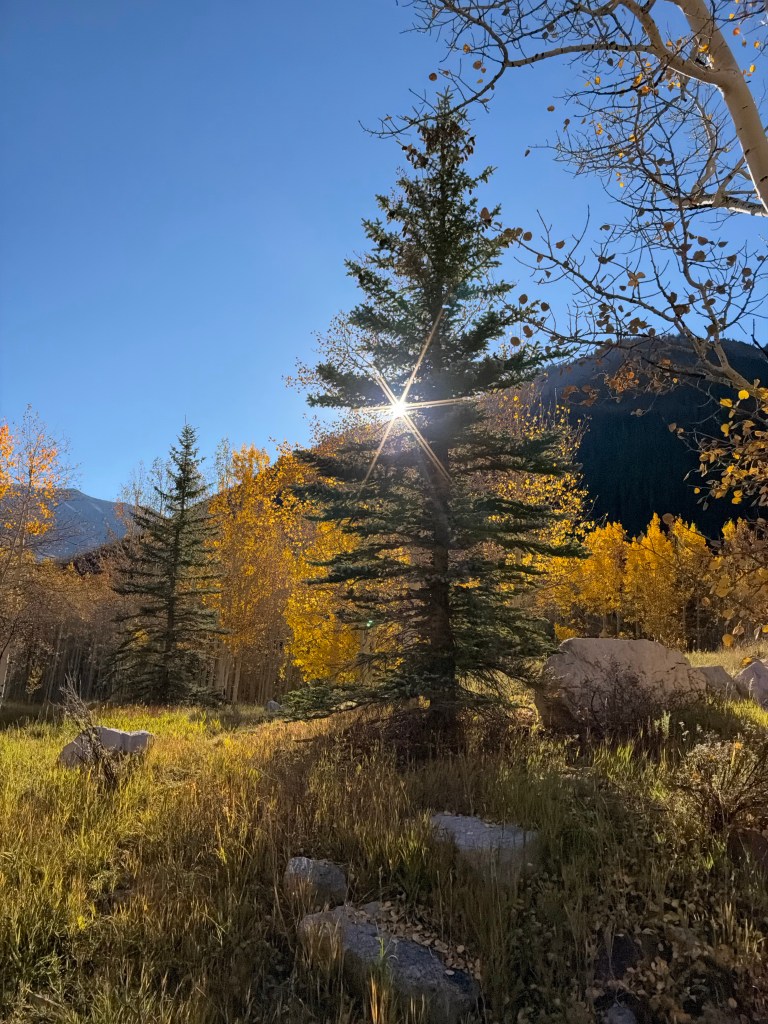
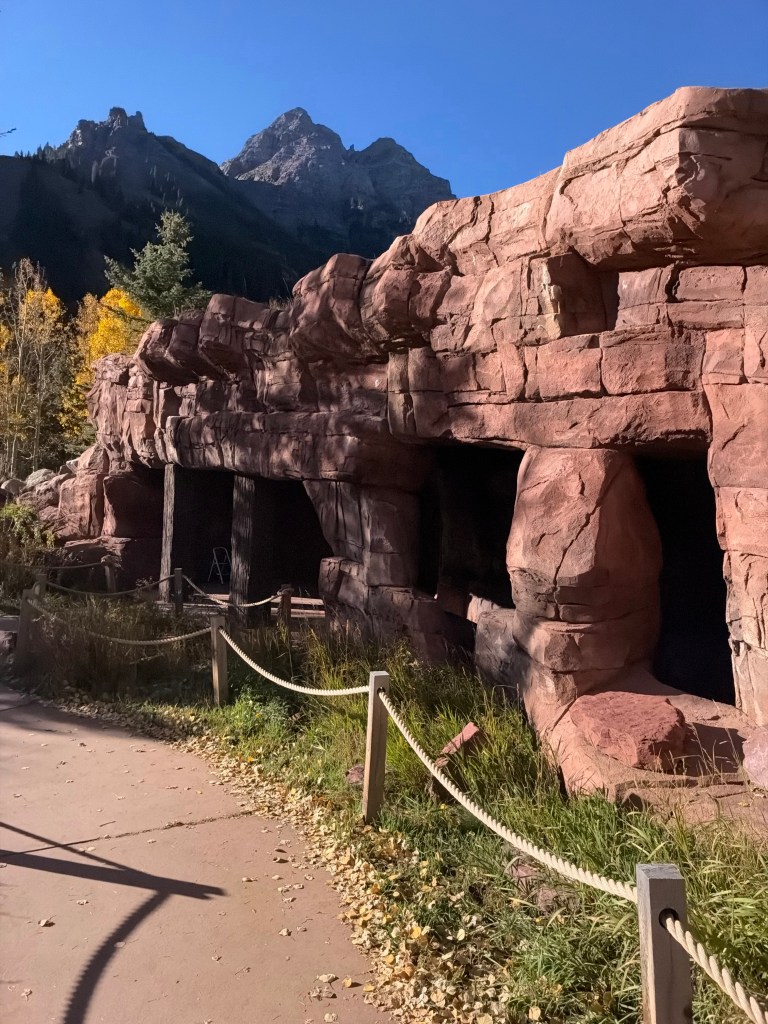
We were lucky to have a beautiful morning. The mountains towered above the lake, patches of fall color remained around us, and every few steps seemed to offer another photograph.
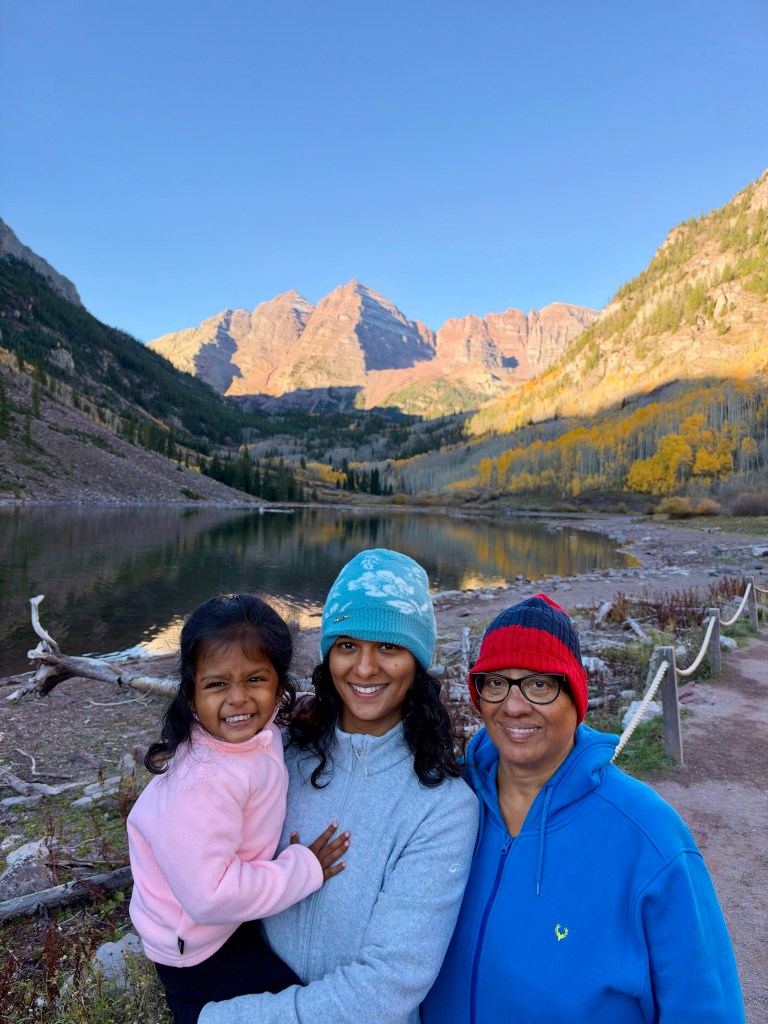
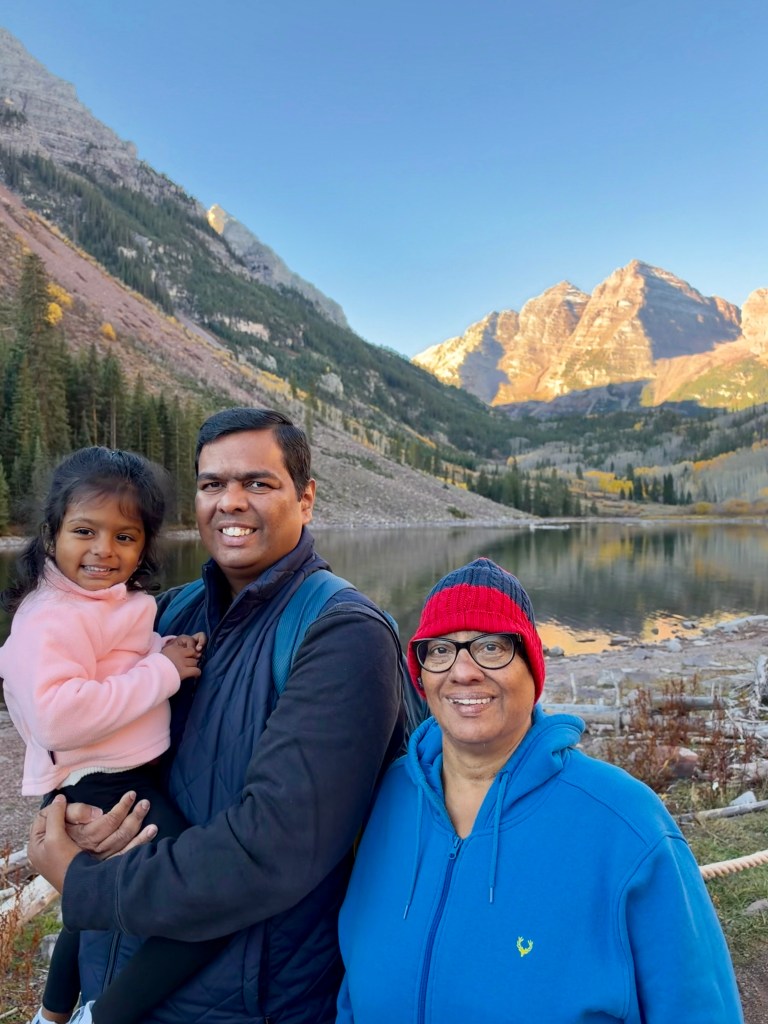
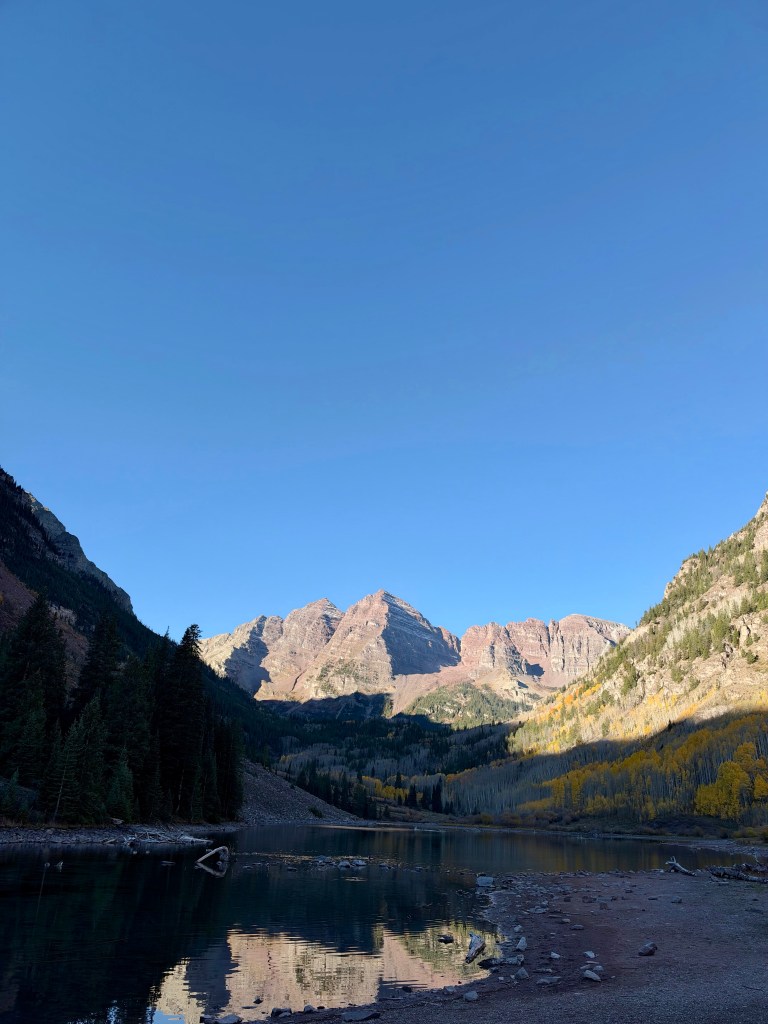
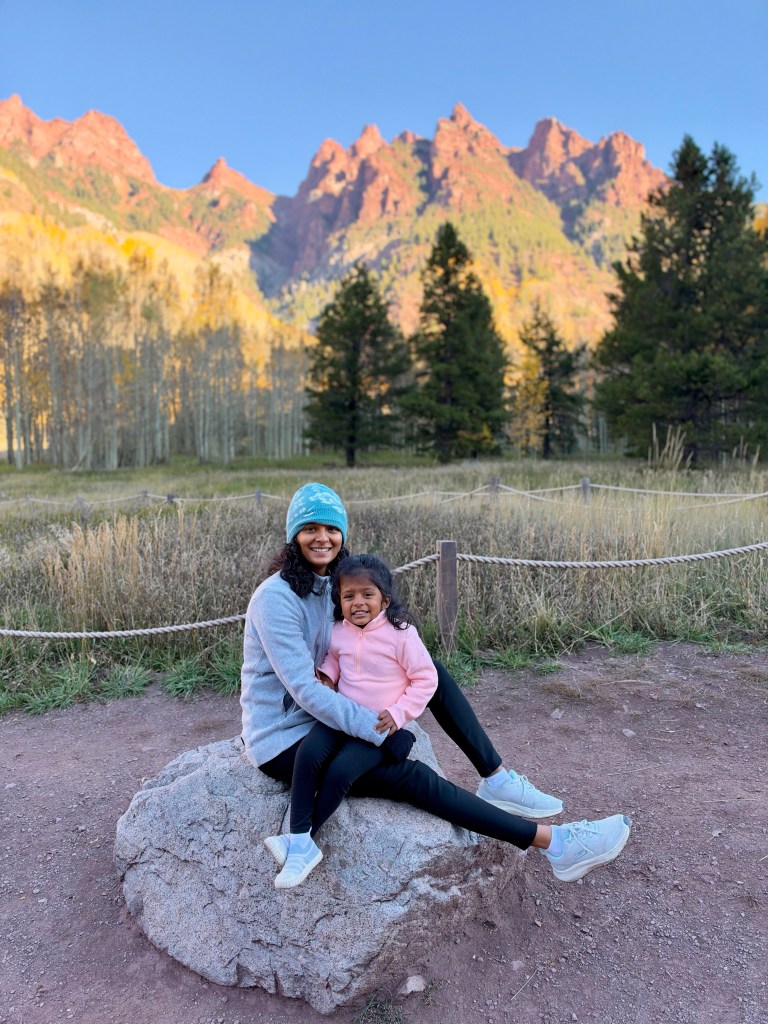
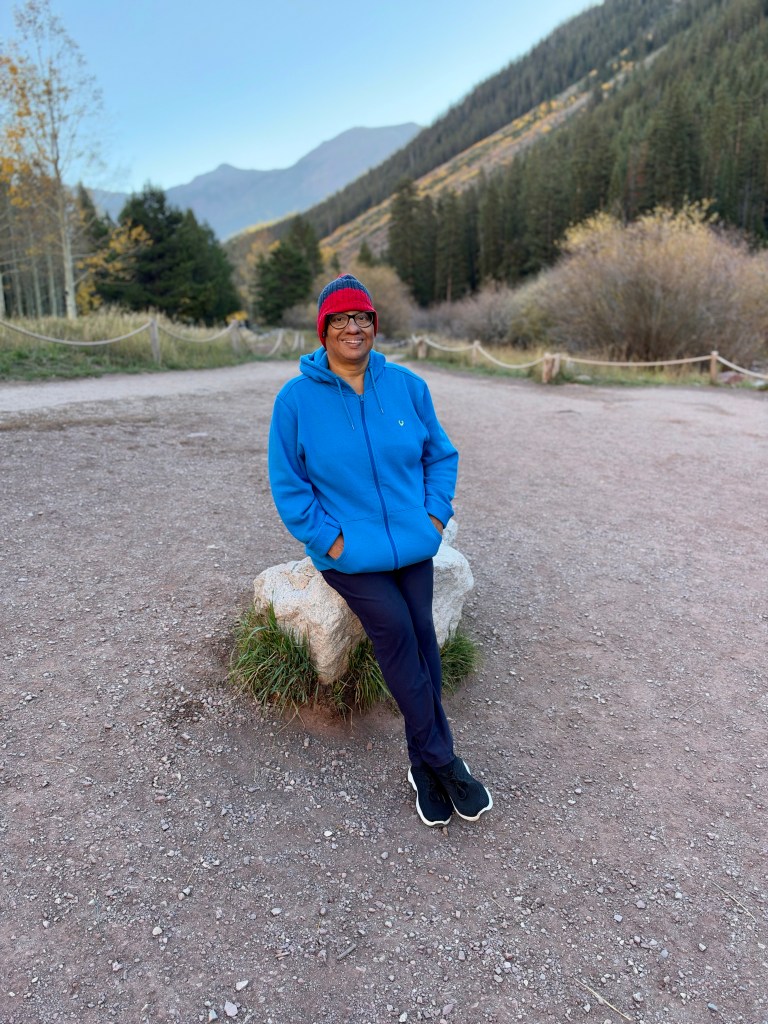
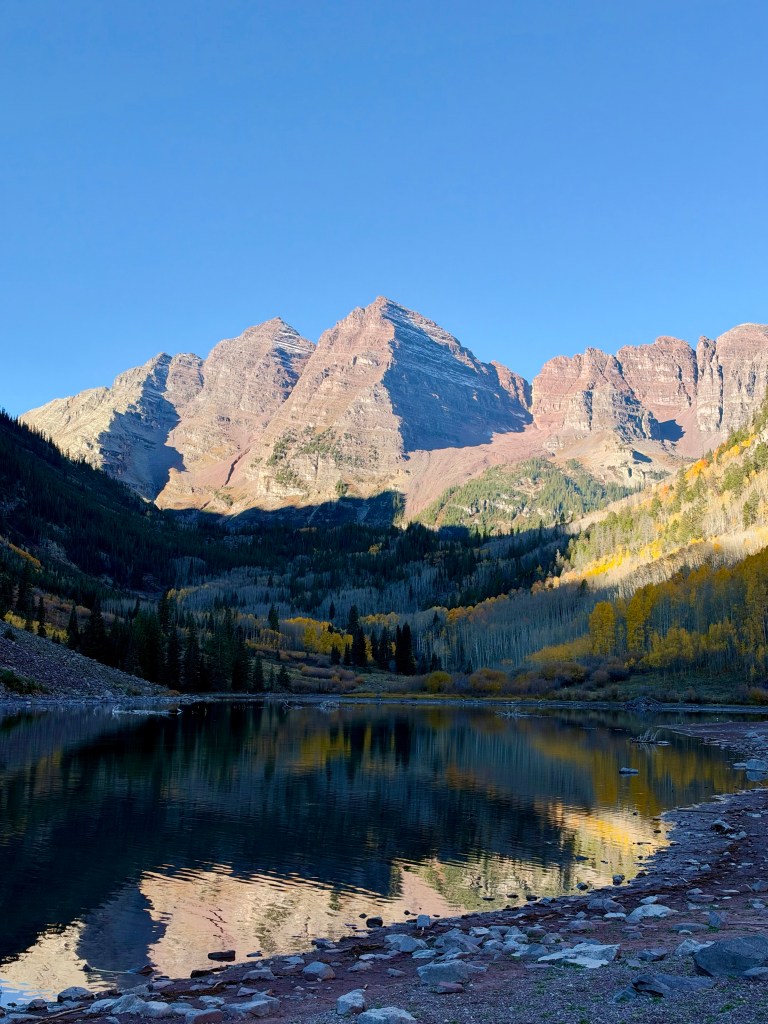
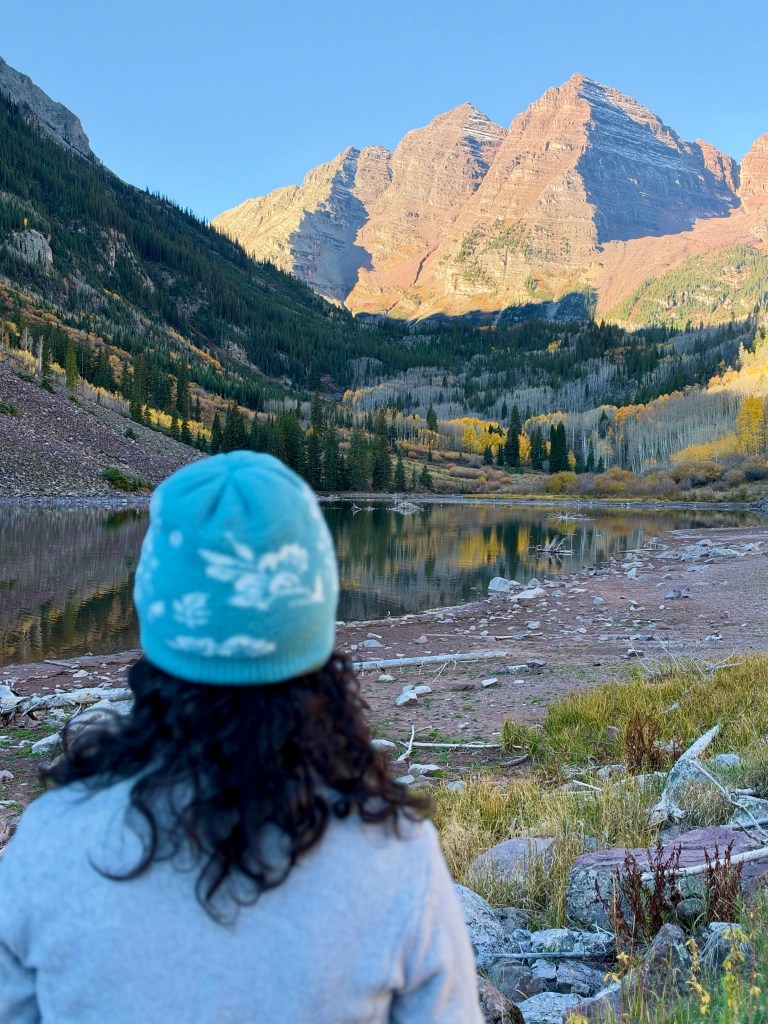
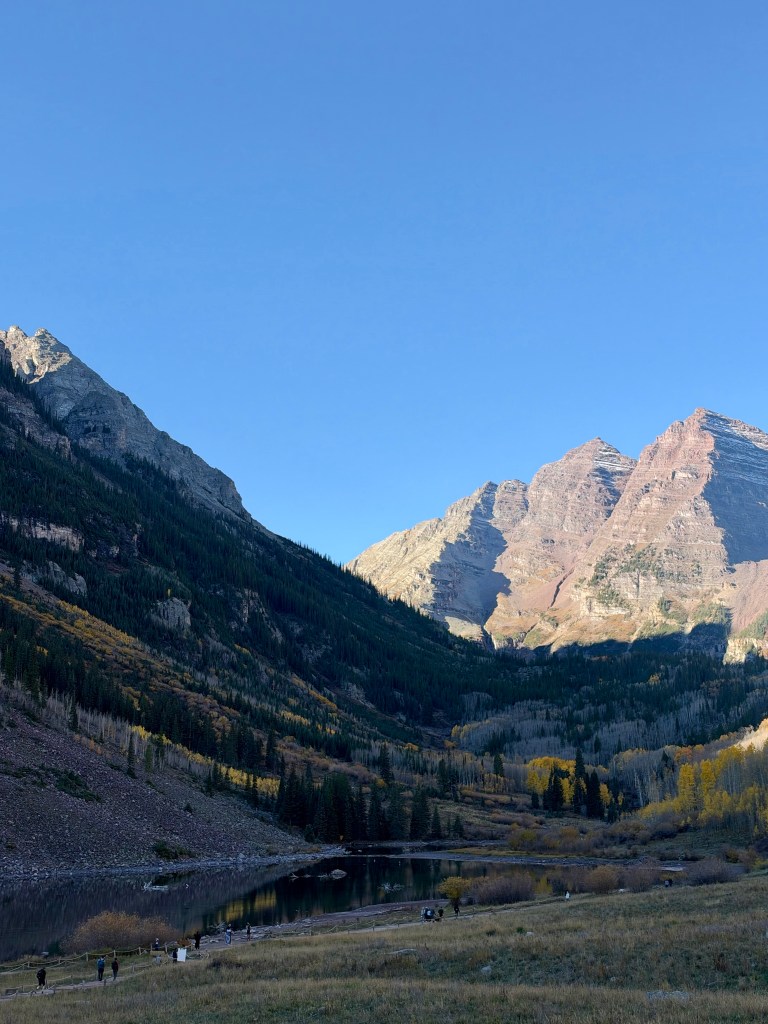
After seven days of driving through Colorado, it felt good to simply stand there for a while.
No long hike. No rushing to the next viewpoint.
Just Maroon Lake and two of the most recognizable mountains in Colorado in front of us.
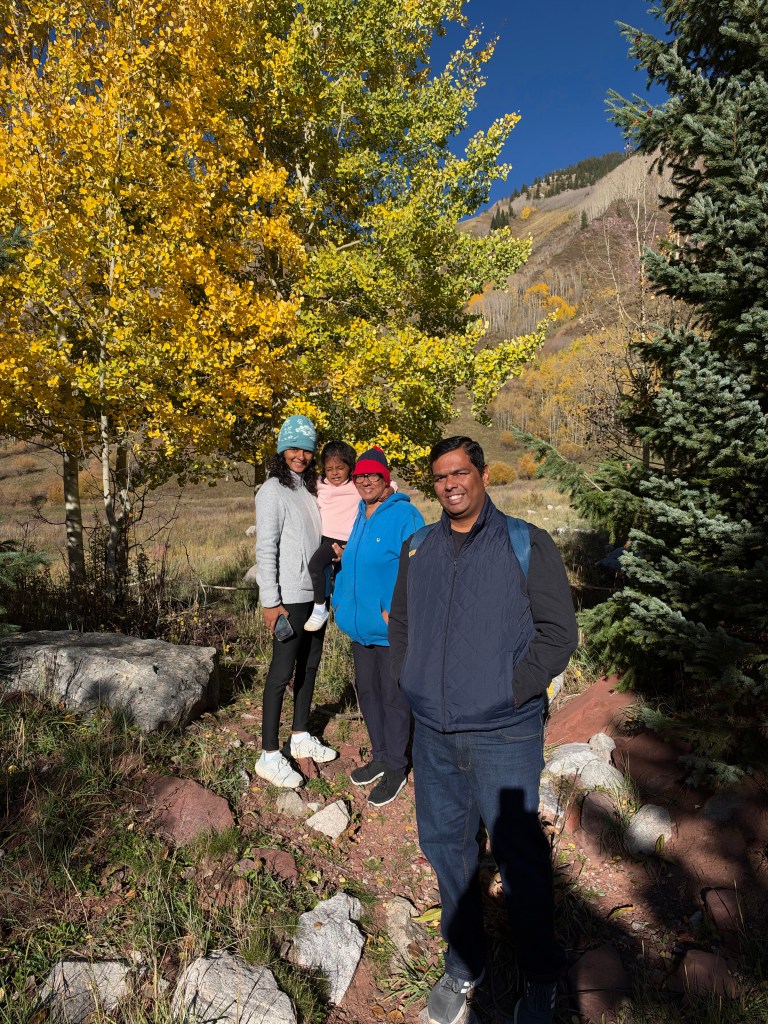
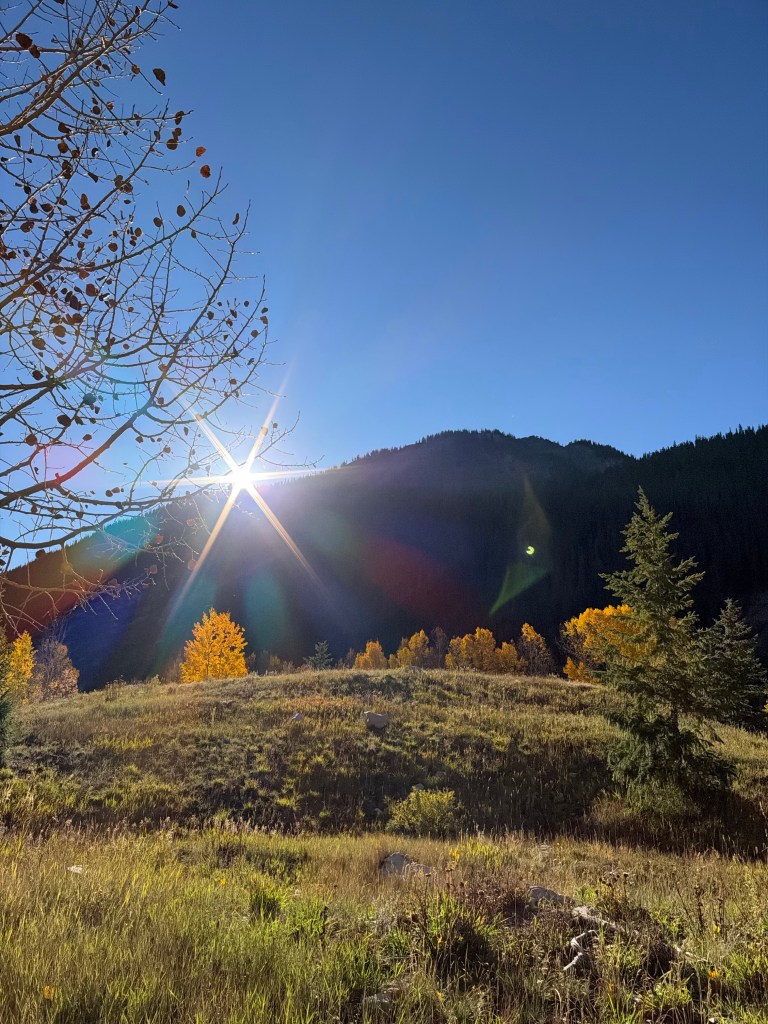
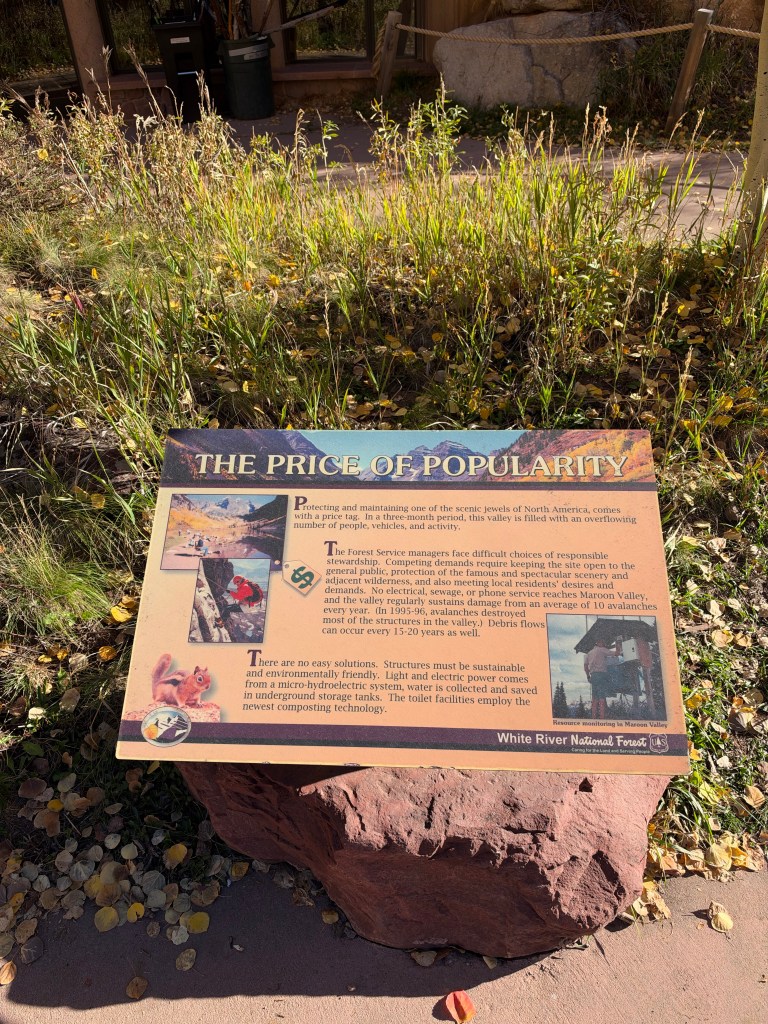
We eventually caught the shuttle back to Aspen Highlands and returned to the hotel. Bags packed, SUV loaded, and it was time to say goodbye to Aspen.
Our drive followed the Roaring Fork Valley through Basalt and Carbondale toward Glenwood Springs. After some of the huge mountain-driving days earlier in the trip, this stretch felt wonderfully relaxed.

We stopped in Glenwood Springs for lunch before beginning our final long drive across the Rockies.
And what a drive it was.
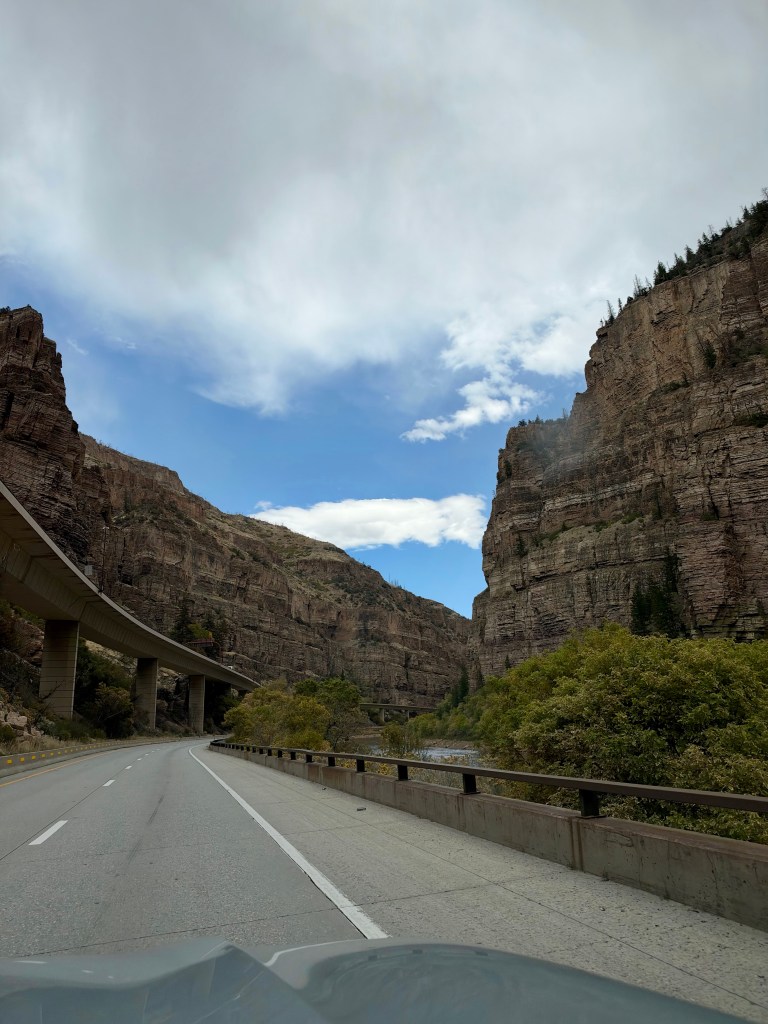
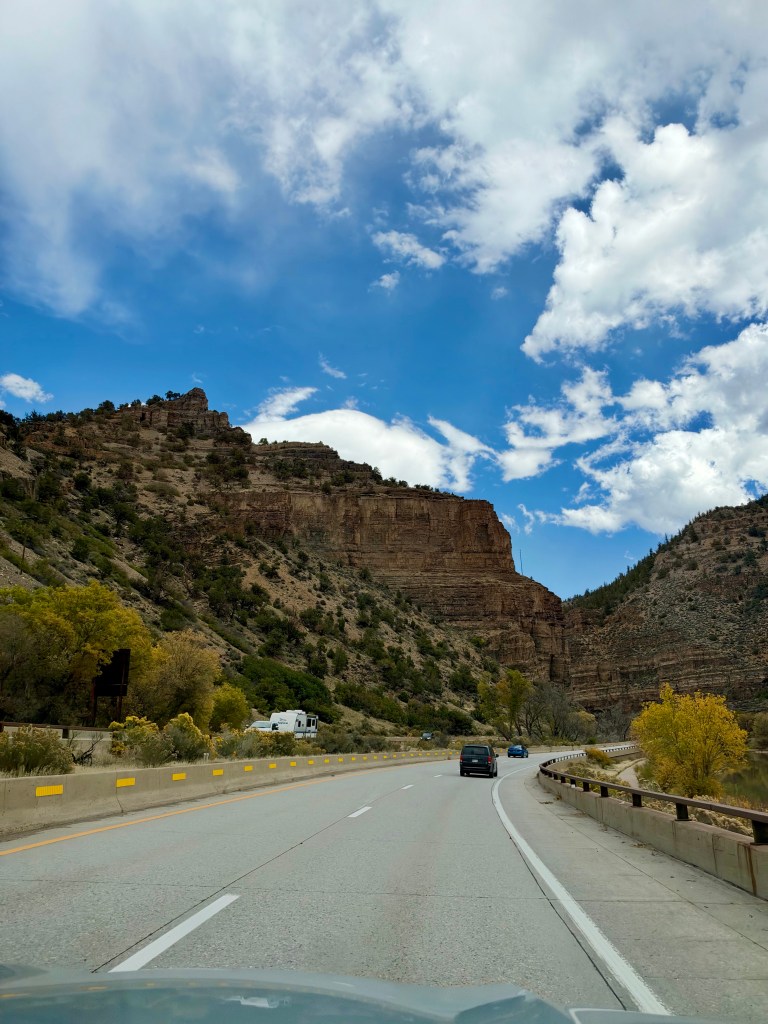
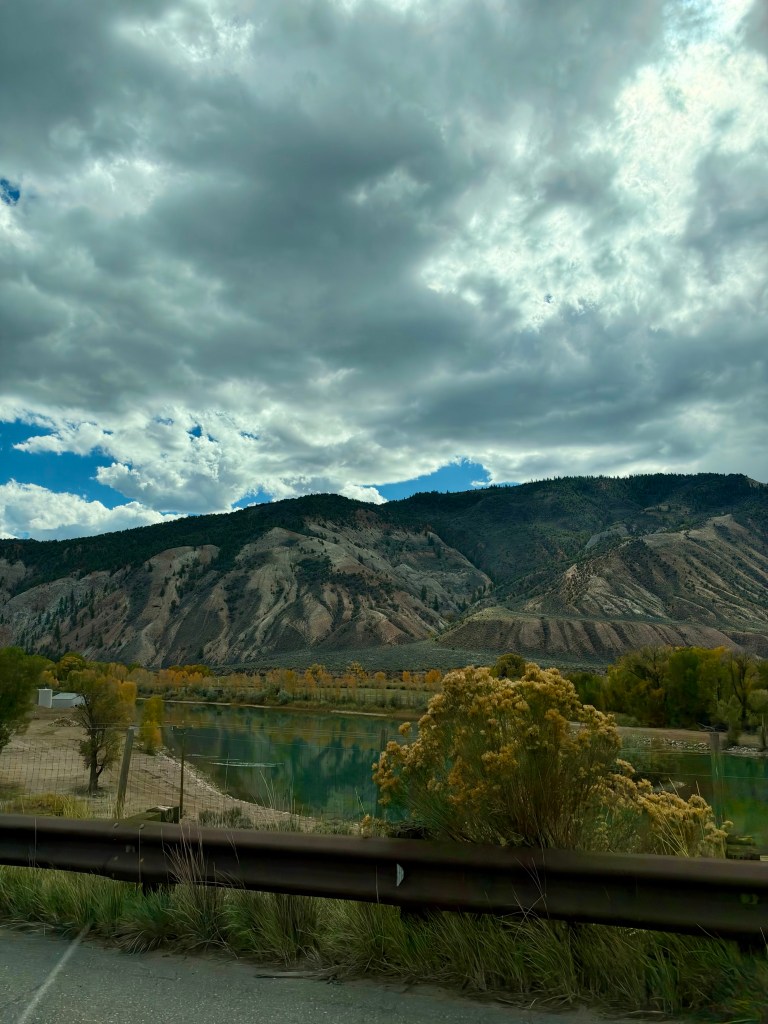
Soon after leaving Glenwood Springs, I-70 enters Glenwood Canyon, one of the most dramatic highway corridors we’ve driven on this trip.
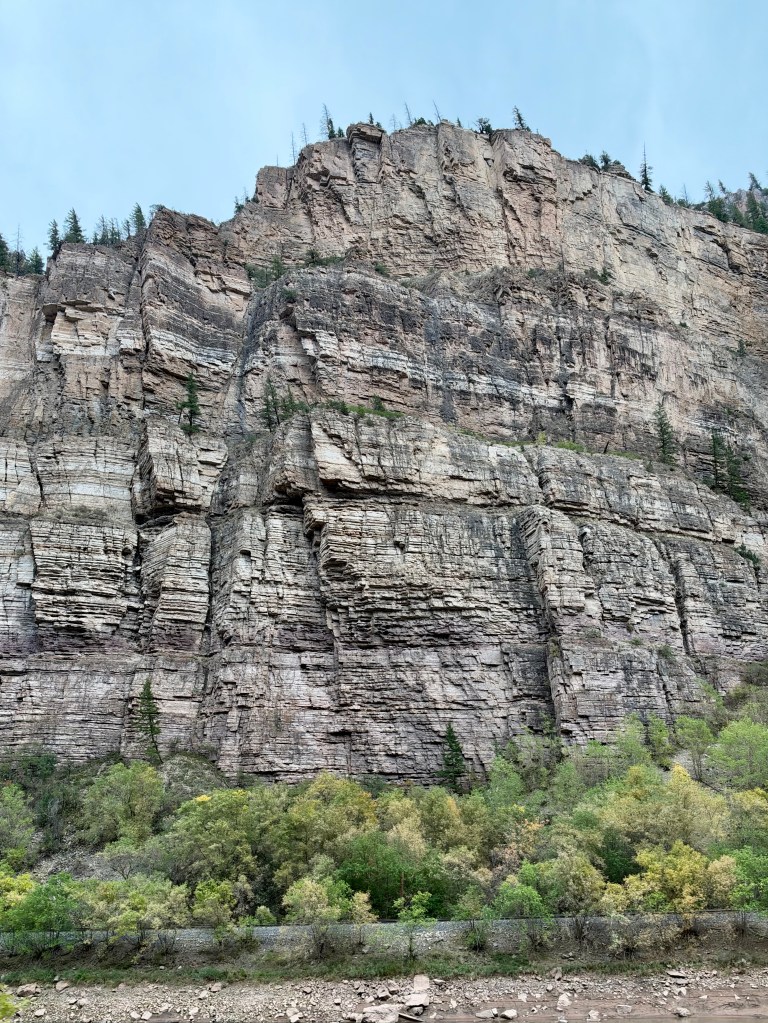
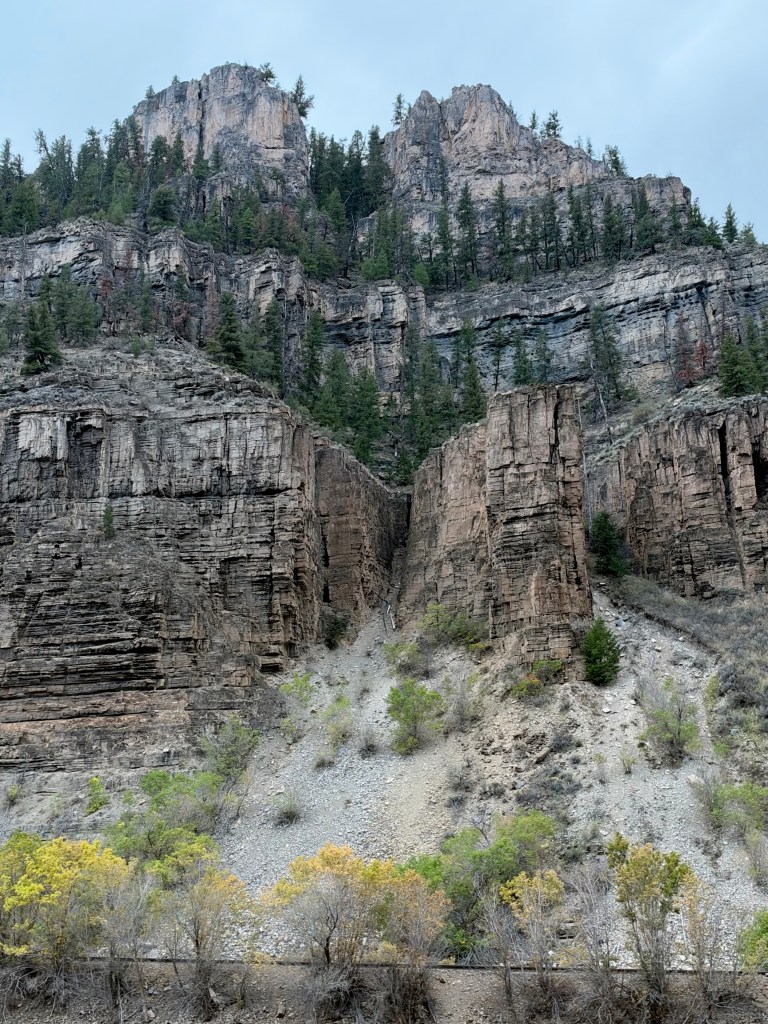
The Colorado River runs through the bottom of the canyon while enormous rock walls rise on either side. Interstate 70 somehow squeezes through the same narrow space, sometimes right beside the river and sometimes on elevated sections built above the canyon floor.
The engineering is impressive once you realize how difficult it was to build a major interstate here while protecting the river and surrounding landscape. The final Glenwood Canyon section of I-70 opened in 1992 after years of construction.
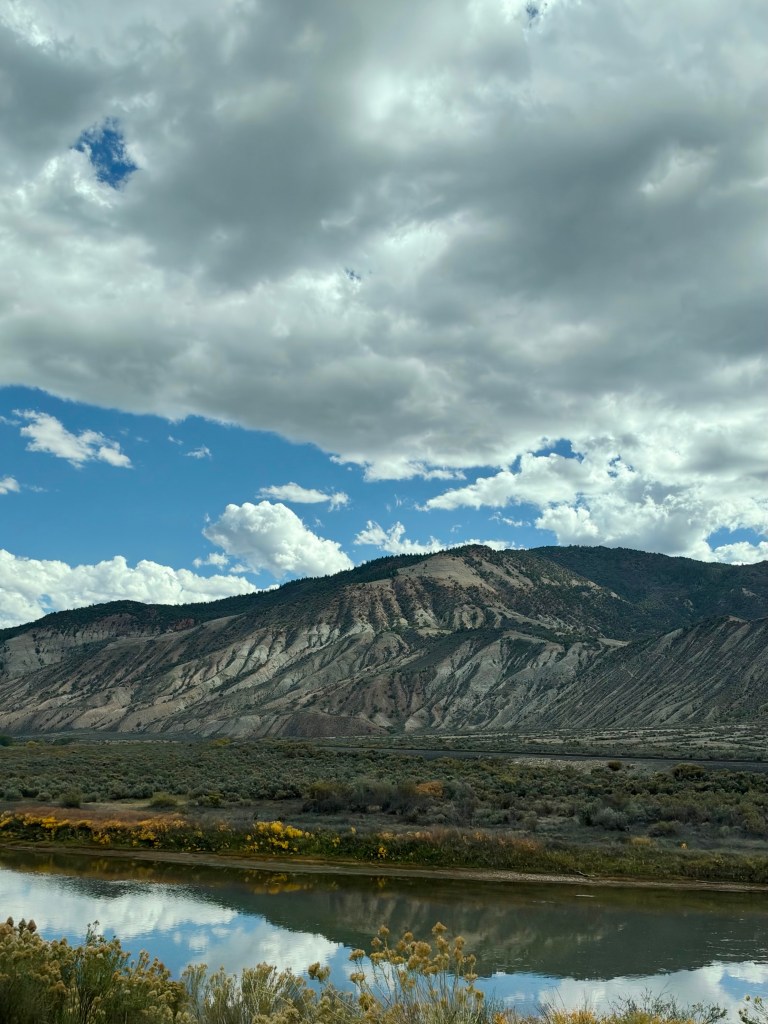
And running beside us through it all was the Colorado River.
This is the same river that continues west through Utah and eventually carves its way through the Grand Canyon in Arizona. Seeing it here, much farther upstream and surrounded by the Rockies, gave us a completely different picture of a river we’d heard about so many times.
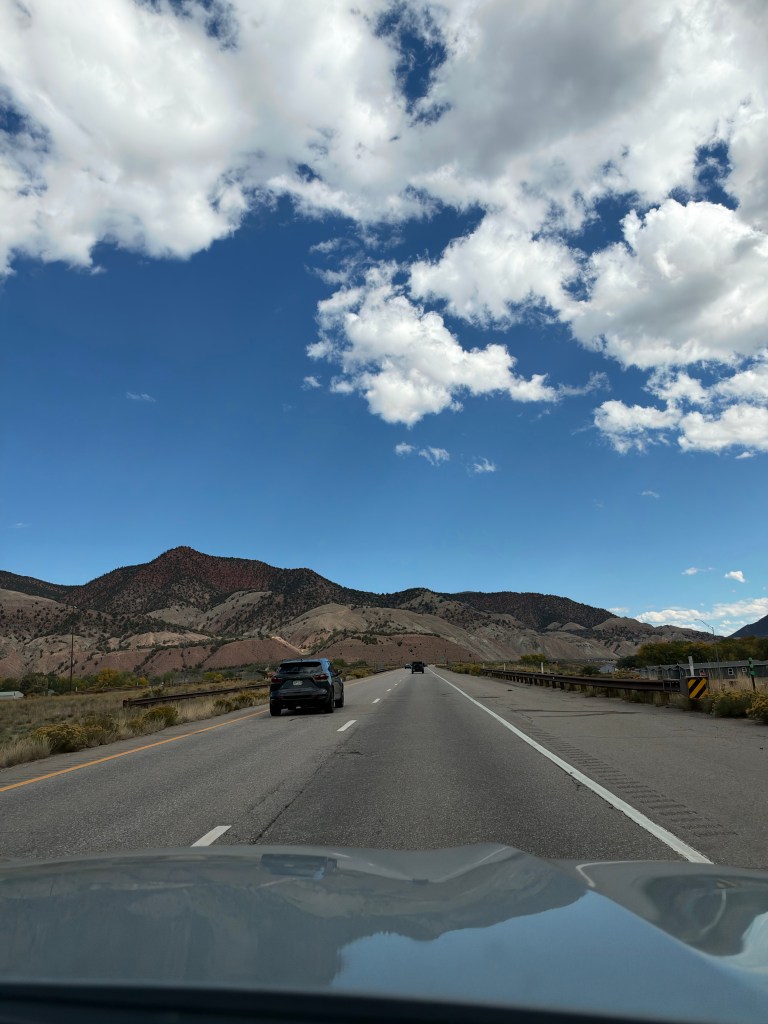
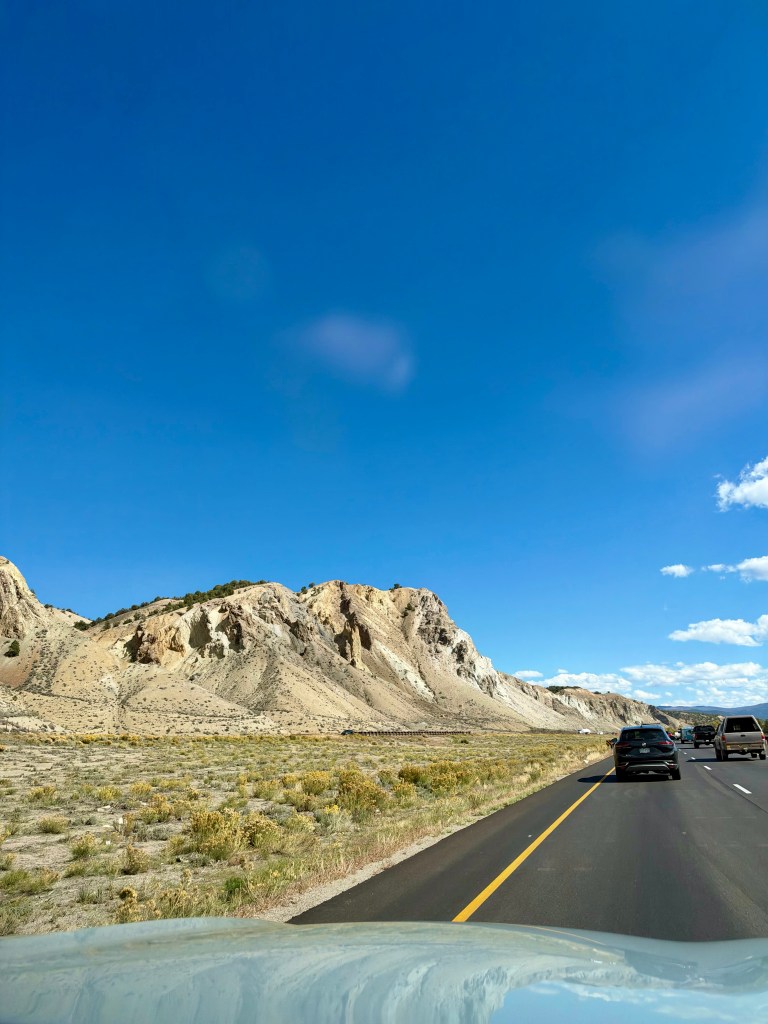
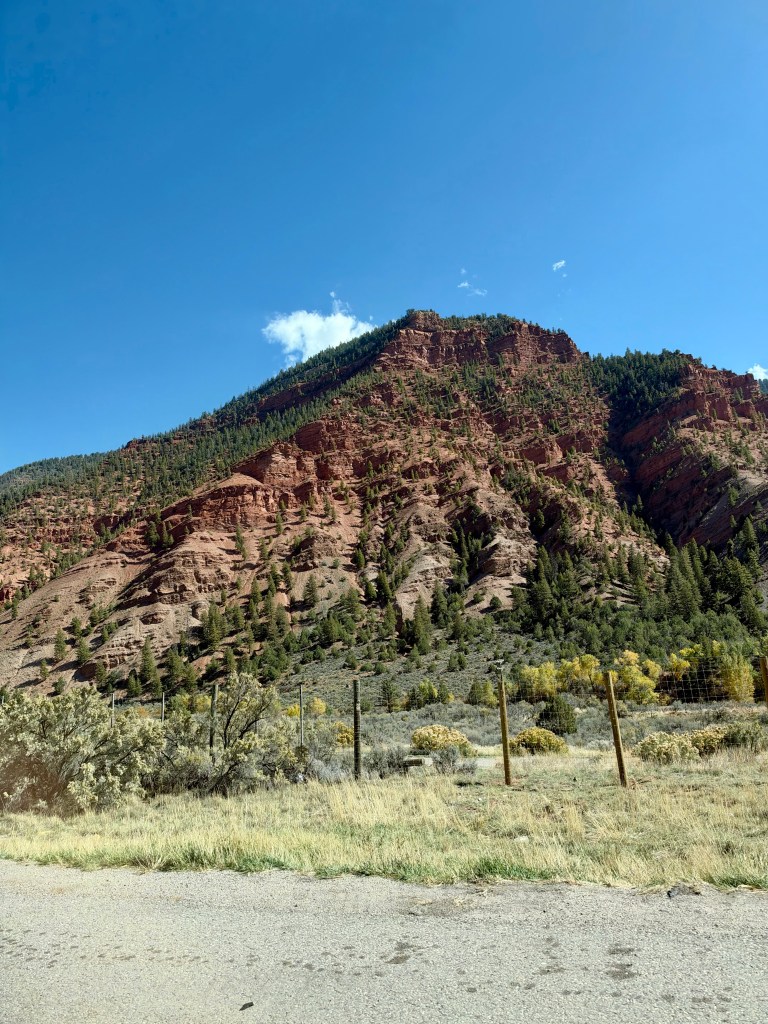
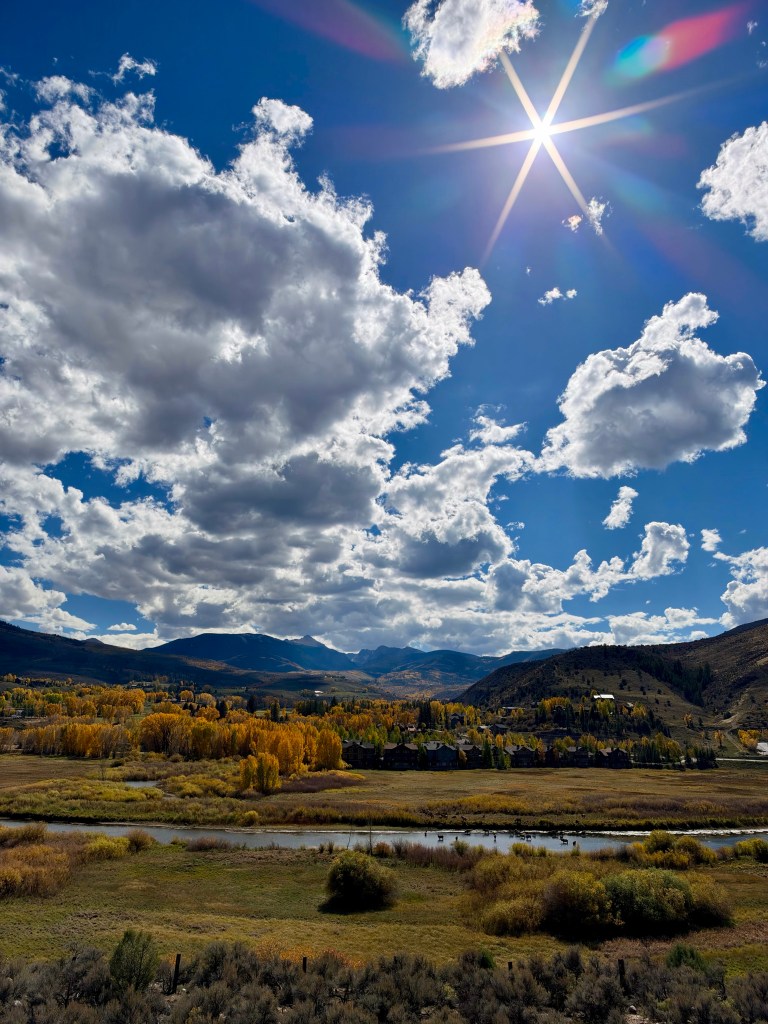
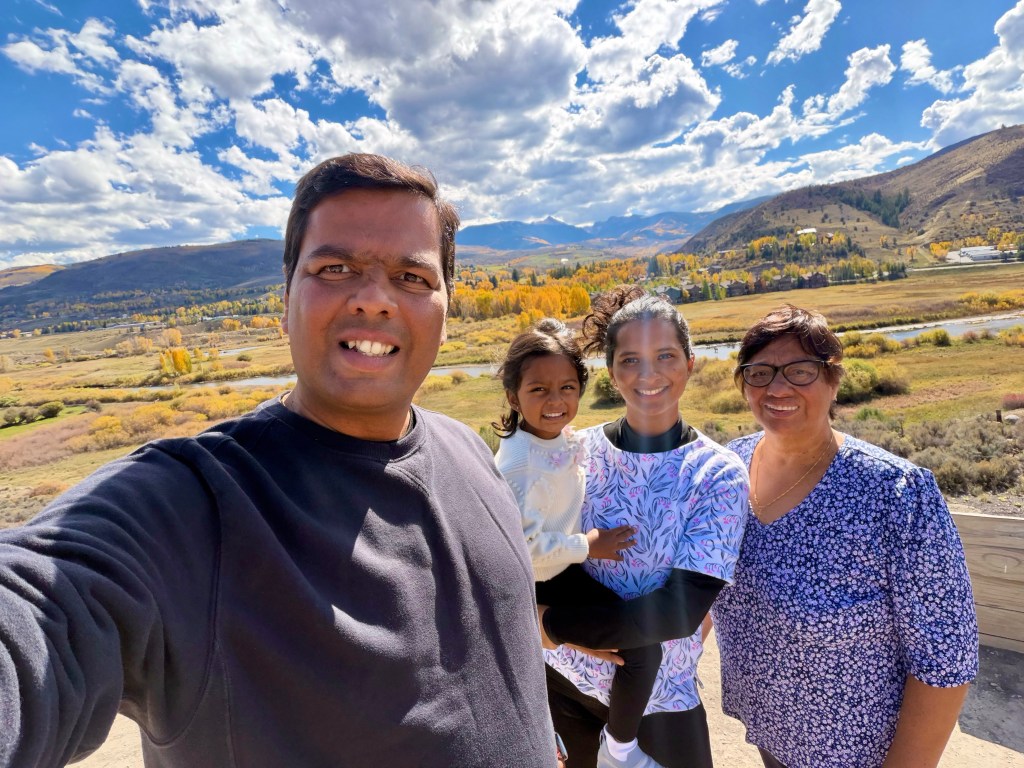
The canyon eventually opened up and we continued east toward Vail.
Driving through Vail was another reminder of how much Colorado changes within a few hours. Vail itself is a relatively young town, developed after the ski resort opened in the early 1960s. Its European-inspired village and huge ski mountain helped turn it into one of America’s best-known ski destinations.
Looking up at those slopes in October, it was fun trying to imagine the same mountains covered in snow with skiers everywhere a couple of months from now.
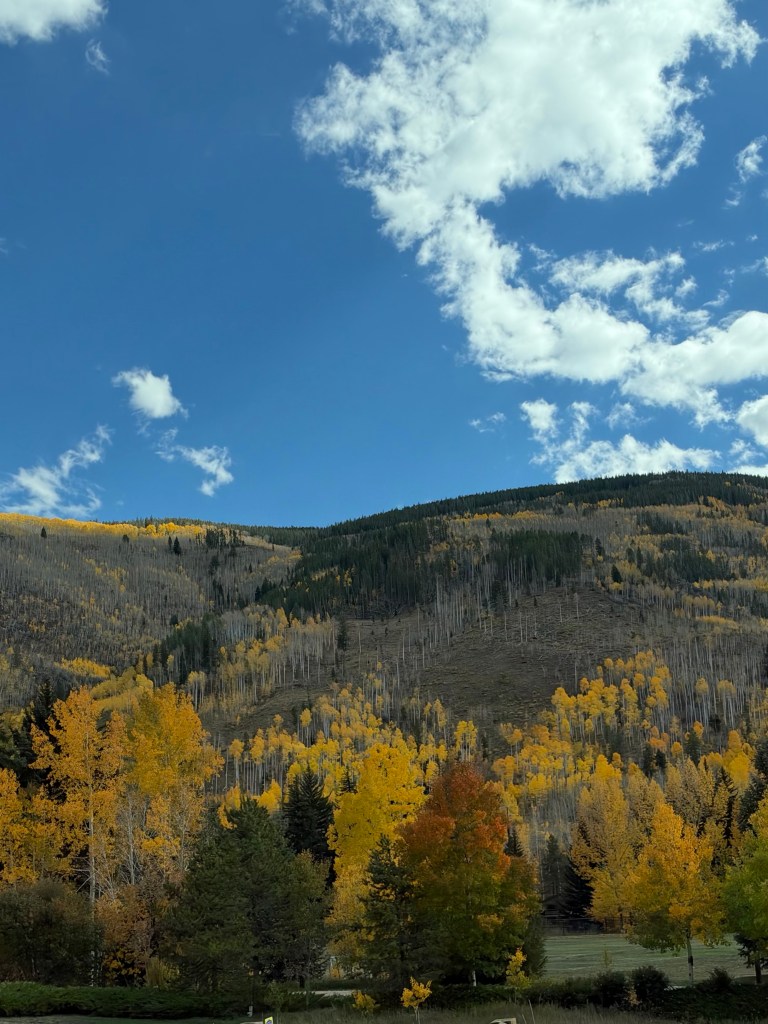
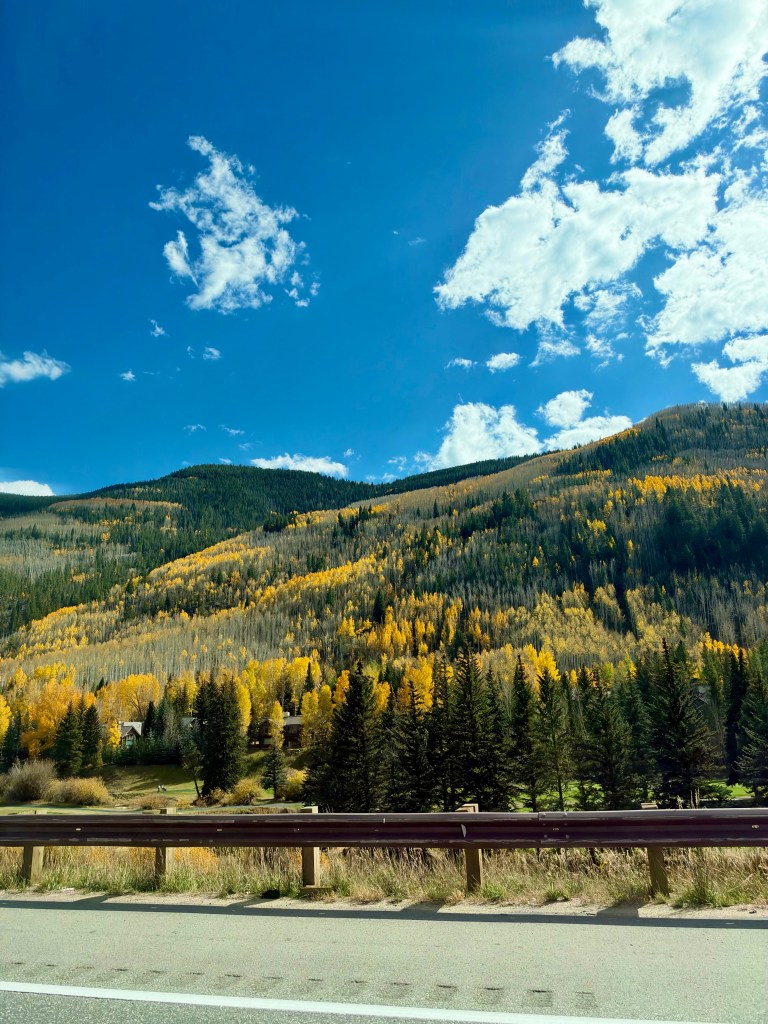
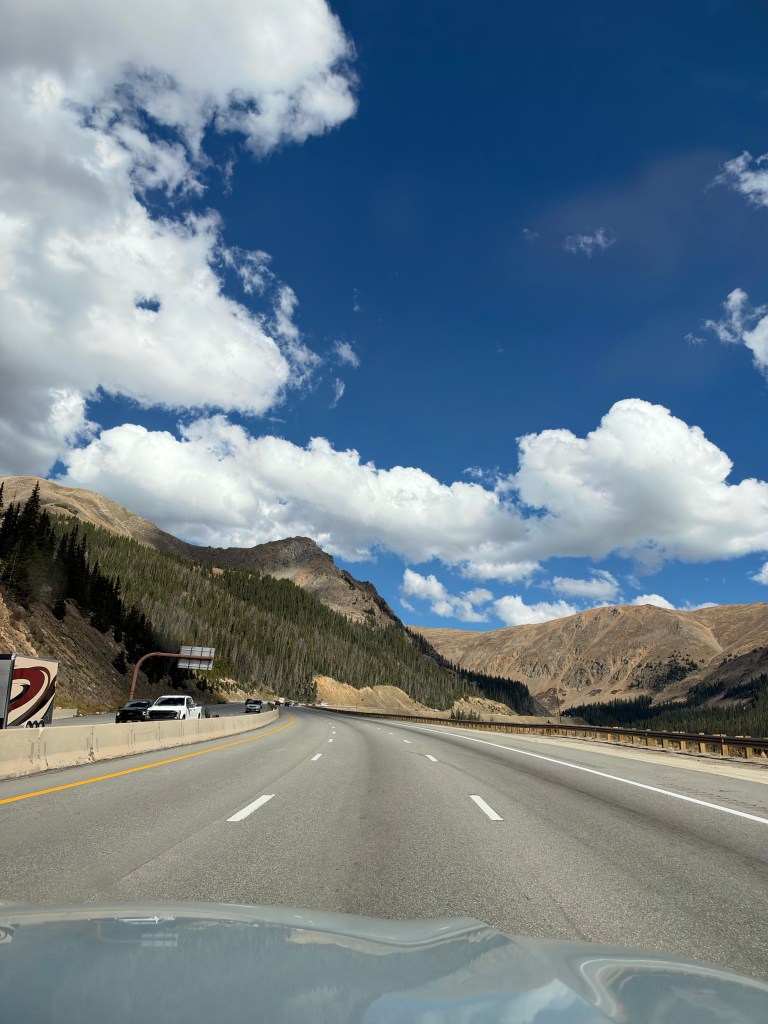
From Vail we climbed again, crossed Vail Pass and continued toward our final major mountain landmark of the trip.
The Eisenhower-Johnson Memorial Tunnel.
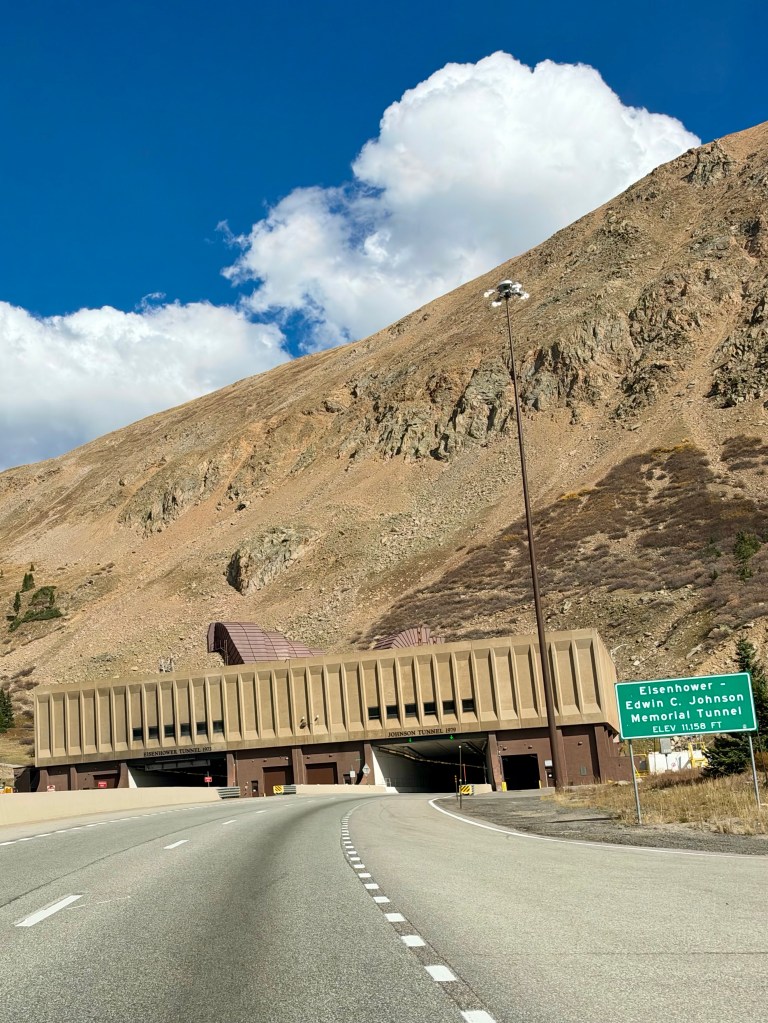
At more than 11,000 feet above sea level, the tunnel carries I-70 directly beneath the Continental Divide. The westbound Eisenhower bore opened in 1973, followed by the eastbound Johnson bore in 1979.
Driving into a tunnel underneath the Continental Divide felt like a fitting way to finish our week of Colorado mountain crossings.
Over the past few days we’ve crossed Red Mountain Pass, Molas Pass, Coal Bank Pass and McClure Pass. We’ve driven the Million Dollar Highway, climbed through the San Juans and wound our way through some of the most beautiful mountain roads we’ve ever seen.
Today, instead of climbing over the Continental Divide, we drove straight through it.
Once we emerged from the tunnel, the landscape began its long descent toward Denver. The giant mountain walls slowly gave way to foothills, the roads widened, and eventually the Denver metro area appeared ahead.
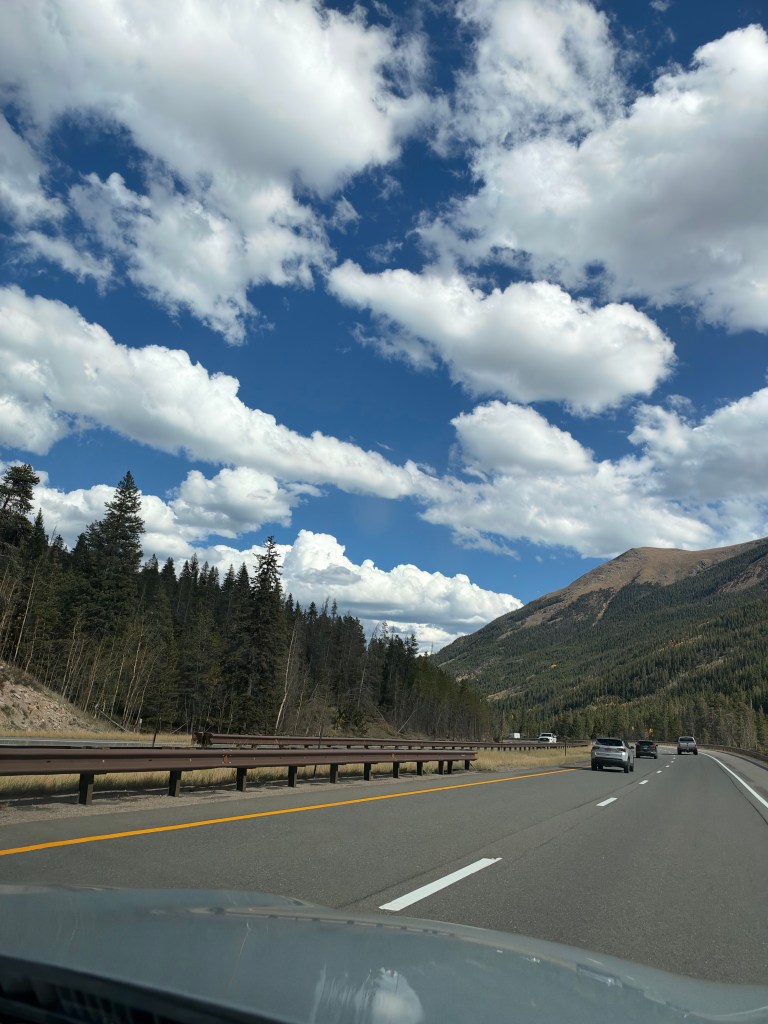
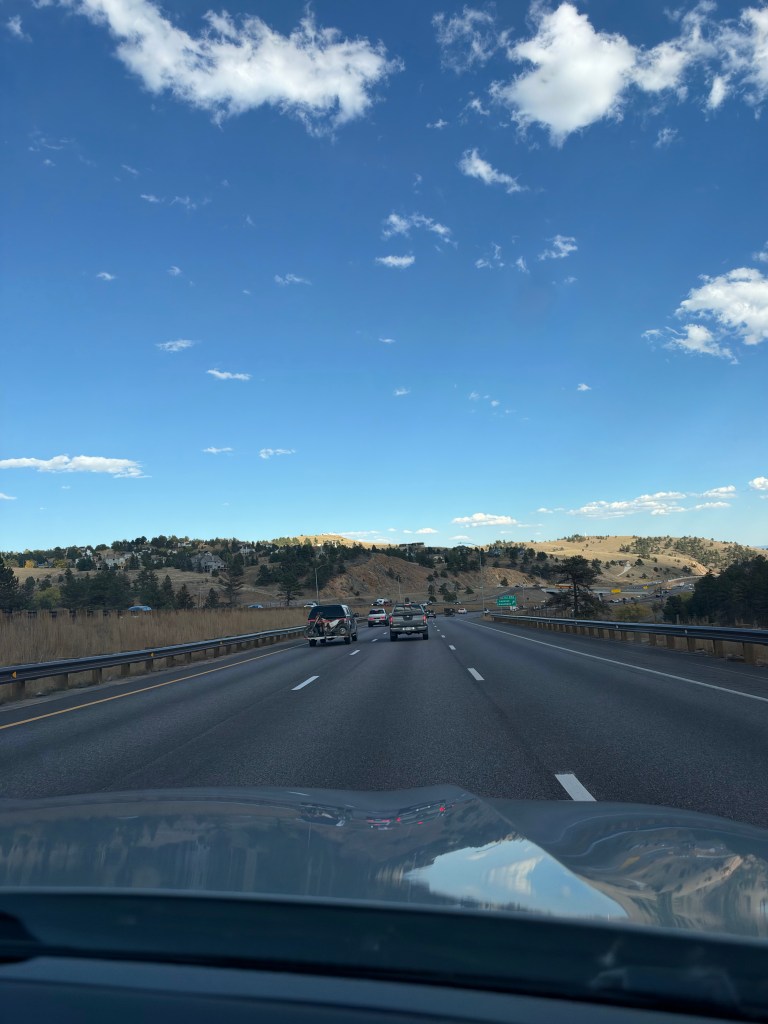
The change in temperature through the day was quite something too. We had started the morning bundled up at Maroon Bells, with the cold mountain air making jackets and layers essential. As we left the high country behind and descended toward Denver, it kept getting warmer. By the time we reached the Denver area, the jackets were off and it felt like we had travelled into a different season in the space of a few hours. From a chilly morning beneath snow-dusted peaks to a warm Colorado afternoon, it was another reminder of just how much the landscape and weather can change across this state.
By late afternoon we reached Brighton and checked into our final hotel of the trip.
Seven days into our Colorado fall road trip, today gave us one last collection of places that showed just how varied this state is.
This morning we were standing beside Maroon Lake beneath two 14,000-foot peaks.
A few hours later we were following the Colorado River through Glenwood Canyon.
Then came Vail, another climb into the Rockies, and a drive beneath the Continental Divide through the Eisenhower Tunnel.
Tonight we’re in Brighton, with the mountains behind us and our bags slowly being packed for the flight back to Dallas tomorrow!

