
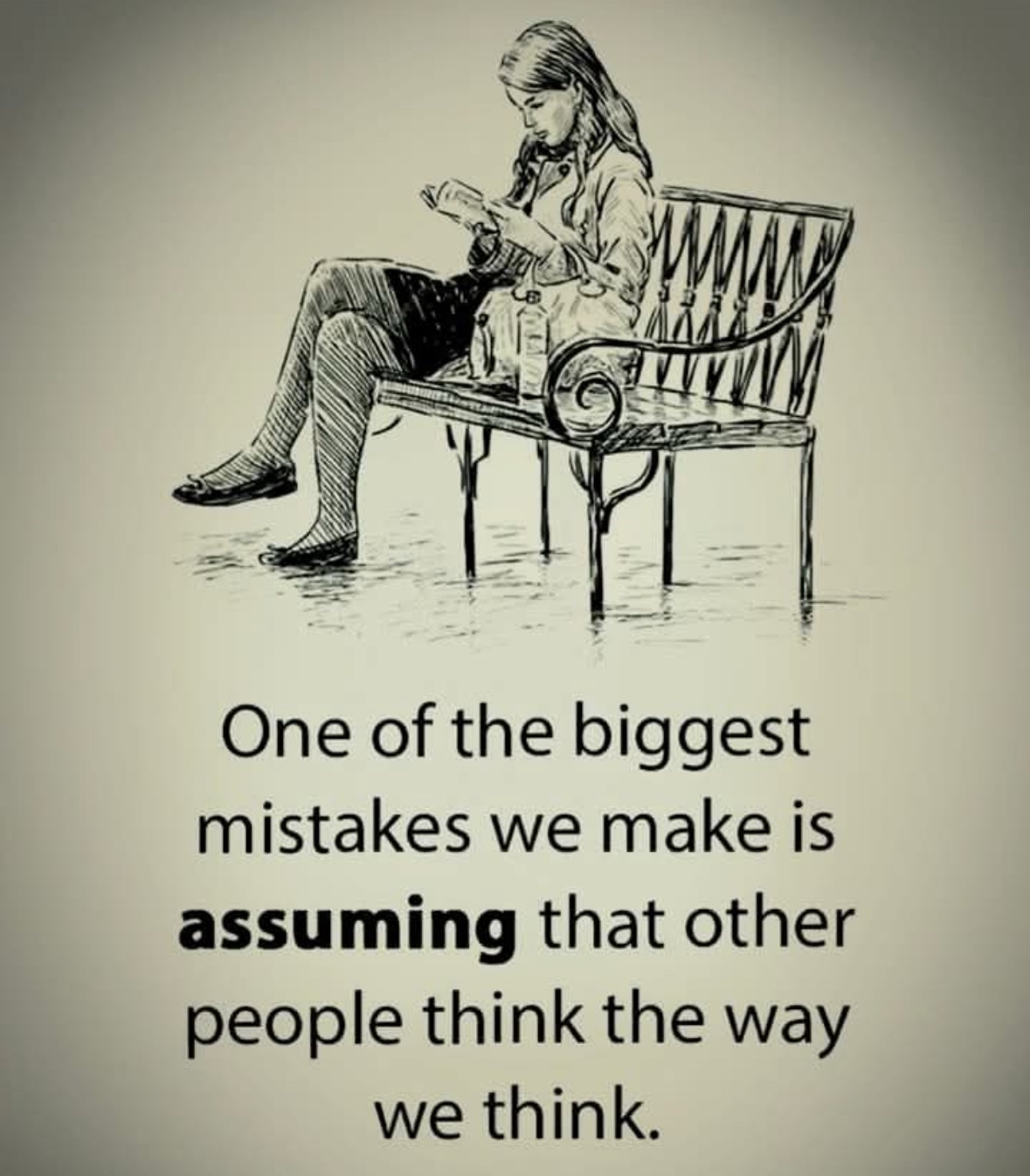
Have you ever been frustrated because someone didn’t “get” what you were saying? Or surprised when a colleague reacted differently than you expected? One of the biggest mistakes we make — in work, relationships, and everyday life — is assuming that other people think the way we think.
This assumption is subtle. It sneaks in when we expect others to share our values, interpret situations the same way, or make decisions using the same logic. But the truth is, every person brings a different lens to the world — shaped by their upbringing, experiences, personality, culture, and even mood in the moment.
Here’s why this matters.
1. It affects how we communicate.
When we assume someone understands our context or priorities, we might leave out critical details or misinterpret theirs. Clear communication means stepping into their shoes — not just explaining our thoughts, but considering how they might receive them.
2. It affects how we lead.
Great leaders don’t just give directions — they take time to understand what motivates their team, what worries them, and how they process feedback. Empathy isn’t just a soft skill; it’s the secret to influence and connection.
3. It affects our relationships.
Most arguments don’t come from malice — they come from mismatched assumptions. What seems obvious to you may not even be on someone else’s radar. The cure? Curiosity. Ask more questions. Listen more deeply. Clarify before you conclude.
The mindset shift
Instead of thinking, “Why would they do that? I would never…” try, “What might make sense from their perspective?” This small shift opens the door to better conversations, stronger teams, and less frustration.
So the next time you feel misunderstood, pause. Remember: others aren’t wrong — they’re just seeing the world differently.
And that’s not a flaw. It’s what makes human connection such a powerful and humbling adventure.
 Kenrick Vaz