
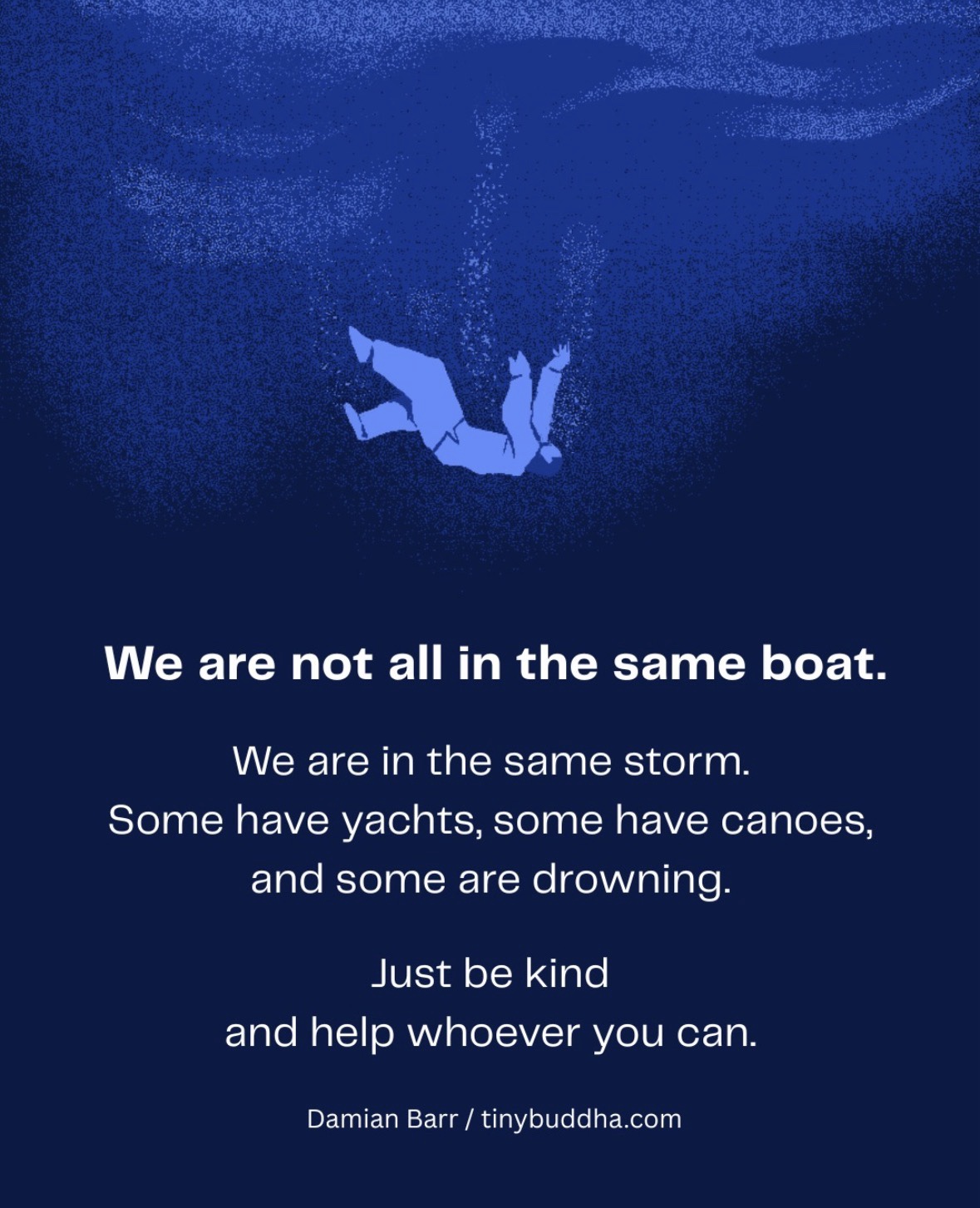
It’s comforting to say we’re all in the same boat. It makes hard seasons feel shared, equal, almost fair. But if we’re honest, that line falls apart pretty quickly.
We’re not in the same boat.
We’re in the same storm.
The rain is hitting all of us. The wind is loud for everyone. The uncertainty is real across the board. But what we’re standing on as we try to stay afloat looks very different.
Some people are riding it out on yachts. They have stability, savings, support systems, flexible jobs, good health, or simply fewer things going wrong at once. The storm is inconvenient, maybe even scary, but their boat is solid. They can wait it out, adjust the sails, trust that they’ll be okay.
Some are in canoes. Light, shaky, exposed. One wrong wave and things start tipping fast. They’re working hard just to keep balance. They might be doing “okay” on the outside, but it takes everything they have to stay upright. There’s no room for extra weight, no margin for error.
And then there are people who aren’t in a boat at all. They’re in the water. Tired. Panicking. Barely keeping their head above the surface. They don’t need motivation quotes or reminders to be grateful. They need help. They need air.
When we forget this, kindness is usually the first thing to go.
We compare someone’s reaction to our own and silently judge.
“Well, I handled it.”
“It wasn’t that bad for me.”
“They should be stronger by now.”
But strength isn’t just about character. It’s also about context. About resources. About what you’re carrying before the storm even hits.
Two people can face the same event and walk away with completely different scars. Not because one is weaker, but because one had more protection.
This is why empathy matters more than ever in hard seasons. Not the performative kind. The quiet kind. The kind that pauses before judging. The kind that asks, “What might their boat look like?”
Kindness doesn’t always mean big gestures. Often, it’s small and unremarkable.
Checking in without needing an update.
Offering help without attaching advice.
Listening without trying to fix.
Giving grace when someone is slower, quieter, sharper, or more withdrawn than usual.
And if you’re on a yacht, this isn’t about guilt. It’s about awareness. You didn’t build the storm, but you might have the ability to help someone else survive it. Sometimes that means throwing a rope. Sometimes it’s just not creating extra waves.
If you’re in a canoe, it’s okay to admit this is hard. You don’t need to minimize your struggle because others have it worse. You’re still in the storm. You’re still allowed to be tired.
And if you’re in the water, hear this clearly: struggling doesn’t mean you failed. It means the conditions are heavy. It means you’re human. Reach out where you can. Even floating for a moment counts.
We don’t need everyone to be heroes. We just need more people to be kind.
Because storms pass faster when we stop arguing about whose boat is better and start helping each other stay afloat.
 Kenrick Vaz