
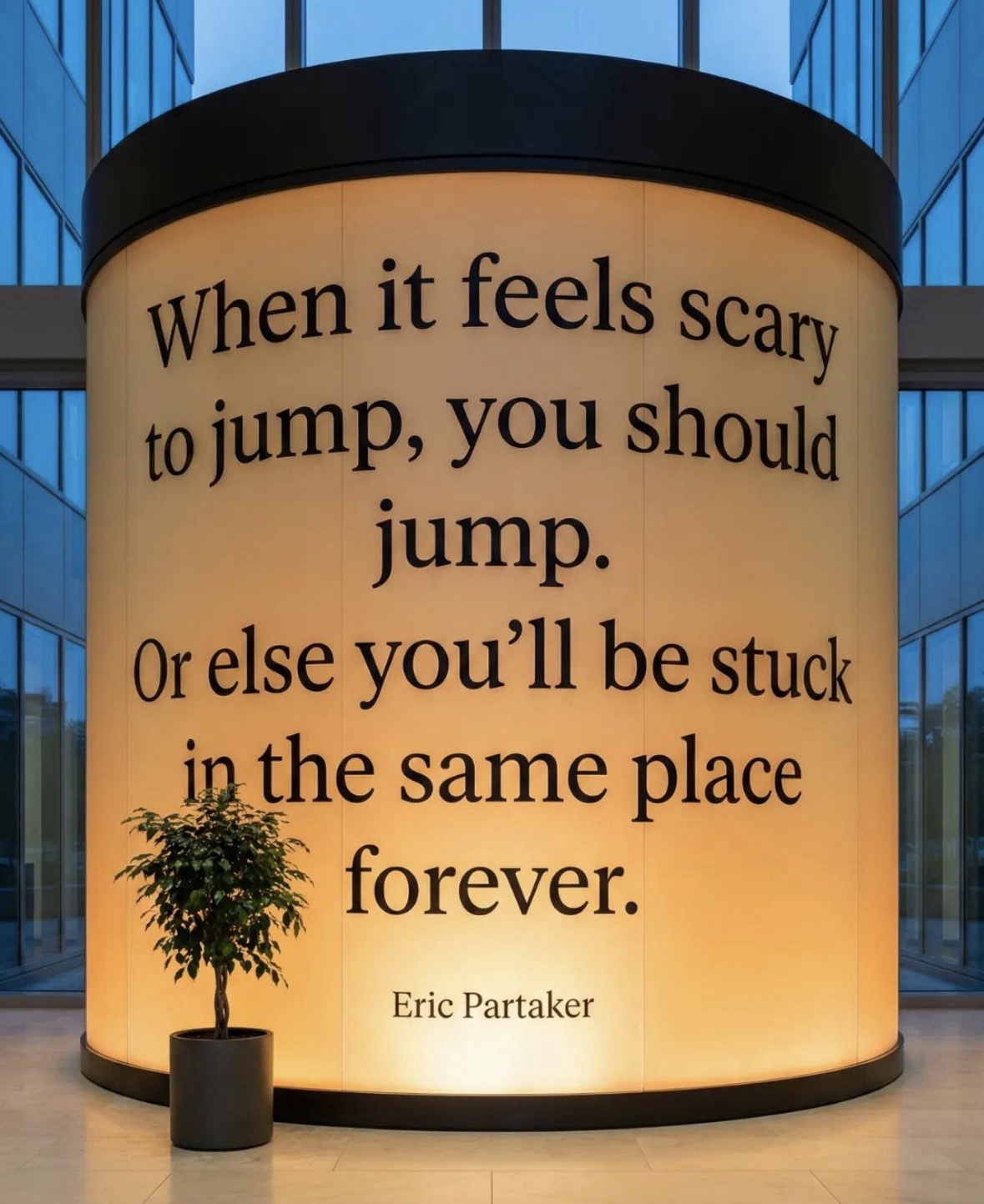
There’s a very specific kind of fear that shows up right before change. It’s not loud panic. It’s quieter than that. It’s the hesitation that says, What if this doesn’t work? The pause that keeps you standing at the edge, convincing yourself that waiting a little longer is the responsible thing to do.
Most of us know that feeling well.
It shows up when you’re thinking about leaving a job that no longer fits, even though it still pays the bills. When you’re considering having a hard conversation you’ve been rehearsing in your head for months. When you feel the pull to start something new—a project, a habit, a relationship, a version of yourself—but can’t quite bring yourself to move.
Fear has a way of dressing itself up as logic. It tells you you’re being practical. That you’re being patient. That now isn’t the right time. And sometimes, yes, waiting is wise. But other times, waiting is just fear wearing a very convincing disguise.
The truth is, the scariest jumps usually feel scary because they matter.
If it didn’t matter, there wouldn’t be fear. You wouldn’t feel that tightness in your chest or that loop of overthinking in your head. You’d just do it and move on. Fear often shows up at the doorway of growth, not because you’re about to fail, but because you’re about to change.
What rarely gets talked about is what happens when you don’t jump.
At first, nothing dramatic. Life keeps going. You tell yourself you’ll revisit the idea later. Weeks turn into months. Months turn into years. And slowly, that edge you once stood on starts to fade from view. Not because the opportunity disappeared, but because you adjusted to staying put.
Staying feels safe in the short term. It’s familiar. Predictable. You know how to survive here. But over time, staying comes with a quieter cost. Regret doesn’t usually hit all at once—it accumulates. It’s the nagging thought of I wonder what would have happened if I tried. It’s the low-grade dissatisfaction that creeps in when you realize you’re repeating the same year over and over, just with different dates on the calendar.
Jumping doesn’t guarantee success. That part is important to say out loud. You can jump and still stumble. You can jump and realize you misjudged something. You can jump and have to course-correct midair.
But here’s the difference: when you jump, you’re moving. When you don’t, you’re frozen.
Movement creates options. Momentum creates learning. Even a “failed” jump teaches you more than standing still ever will. You learn what you’re capable of. You learn what doesn’t work. You learn that you can survive uncertainty, which is a lesson that quietly changes everything.
Most people who look back on their lives don’t regret the jumps they took. They regret the ones they talked themselves out of. The call they didn’t make. The risk they delayed until it felt safe—and never did. The version of themselves they kept postponing.
Fear doesn’t go away before you jump. That’s another lie we often wait for. Confidence rarely arrives first. It usually shows up after action, not before it. You don’t jump because you’re fearless. You jump because you decide that staying stuck is scarier than trying.
And yes, your legs might shake. Your voice might crack. You might not feel ready. But readiness is overrated. Most meaningful things in life are done slightly unprepared.
Jumping doesn’t have to mean blowing up your entire life overnight. Sometimes it’s a small step that still feels terrifying because it breaks inertia. Sending the email. Signing up. Saying no. Saying yes. Admitting the truth. Starting before you feel qualified.
Those small jumps add up. They change how you see yourself. You stop identifying as someone who waits and start becoming someone who moves.
If you’re standing at an edge right now, feeling that familiar fear, pay attention. Ask yourself whether this fear is protecting you—or imprisoning you. Ask yourself what staying will cost you a year from now. Five years from now.
Because the real danger isn’t falling. It’s building a life so comfortable and constrained that you never leave the ground at all.
When it feels scary to jump, that’s often the sign.
That’s when you jump.
 Kenrick Vaz