
I was standing in line for coffee at the airport a few months ago, waiting for a delayed flight, when a colleague and I slipped into one of those conversations that start casually but end up sticking with you.
We had both just come out of an interesting workshop, with lots of moving pieces. The kind of environment where people sometimes feel like every step is being tracked, every message scrutinized, every hour accounted for.
At some point he said something that made me pause.
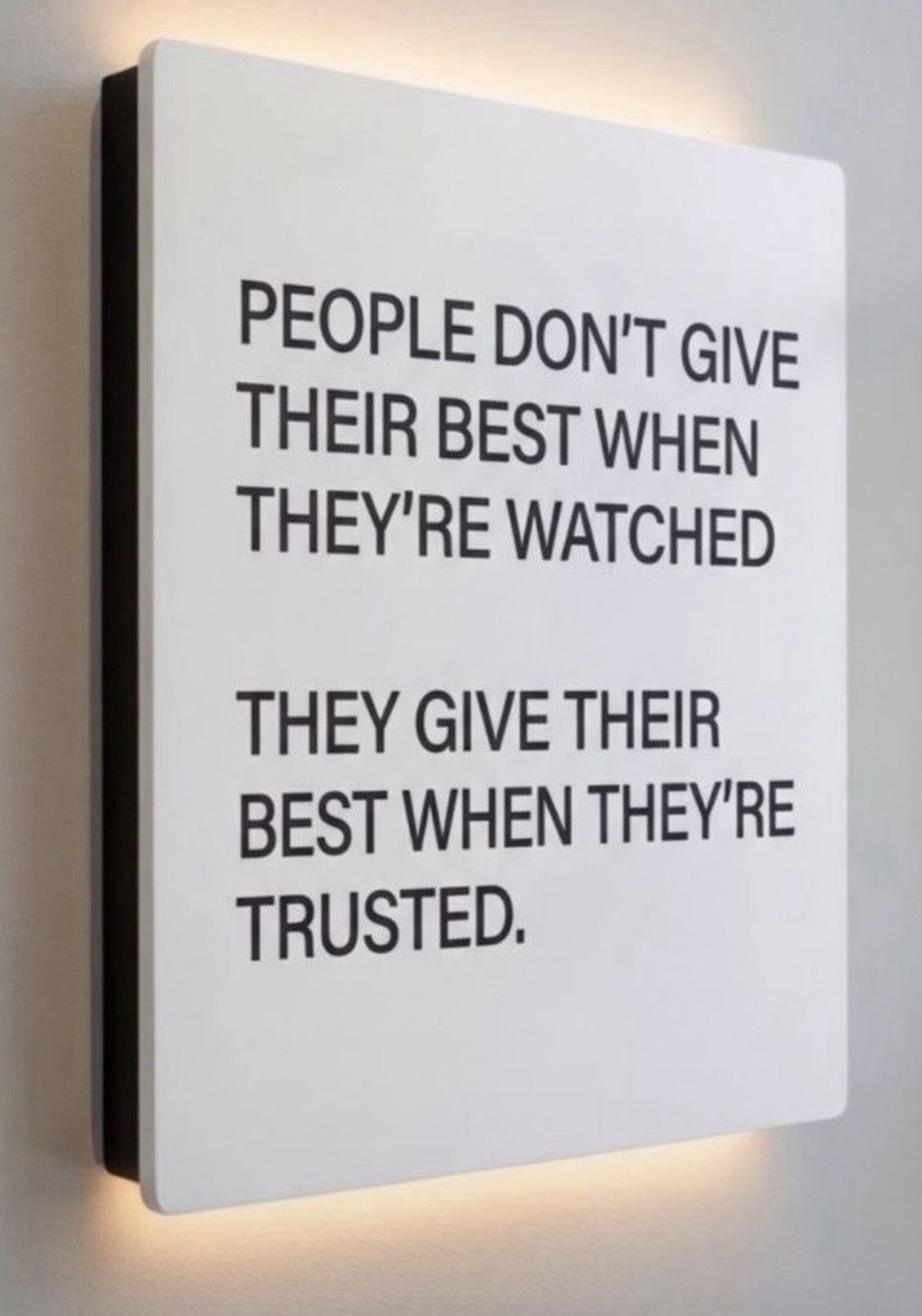
“People don’t really give their best when they’re being watched,” he said. “They give their best when they’re trusted.”
It was simple, but it hit hard because we’ve all seen both sides of that equation.
Most organizations believe that oversight drives performance. More dashboards. More updates. More check-ins. More approvals. The logic feels sound: if you keep an eye on things, nothing slips.
But human beings don’t work like machines on a production line.
When people feel constantly observed, something subtle happens. Their energy shifts from doing great work to avoiding mistakes. Creativity narrows. Initiative slows down. Instead of asking “How can I make this better?” the quiet question becomes “How do I make sure I don’t get blamed?”
You end up with compliance instead of ownership.
And compliance rarely produces anyone’s best work.
Trust changes the equation completely.
When someone trusts you with responsibility instead of hovering over every decision, it sends a very different signal. It says: I believe you can handle this. I believe you’ll figure it out.
That belief has a strange way of raising the bar people set for themselves.
Think about the best teams you’ve been part of. Chances are they weren’t defined by constant supervision. They were defined by clarity, accountability, and a shared sense that everyone was trusted to deliver.
Trust doesn’t mean the absence of expectations. In fact, it usually comes with higher ones.
But the difference is in the posture. Instead of standing over someone’s shoulder, you stand beside them. Instead of controlling every step, you create the conditions for people to take ownership of the outcome.
And ownership is where real performance lives.
I’ve seen incredibly talented people shrink in environments where every move was second-guessed. The same people, in a different team with a little breathing room, suddenly became problem solvers, innovators, and leaders.
Nothing about their capability changed. The environment did.
Trust also does something deeper than improve output. It gives people dignity in their work.
Most professionals don’t want to be managed like they’re trying to get away with something. They want to feel like contributors, not suspects.
When leaders trust their teams, the message is clear: You’re here because you’re capable. Now go do great work.
And surprisingly, that freedom often makes people more accountable, not less.
Because when someone places genuine trust in you, you don’t want to let them down.
Of course, trust isn’t blind optimism. It still needs clear goals, honest feedback, and course correction when things drift. But those things can exist without turning the workplace into a surveillance system.
Good leadership isn’t about watching people closely enough that mistakes never happen.
It’s about building a culture strong enough that people care about the work even when no one is watching.
Standing there in that airport line, coffee finally in hand, my colleague laughed and said something else that summed it up perfectly.
“If someone has to watch you all the time to get good work out of you, that’s not performance. That’s babysitting.”
And he’s right.
The best work rarely comes from pressure alone. It comes from people who feel trusted enough to think, create, and take responsibility for the outcome.
When trust walks into a room, something interesting happens.
People start showing up with their best.
 Kenrick Vaz