
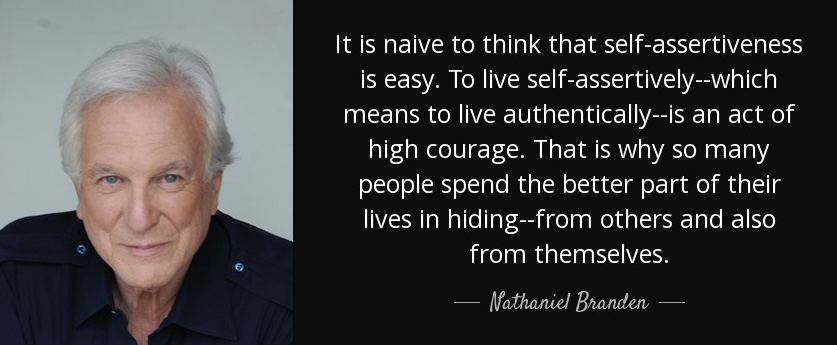
Assertiveness is a crucial trait that plays a significant role in both personal and professional aspects of life. It involves expressing one’s thoughts, feelings, and needs openly and honestly while respecting the rights and opinions of others.
This is going to sound harsh:
If you don’t find your assertive voice, you will be walked over. It will affect your confidence. And this will affect the trajectory of your life.
Recently I came across Jefferson’s Fisher‘s profile on Instagram.
He suggests 3 simple changes you can make right now to become more assertive:
1: Stop over-apologizing.
That’s where you say “I’m sorry” in every other sentence. It’s time to drop that habit.
Instead of saying, “I’m sorry I’m late,” try “Thank you for waiting for me.” Replace “I’m sorry to bother you,” with “I appreciate your time.”
If it is not an apology, do not apologize for it. It’s a submissive position.
2: Stop undervaluing what you have to say.
Your thoughts are important. Never put yourself down before you get out your sentence.
Don’t start with, “This might be a dumb question but…”
Instead, use phrases like, “Can I build upon that?” or “Can I take that further?” This shows you’re engaging confidently with the conversation.
3: “No” is a complete sentence.
If you have a boundary, stick to it.
People might not always like it, but they will respect you for being clear about your limits.
Use these 3 tips and you’ll find your voice growing stronger each day. Assertiveness is a key trait that enhances communication, self-esteem, relationships, and overall well-being. By fostering clear and respectful dialogue, assertive individuals navigate life’s challenges more effectively and build stronger, more fulfilling connections with others. Developing assertiveness is a worthwhile investment that can lead to numerous personal and professional benefits.
 Kenrick Vaz