
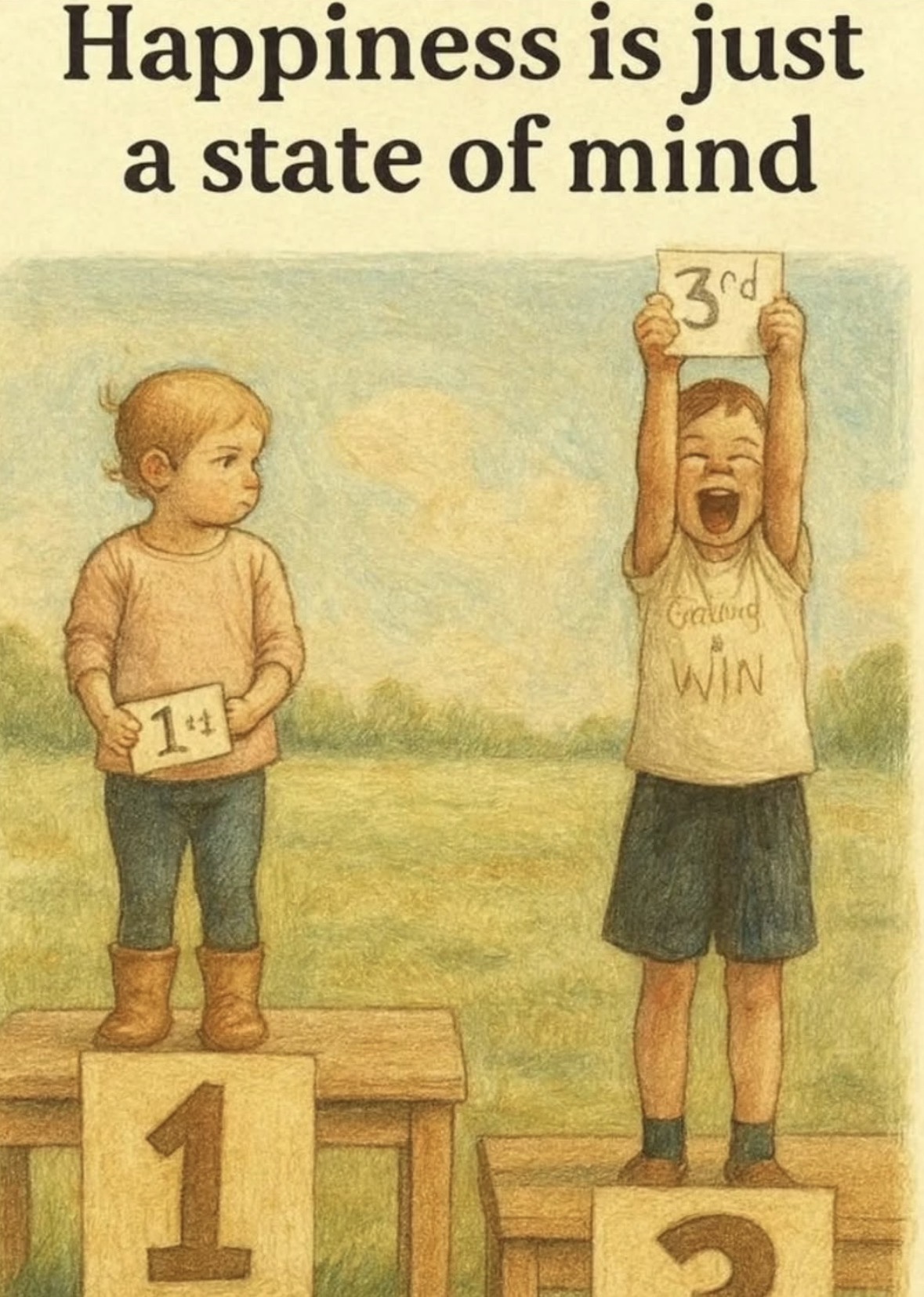
“Happiness is just a state of mind” is one of those lines people throw around so casually that it can almost sound dismissive. Like if you’re struggling, overthinking, tired, or carrying something heavy, all you need to do is change your mindset and suddenly life will feel lighter. But the truth is, while there’s something deeply real in that phrase, it’s also a lot more layered than it sounds.
Happiness isn’t always found in the big things people chase. It’s not automatically waiting for you at the next promotion, the next relationship, the bigger house, the dream trip, or the moment life finally starts looking the way you imagined it would. We spend so much of our lives attaching happiness to conditions. I’ll be happy when this works out. I’ll feel better when I get there. I’ll finally relax when everything settles down. But life has a funny way of never fully “settling down.”
There’s always something. A new responsibility. A new worry. A new pressure. Even in the moments we prayed for, there can still be stress, grief, uncertainty, and exhaustion. That’s why so many people reach milestones they thought would change everything, only to realize they still feel like themselves. Still human. Still carrying the same thoughts, the same patterns, the same inner noise.
That’s where the phrase starts to make sense.
Happiness really is, in many ways, a state of mind. Not because pain isn’t real. Not because circumstances don’t matter. And definitely not because people can just “think positive” their way out of hard seasons. But because the quality of your life is often shaped less by what’s happening around you and more by the way you’re learning to hold what’s happening within you.
Two people can live through the same kind of day and walk away with completely different experiences of it. One sees inconvenience, frustration, and everything that went wrong. The other notices the small win, the lesson, the laugh, the little mercy tucked inside the mess. Same day. Different mind.
That doesn’t mean one person is naive and the other is realistic. It just means perspective is powerful.
A lot of us have been taught to treat happiness like a reward. Something earned after enough hard work, enough healing, enough success, enough proving. But maybe happiness isn’t supposed to be something you chase until you collapse. Maybe it’s something you practice. Something you notice. Something you make room for, even before life becomes ideal.
Because if happiness depends entirely on perfect conditions, most of us will miss it.
The hard truth is, there will always be reasons to be unhappy. Bills to pay. People to disappoint. Delays. Losses. Misunderstandings. Loneliness. Bad news. Fatigue. There will always be a version of life that feels unfinished. If you wait for everything to line up before you allow yourself to feel peace, you may end up spending years postponing joy.
And joy hates being postponed.
Sometimes happiness is loud. It’s celebration, laughter, music in the car, dinner with people you love, a prayer answered, a dream unfolding. But sometimes happiness is almost invisible. It’s the quiet exhale after a hard week. It’s your child reaching for your hand. It’s the sunlight hitting your room just right. It’s coffee while the house is still asleep. It’s getting through something you thought would break you and realizing you’re still here.
That kind of happiness matters too.
Maybe even more.
Because real happiness isn’t always a high. It isn’t constant excitement or a life with no problems. Sometimes it’s just inner steadiness. A groundedness. A soft ability to be present without needing every moment to be extraordinary. It’s being able to sit in an ordinary Tuesday and still find something beautiful about being alive.
That’s a mindset.
And mindsets aren’t magic. They’re built.
They’re built in the way you talk to yourself when things go wrong. In the stories you repeat in your head. In whether you choose gratitude without denying grief. In whether you keep feeding bitterness or start making room for grace. In whether you let one bad moment define your whole day. In whether you keep looking at your life through the lens of what’s missing, or begin honoring what’s already here.
That doesn’t happen overnight. It takes intention. It takes awareness. Sometimes it takes unlearning. Sometimes it takes healing old wounds that taught you happiness was unsafe, temporary, or always out of reach. Sometimes it means admitting you’ve been so focused on surviving that you forgot how to notice beauty.
But you can relearn.
You can train your mind to stop racing past the good.
You can teach your heart to stop assuming joy has to be huge to be real.
You can start becoming someone who doesn’t need every external thing to cooperate before allowing themselves a moment of peace.
That’s the freedom in this idea.
If happiness is just a state of mind, then it isn’t always locked behind circumstance. It isn’t owned by the lucky, the wealthy, the successful, or the people whose lives look polished from the outside. It becomes available in smaller, quieter, more human ways. It becomes something you can return to, even in imperfect seasons.
Not every day will feel happy. Some days will feel heavy, unfair, or deeply exhausting. Some seasons are meant for endurance, not performance. But even then, the state of your mind matters. The way you speak to yourself matters. The way you frame your life matters. The things you choose to notice matter.
Maybe happiness isn’t about forcing a smile or pretending everything is okay.
Maybe it’s about learning that peace can coexist with chaos.
That gratitude can coexist with longing.
That hope can coexist with pain.
And maybe the most beautiful part is this: happiness doesn’t always have to be found. Sometimes, it’s simply chosen.
 Kenrick Vaz