
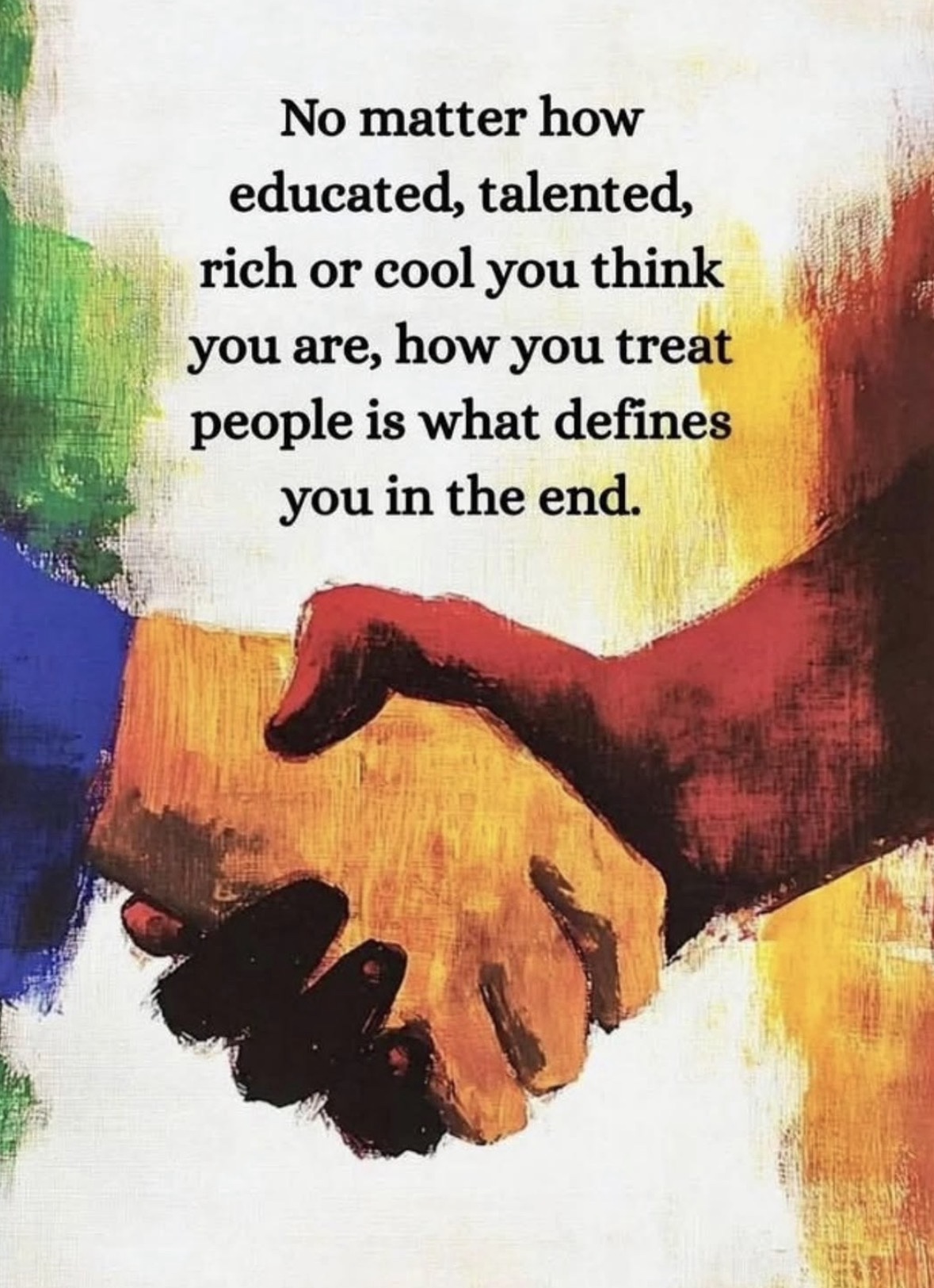
You can stack degrees, build a résumé that reads like a highlight reel, make more money than you ever thought you would, and still miss the one thing people will remember about you.
It’s not your title. It’s not your intelligence. It’s not even your success.
It’s how you treated them.
That’s the quiet truth most of us learn a little late. Because the world trains us to chase visible wins. Promotions. Recognition. Influence. We learn how to present, how to negotiate, how to lead meetings. But no one really pulls you aside and says, “None of this will matter if people feel small around you.”
And yet, that’s exactly what ends up defining you.
Think about the people you genuinely respect. Not the ones you admire from a distance, but the ones you’ve actually worked with, lived with, interacted with. Chances are, what stands out isn’t how sharp they were—it’s how they made people feel. The leader who listened when they didn’t have to. The colleague who gave credit instead of taking it. The person who stayed kind even when things got hard.
Because kindness, respect, and empathy are harder to fake than competence. And they leave a deeper imprint.
You see this play out clearly in corporate life.
On paper, companies like to believe people stay for compensation, perks, and brand value. And sure, those things matter. But if you’ve spent any real time inside organizations, you know that’s not the full story.
People don’t quit companies. They quit managers.
They stay because someone makes them feel valued. They leave because someone makes them feel invisible.
You’ll find teams hitting impossible targets not just because they’re skilled, but because they trust their manager. Because their manager shows up for them. Because feedback is honest but not demeaning. Because mistakes are treated as learning moments instead of public takedowns.
And on the flip side, you’ll see incredibly talented teams fall apart under leaders who might be brilliant on paper but lack basic respect for the people working under them. Micromanagement, dismissiveness, lack of recognition—it doesn’t take long before motivation drains out of the room.
It’s not complicated. People remember how you treat them when things are going well. But they never forget how you treat them when things are not.
That’s where your real character shows up.
It’s easy to be gracious when you’re winning. It’s easy to be kind when there’s no pressure. But how do you respond when deadlines are slipping, when someone makes a mistake, when you’re frustrated, when you’re tired?
Do you default to respect, or do you let status take over?
Because here’s the thing—no amount of talent cancels out poor behavior. In fact, the more capable you are, the more noticeable it becomes when you treat people poorly. It doesn’t make you look powerful. It just makes people tolerate you instead of respect you.
And tolerance has an expiry date.
The irony is, the people who understand this tend to go further anyway. Not because they’re trying to be liked, but because they build environments where others can actually do their best work. They create psychological safety without even using the term. They earn trust without demanding it.
And trust scales in ways talent alone never will.
This isn’t about being soft or avoiding tough conversations. The best leaders still hold high standards. They still push people. They still call out issues. But they do it without stripping people of dignity. They separate performance from personal worth. They understand that you can challenge someone without disrespecting them.
That balance is rare. And when people experience it, they don’t forget it.
At the end of the day, your résumé might open doors. Your skills might get you in the room. But your behavior determines whether people want to stay in that room with you.
Long after titles change and roles evolve, what sticks is simpler.
Did people feel respected around you?
Did they feel heard?
Did they feel like they mattered?
Because when everything else fades—and it will—that’s the part of your story people carry forward.
Not what you achieved.
But who you were to them while you were achieving it.

