
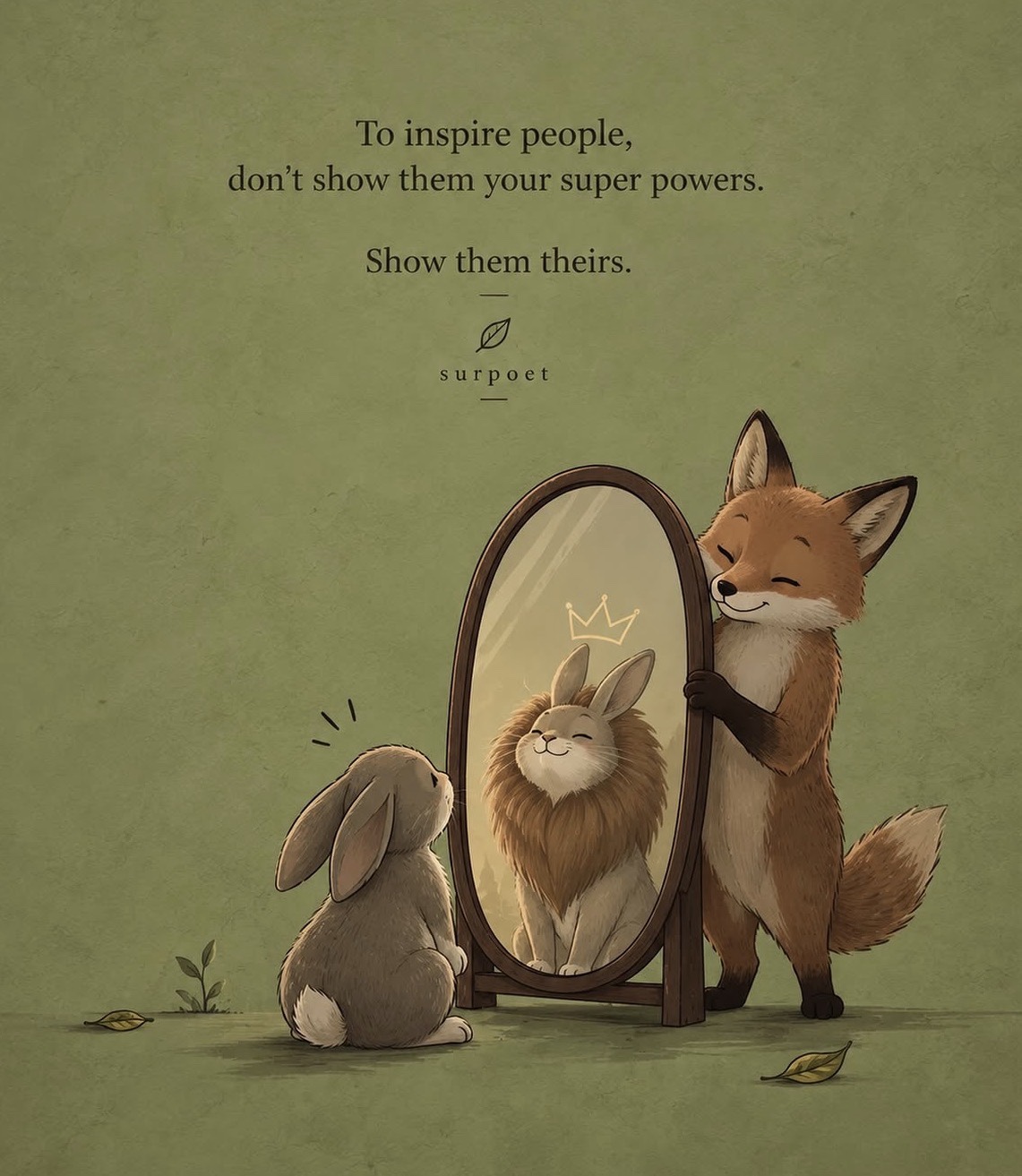
The best kind of inspiration does not make people stare at you in awe. It makes them look at themselves differently.
There is a big difference.
We often think inspiring someone means showing them what is possible through our own achievements. We tell the story of how hard we worked, how far we came, what we survived, what we built. There is value in that. Seeing someone do something difficult can give us hope.
But sometimes it also creates distance.
You see someone at the top of their game and think, “Good for them. I could never do that.”
Their success becomes something to admire instead of something that moves you.
The people who have inspired me most have done something else. They made me believe I had more in me.
They saw something before I did.
Maybe it was a manager who trusted you with a responsibility you felt unprepared for. A teacher who pushed you because they knew you could handle more. A friend who listened to your idea and said, “Why wouldn’t you be able to do that?”
Sometimes one sentence is enough.
Think about the moments when someone believed in you before you had enough evidence to believe in yourself. You probably remember them clearly. You remember where you were. You remember what they said. You may even remember the expression on their face.
That is how powerful it can be when someone sees potential in us.
We spend a lot of time trying to prove what we can do. At work, we want people to see our experience. On social media, we share the wins. In conversations, we talk about what we know. There is nothing strange about that. We all want to be respected.
But influence works differently.
Imagine two leaders.
One walks into every room determined to be the smartest person there. They have the answers. They solve the difficult problems. Everyone knows how capable they are.
Another leader walks into the same room and starts asking questions.
“What do you think?”
“How would you solve this?”
“What are we missing?”
Then they listen.
Over time, people around that second leader start speaking up more. Someone who rarely shared an opinion begins challenging ideas. A junior employee volunteers for something bigger. A person who once waited for instructions starts making decisions.
That leader has done more than solve a problem. They have helped someone discover what they are capable of.
Parents do this too.
A child is trying to build something and keeps getting it wrong. It is tempting to reach over and fix it. We know how. It would take ten seconds.
Sometimes the better thing is to sit beside them and let them struggle for another minute.
Then comes that little moment when they figure it out.
“Look! I did it!”
Their face changes.
That feeling matters more than the perfectly built tower.
The same thing happens with adults, except we have become much better at hiding our uncertainty. We still wonder whether we are good enough for the promotion, ready for the opportunity, capable of starting over, smart enough to learn something new.
A person who reminds us of our own ability can change the direction we take.
That is why encouragement needs to be specific.
“You’re amazing” feels good for a moment.
“I saw how you handled that conversation. You stayed calm, listened carefully, and found a solution when everyone else was stuck” gives someone something they can recognize in themselves.
Now they know what you saw.
They can use it again.
There is something generous about this kind of influence. You do not need to be the hero in someone else’s story. You can simply point out the strength they have stopped noticing.
Tell someone they ask great questions.
Tell the quiet person in the meeting that their idea deserves more attention.
Tell the person doubting themselves exactly what you have seen them handle before.
Give someone a chance before they feel completely ready.
Then get out of the way.
Anyone can impress a room by showing people what they can do.
The people we remember are often the ones who looked at us and said, “You can do this too.”

