
There’s a line I came across recently that stayed with me:
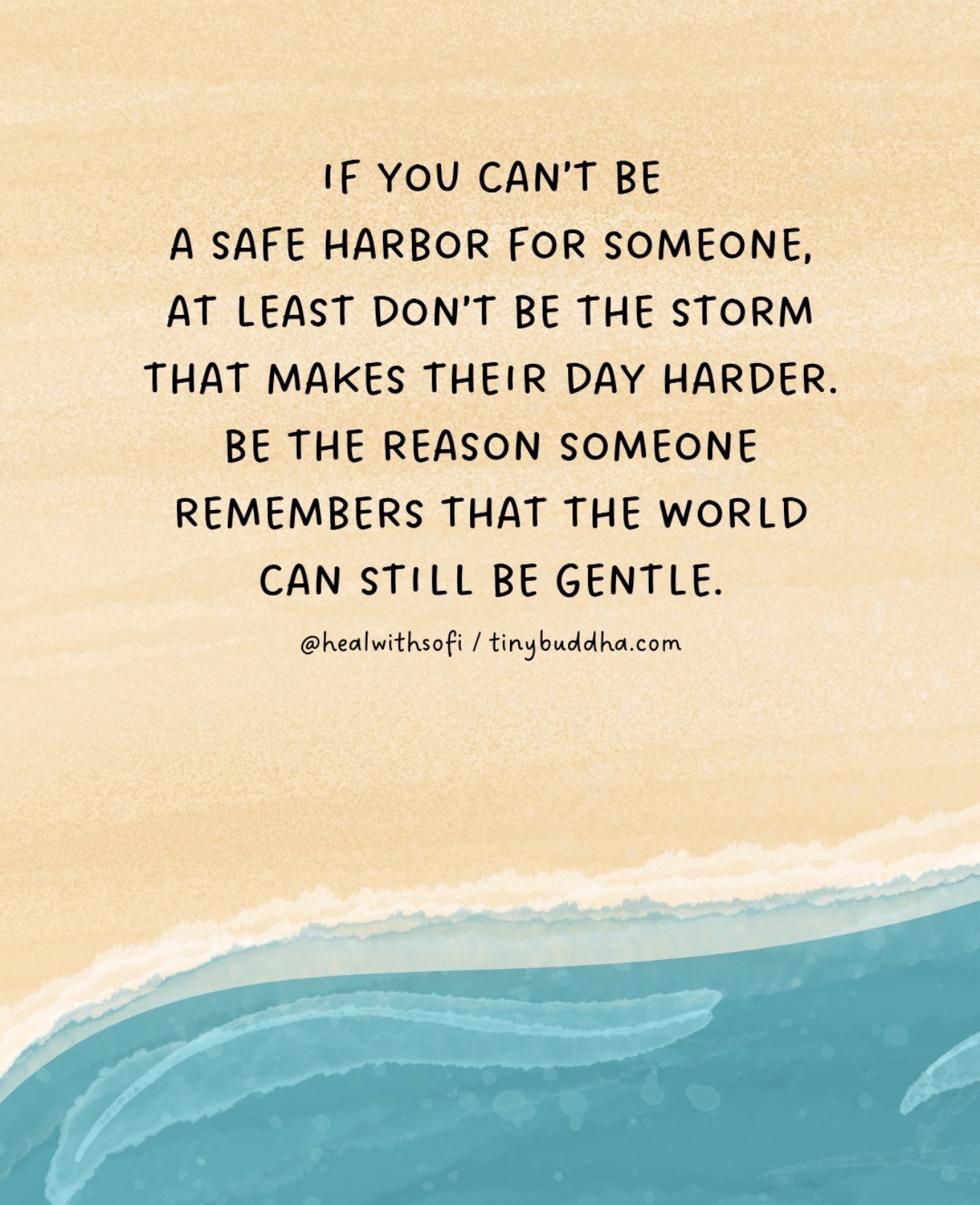
“If you can’t be a safe harbor for someone, at least don’t be the storm that makes their day harder. Be the reason someone remembers that the world can still be gentle.”
It sounds simple. Living it takes a little more work.
We rarely know what someone is carrying when we meet them.
The person taking too long at the checkout counter may have spent the morning at a hospital. The colleague who seems distracted could be dealing with something at home. Someone who hasn’t replied to your message might be exhausted and trying to get through the day. The person who snapped at you may have reached the end of a very difficult week.
We see a few seconds of someone’s life and often build the rest of the story ourselves.
Sometimes we decide they’re rude. Lazy. Arrogant. Careless. Difficult.
Maybe they are having a bad day.
That doesn’t mean we have to accept poor behavior or let people walk over us. Boundaries matter. You can disagree with someone. You can say no. You can call out something that isn’t right.
You can do all of that without making another person feel small.
I think we underestimate how much damage can happen in ordinary moments.
A sarcastic comment in a meeting. An impatient response to someone asking a question. A joke at another person’s expense. Raising your voice because you’re frustrated. Ignoring someone because acknowledging them feels inconvenient.
Five minutes later, you’ve moved on.
They might carry it for the rest of the day.
The opposite works too.
Someone remembers when you made space for them to speak. They remember the message you sent when they were struggling. They remember that you listened without immediately trying to fix everything. They remember when everyone else was impatient and you gave them another minute.
Most kindness looks ordinary while it is happening.
Holding a door. Saying thank you and meaning it. Asking the quiet person in the room what they think. Giving someone credit for their work. Letting a car merge. Speaking respectfully to the waiter when the order is wrong. Calling your parents. Checking on a friend who has gone quiet.
None of these things will make the news.
They still matter.
As I get older, I find myself thinking more about the experience people have after spending time with me.
Did they feel heard?
Did I make their day slightly easier?
Did I add unnecessary weight to something they were already carrying?
That last question can be uncomfortable.
We all have our own storms. Stress follows us home from work. Family pressures build up. Plans fall apart. Money gets tight. Sleep disappears. Someone says the wrong thing at exactly the wrong moment.
It becomes easy to pass that frustration along.
A bad meeting becomes an impatient conversation at home. Traffic turns into anger at a stranger. A difficult morning changes the way we speak to someone who had nothing to do with it.
The storm travels.
Stopping it somewhere is a choice.
Sometimes that means staying quiet for ten seconds before responding. Sometimes it means apologizing quickly instead of spending an hour defending what you said. Sometimes it means deciding that being right is less important than how you treat the person standing in front of you.
And sometimes being a safe harbor is much simpler.
Sit with someone.
Listen.
Send the message.
Make the call.
Give them another chance.
Tell them they did a good job.
Ask, “Are you okay?” and stay long enough to hear the real answer.
There is plenty in this world that can make people harder, more suspicious and more guarded.
So when you get the chance to make someone’s day a little lighter, take it.
And on the days when you don’t have enough in you to be someone’s safe harbor, make sure you aren’t the storm.

