
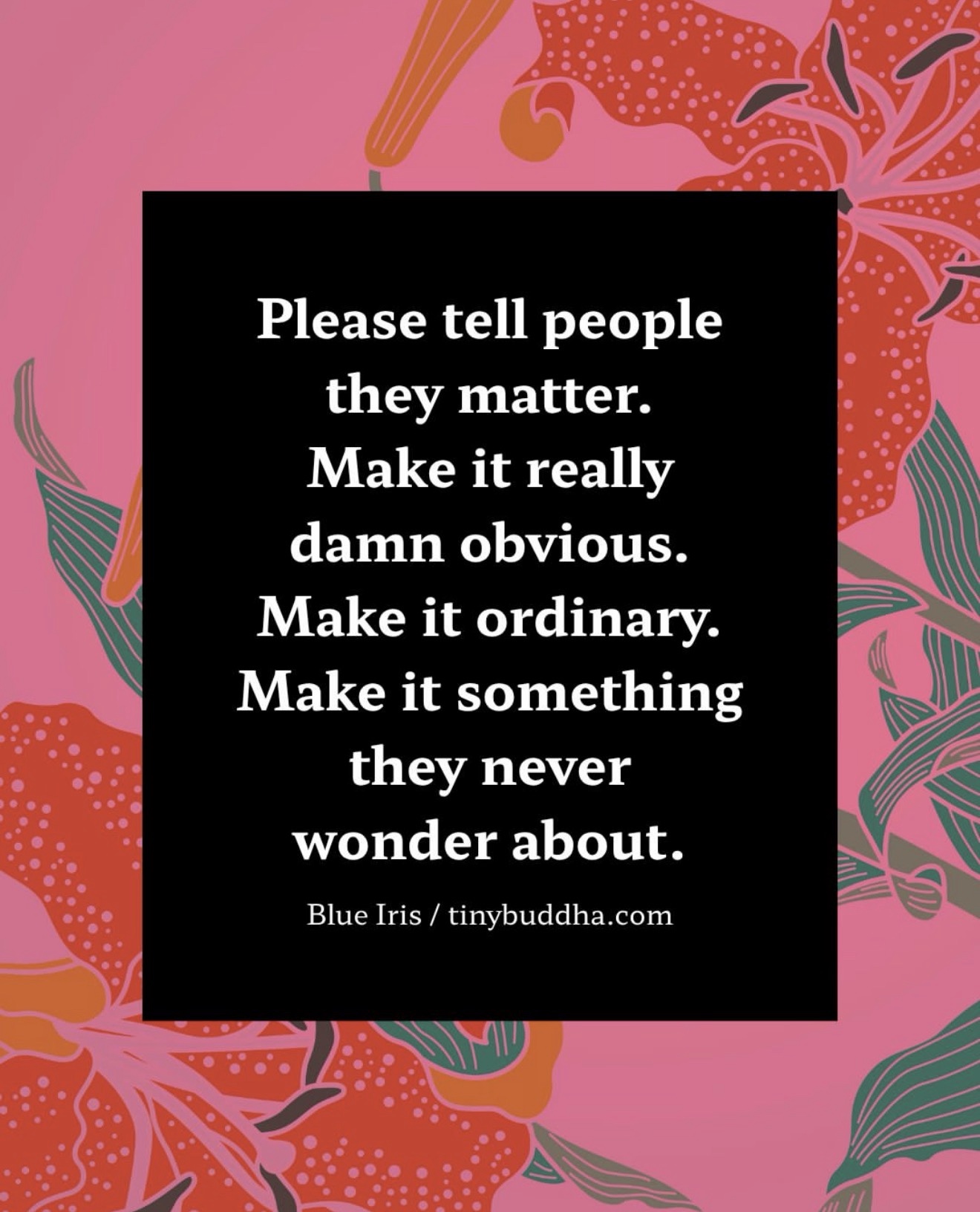
Say it clearly enough that they never have to study your behaviour for clues.
We often assume people know how we feel about them. Of course my parents know I love them. My partner knows how much I appreciate them. My friends know I value them. The people I work with know I respect what they bring to the table.
Do they?
People cannot hear the conversations we have about them in our heads. They do not know that we smiled when their name appeared on our phone. They never heard us tell someone else how talented they are. They cannot see the gratitude we feel when they quietly make our day easier.
They only know what reaches them.
That is why appreciation needs a voice.
Tell your friend, “I’m glad you’re in my life.”
Tell your parents you appreciate something specific they did years ago.
Tell your colleague, “You handled that brilliantly.”
Tell your partner, “Life is better with you here.”
Tell your child how much you love hearing their stories, even when the story takes twelve minutes and somehow involves a dinosaur, a biscuit and something that happened three Tuesdays ago.
Make it ordinary.
We tend to save meaningful words for meaningful occasions. Birthdays get long messages. Farewells get emotional speeches. Anniversaries get carefully chosen cards. Someone leaves a job and suddenly everyone has paragraphs to write about how much they contributed.
Why wait?
Send the message on a random Wednesday afternoon.
Say thank you for the coffee.
Tell someone you noticed that they checked on you.
Tell a teammate their idea changed the direction of the conversation.
When someone makes you laugh on a difficult day, tell them you needed that.
When a friend always remembers to call, tell them you notice.
There is something powerful about appreciation that arrives without an occasion attached to it. There is no social script demanding it. Nobody expects a heartfelt message at 2:17 on an ordinary Tuesday. That is exactly why it lands differently.
“I was just thinking about you. I’m grateful we’re friends.”
Imagine receiving that.
Most of us carry questions about where we stand with people. We wonder whether we are becoming annoying. Whether we are still wanted in the group. Whether our work is good enough. Whether anyone notices how much effort we are putting in. Whether someone would miss us if we stopped showing up.
Sometimes those questions grow in places where a few simple words could have settled them.
We can become strangely stingy with affection. We feel plenty and express a fraction of it.
Maybe we worry about sounding sentimental. Maybe our families never spoke that way growing up. Maybe we think actions should be enough.
Words are actions too.
A message takes thirty seconds to send and can stay with someone for years.
I still remember compliments people gave me long ago. Small ones. A teacher who noticed something I was good at. A colleague who said they trusted my judgment. A friend who told me they felt comfortable talking to me. They probably forgot saying those things within a day.
I didn’t.
That is the strange mathematics of kindness. Something can cost the giver almost nothing and become precious to the person receiving it.
Specific words matter most.
“You’re amazing” feels good.
“I love how you always make sure nobody at the table feels left out” tells someone they have been seen.
“Great job” is nice.
“The way you stayed calm and helped everyone through that mess made a difference” gives someone something real to hold onto.
Being seen is often hidden inside tiny details.
You remembered.
You noticed.
You listened.
You showed up.
You made this easier.
I feel safe talking to you.
I trust you.
I’m proud of you.
I’m glad you’re here.
Those sentences are small enough to fit into everyday life.
Use them.
Especially with the people closest to you.
Familiarity can make appreciation quieter. Someone becomes such a permanent part of our day that we stop saying the things we once said easily. Gratitude turns into assumption. Love becomes logistics. Conversations become groceries, calendars, school pickups, bills and what time everyone needs to leave tomorrow morning.
Then one evening, say it anyway.
“Hey, I know I don’t say this enough, but I love doing life with you.”
No occasion. No speech. No reason required.
There are people around us walking through days we know very little about. Someone may be carrying rejection, loneliness, fear or a private disappointment while looking completely fine across the table.
Your words will not solve everything they are carrying.
They can give them one thing they do not have to question.
Whether they matter to you.
Make that part really damn obvious.

