
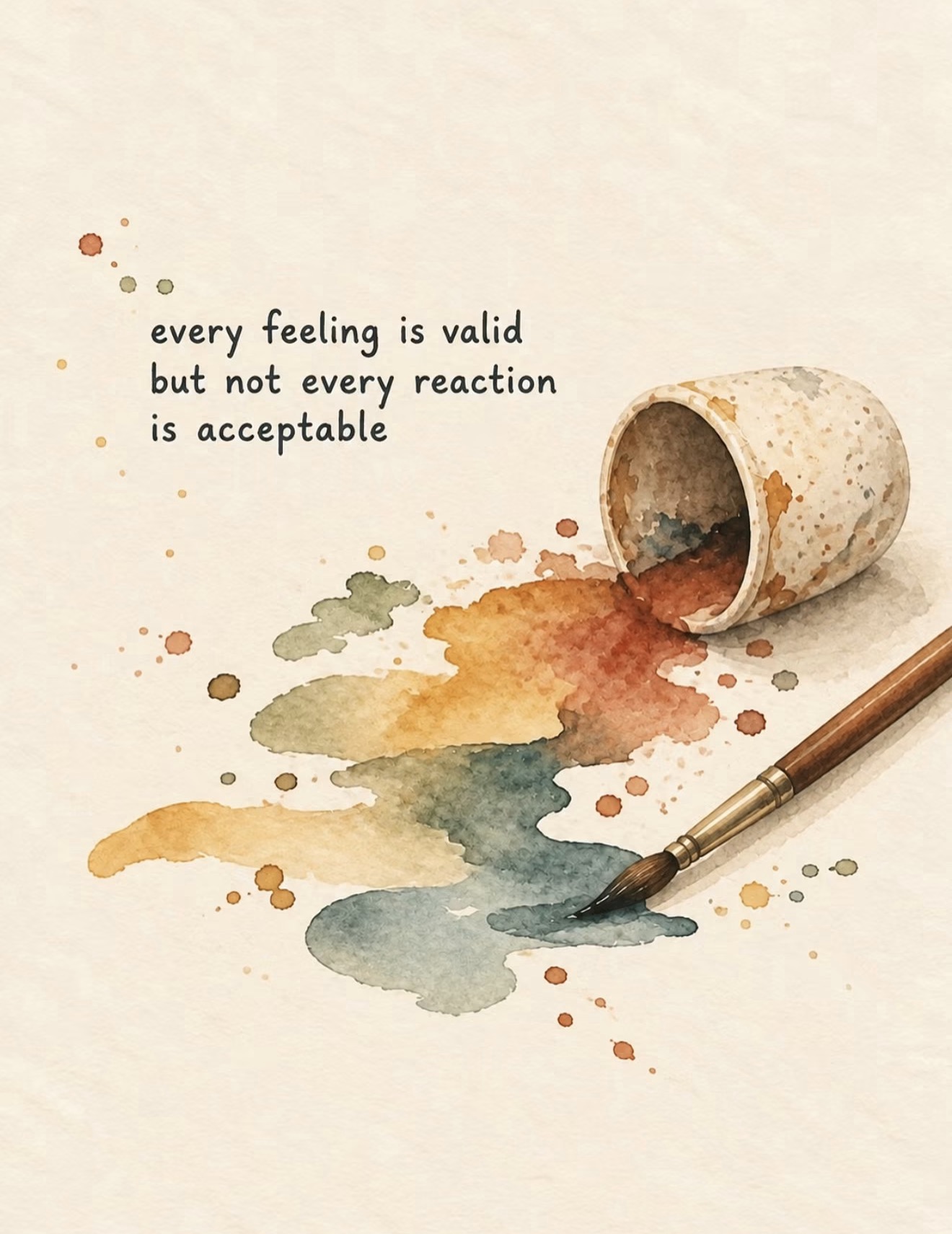
You can be angry without being cruel. You can be hurt without hurting someone else. You can feel jealous, disappointed, frustrated, or completely overwhelmed and still have a responsibility for what you do next.
That’s something we often forget when emotions run high.
We’ve become quite comfortable telling people that every feeling is valid. And I agree with that. Nobody should have to apologise for feeling sad, anxious, angry, or insecure. Emotions are part of being human. They show up when something matters to us, when our expectations aren’t met, or when life takes a turn we weren’t prepared for.
But somewhere along the way, we’ve started treating our feelings as permission slips for our behaviour.
Someone upsets us, so we snap at them. We feel ignored, so we give them the silent treatment. We’re having a terrible day, so everyone around us gets a taste of it. And when someone calls us out, we explain that we were stressed, frustrated, or going through something difficult.
Those explanations might be completely true.
They still leave us responsible for how we treated someone.
Think about the last time you had a difficult day at work. Maybe a meeting went badly, someone questioned your decisions, or you spent hours fixing a problem that should have been avoided. By the time you got home, you were exhausted. Then someone asked you a perfectly ordinary question, and you responded with irritation.
The frustration was understandable. The person receiving it had nothing to do with what happened at work.
And yet, this happens all the time.
We carry emotions from one situation into another, often without noticing. A disagreement with a colleague becomes impatience with our spouse. Financial worries turn into arguments over small purchases. Feeling unappreciated makes us withdraw from people who care about us.
Sometimes the people closest to us end up dealing with the worst versions of us because we assume they’ll understand.
And perhaps they will.
But understanding someone shouldn’t mean having to absorb their anger every time life gets difficult.
I think emotional maturity begins when we learn to recognise the space between what we feel and what we choose to do about it.
That space can be incredibly small.
Sometimes it’s the few seconds before sending an angry message. Sometimes it’s walking away from an argument because you know you’re about to say something you’ll regret. Other times it’s admitting that you’re upset and need a little time before continuing a conversation.
None of this comes naturally when emotions are running high.
When we’re angry, we want to respond immediately. When we’re hurt, we want the other person to understand exactly how much they’ve hurt us. When we’re embarrassed, we might become defensive because admitting we were wrong feels uncomfortable.
Our first instinct often wants relief.
And reacting can provide that relief for a moment.
You raise your voice, send the message, make the sarcastic comment, or say something deliberately hurtful. For a few seconds, it feels satisfying because you’ve released some of the pressure building inside you.
Then comes the awkward silence.
Or the look on someone’s face.
Or the realisation that you’ve made an already difficult situation worse.
I’ve come to believe that one of the most useful questions we can ask ourselves during an emotional moment is, “What am I hoping will happen because of my reaction?”
If you’re angry with someone, do you want them to understand why you’re upset? Do you want an apology? Are you trying to solve a problem? Or do you simply want them to feel as bad as you do?
That last one is worth paying attention to.
Because when we’re hurting, it’s surprisingly easy to confuse expressing pain with passing it on.
This becomes even more important in our closest relationships.
A child having a meltdown is still learning how to handle frustration. An adult shouting, insulting, or threatening someone during an argument has a greater responsibility to manage those impulses.
And children learn a great deal by watching how adults behave when things go wrong.
They notice when we apologise after losing our temper. They see whether we listen during disagreements. They remember how we respond when we’re disappointed.
Imagine telling a child that it’s perfectly okay to feel angry because someone took their toy, while also teaching them that hitting the other child is unacceptable.
We understand that distinction easily when we’re teaching children.
As adults, we sometimes struggle to apply the same lesson to ourselves.
Of course, managing emotions doesn’t mean pretending everything is fine.
If someone repeatedly disrespects you, you’re allowed to be angry. If a friend betrays your trust, you’re allowed to feel hurt. If a relationship leaves you exhausted, you’re allowed to set boundaries, have difficult conversations, or walk away.
You can say, “What you did hurt me.”
You can tell someone that their behaviour is unacceptable.
You can refuse to continue a conversation when you’re being shouted at.
There is room for honesty, firmness, and disagreement without turning every painful interaction into a personal attack.
And sometimes we will get it wrong.
We’ll lose patience. We’ll say something sharper than we intended. We’ll let stress influence our tone. That’s part of being human too.
What matters then is what we do once we recognise it.
A sincere apology requires us to acknowledge the behaviour itself.
“I’m sorry I shouted at you. I was frustrated about something else, and I took it out on you.”
That sentence takes more courage than explaining all the reasons we were upset.
It also gives the other person something meaningful. It shows them that their experience matters, even while we’re dealing with our own difficult emotions.
There’s a difference between asking someone to understand your feelings and expecting them to excuse your actions.
I think we owe ourselves the same patience we try to extend to others. When something triggers a strong reaction, it’s worth getting curious about why.
Perhaps criticism makes you defensive because you’ve spent years feeling that nothing you do is good enough. Maybe being ignored brings back memories of feeling excluded. Perhaps small inconveniences overwhelm you because you’ve been carrying too much responsibility for too long.
Those patterns deserve attention.
Understanding them helps us recognise when an old wound is influencing a new conversation.
And that awareness gives us a chance to respond differently.
The next time you’re furious with someone, you might still feel your heart racing and your thoughts moving faster than you can organise them. You might have a dozen things you want to say.
You can give yourself a few minutes.
Put the phone down. Go for a walk. Drink some water. Tell the other person you need time to think.
Then return to the conversation when you can explain what hurt you without deliberately causing more hurt.
And if you’ve already reacted badly, you can go back and apologise.
Even if you’re still angry.
Even if the other person also made mistakes.
Even if the conversation is uncomfortable.
Because your feelings deserve to be heard, and the people around you deserve to be treated with care.
The next time anger gets the better of you, pay attention to what happens after the first sharp word. There’s still time to lower your voice, change your tone, and say what you meant to say.

