

Leaders don’t fail by doing too less.
They fail from doing too much.
Leadership ≠ Control
Leaders who confuse leadership with control:
– face burnout.
– become the bottleneck in daily operations.
– miss opportunities.
If delegation makes you anxious,
you’re not alone.
But avoiding it is costing you time, trust, and growth.
Here’s how to delegate like a Fortune 500 CEO:
The 4D Framework:
↳ Sort everything:
Do what matters.
Defer what can wait.
Delegate what others can own
Delete what drags you down.
The RACI Model:
↳ Clarify ownership by defining who is:
– Responsible
– Accountable
– Consulted
– Informed.
Eisenhower Matrix:
↳ Prioritise like a strategist:
Urgent + Important? Do it now.
Important, Not Urgent? Delegate.
Neither? Delete.
Fortune 500 Delegation Habits:
1. Know your team’s strengths.
2. Set clear goals and timelines.
3. Empower decisions within boundaries.
4. Follow up, don’t micromanage.
5. Give feedback and room to grow.
Avoid these traps:
– Clinging to control.
– Micromanaging or ghosting after assigning.
– Skipping training and clarity.
Here’s the truth:
You weren’t meant to do it all alone.
Delegation is a skill and a superpower.
It isn’t about giving up control,
it’s about creating capacity.
For growth.
For strategy.
For leadership.
You don’t rise to the top by doing it all.
You rise by knowing what only you should do.
How to Speak Like a Great Leader

The words you use determine the leader you become.
Powerful leaders use these phrases to build trust in their team:
🗣️ Tell me more about that
↳ Show genuine interest and curiosity
🗣️ What can I do to help?
↳ Show you’re there to support the team
🗣️ I believe in you
↳ Inspire their confidence and motivate
🗣️ Let’s figure this out together
↳ Encourage their solutions and teamwork
🗣️ I hear what you’re saying
↳ Show you are actively listening
🗣️ We need your voice
↳ Encourage their diverse perspectives and ideas
🗣️ What do you think we should do?
↳ Empower team members to contribute
🗣️ I appreciate this
↳ Acknowledge their hard work
🗣️ Your effort made this happen
↳ Recognize your team and give credit
🗣️ I trust your judgment
↳ Empower others to make decisions
🗣️ That was my mistake
↳ Take responsibility and avoid blaming your team
🗣️ What did we learn here?
↳ Focus on their growth without blame
🗣️ Show me how you would do it
↳ Show you respect them enough to listen
🗣️ What are your career goals?
↳ Show you care about their professional growth
🗣️ I am here for you
↳ Show your support and care about their well-being
____
P.S. The best leaders don’t just inspire with their voice.
They lead with their actions.
Life is Better with People Who Are Genuinely Kind
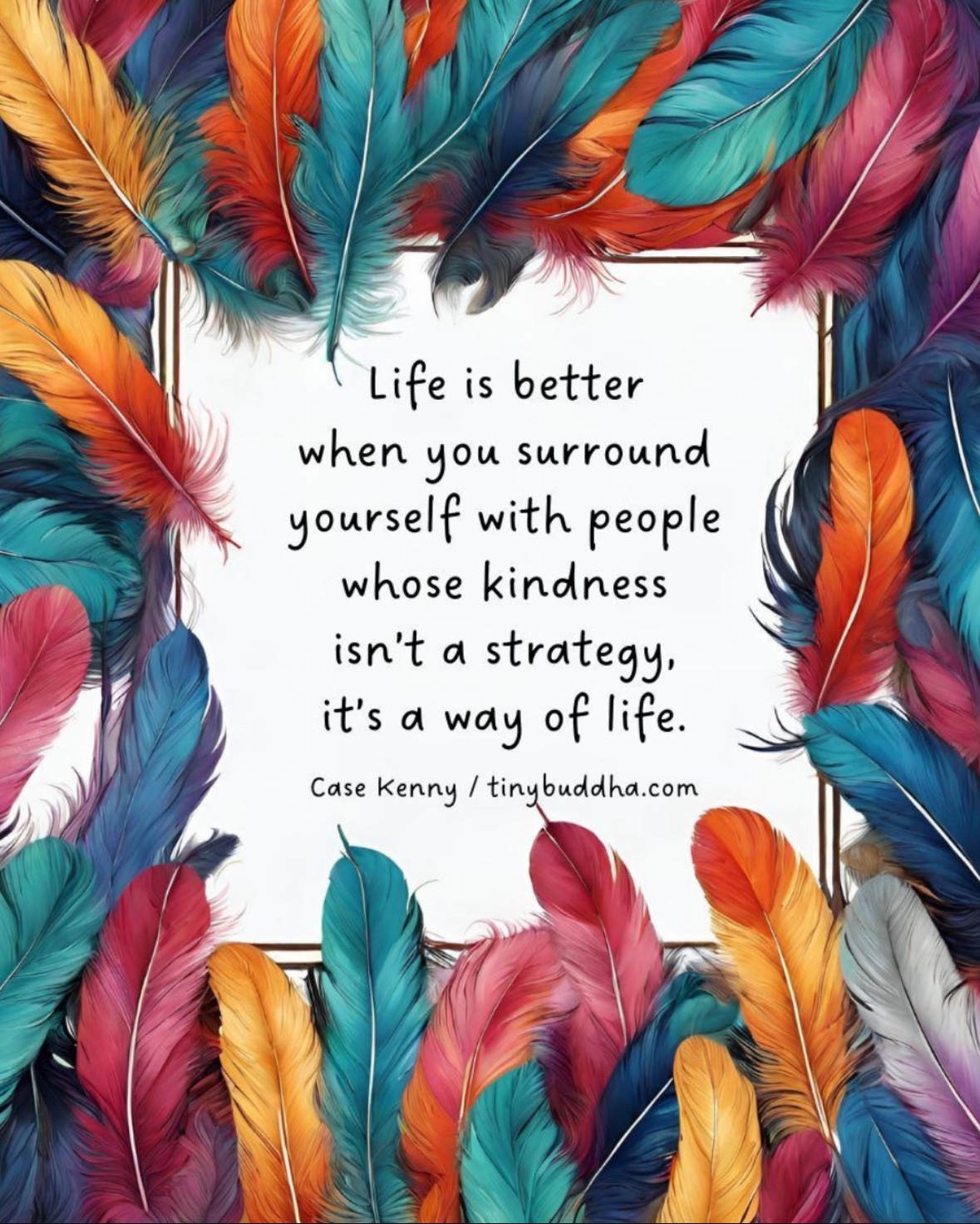
We live in a world that’s more connected than ever—but ironically, it often feels harder to find genuine connections. We interact with dozens of people daily: in meetings, on calls, in texts, emails, and social media comments. And somewhere in the mix, it’s easy to mistake politeness for kindness, charm for empathy, and charisma for character.
But the difference becomes clear over time.
Kindness that’s performative always has a motive. It shows up when it’s convenient, or when there’s something to gain. It’s transactional. You’ll hear the right words, maybe even get the perfect smile—but something feels… off.
And then there are the other kind of people.
People whose kindness isn’t calculated—it’s instinctive. They don’t say kind things to win favor, they do it because it’s who they are. They check in when they don’t need to. They celebrate your wins without envy. They help even when no one’s watching. Their kindness is stitched into their very being—not worn like a temporary coat, but carried like second skin.
Those are the people who make life immeasurably better.
They remind us that compassion isn’t weakness. That softness doesn’t mean lack of strength. That you can be kind and still be sharp, bold, ambitious. They make teams stronger, relationships deeper, and everyday moments more meaningful.
So how do you find these people?
You feel them. They’re the ones who make you feel seen without needing to be in the spotlight. They offer you their time when they’re short on their own. They listen—really listen—without waiting for their turn to speak. They don’t just show up when the lights are on; they show up when you’re in the dark.
And more importantly—be one of those people.
Because kindness, when it’s not a strategy but a way of life, has a ripple effect. It makes you memorable for the right reasons. It makes your presence a safe space in a noisy world.
Let’s choose to build circles, teams, and communities filled with that kind of energy. Not because it’s trendy, but because it’s true.
Because life really is better that way!
Confidence

Confidence isn’t about being the loudest
(Especially at work)
It’s quieter than that.
It’s about:
– Staying consistent.
– Showing up, again and again.
– Knowing who you are – even when no one’s watching.
So if you want to build real confidence, start here:
1) Follow through on tasks
→ Meet your deadlines.
→ Keep your promises. That’s how trust is built.
2) Say yes to responsibilities that scare you
→ Put your hand up for the project that challenges you.
→ Growth lives outside your comfort zone.
3) Face the uncomfortable conversations
→ Don’t avoid tough feedback or difficult clients.
→ Confidence grows when you stop dodging the hard stuff.
4) Learn from mistakes
→ Own them. Fix them. Move forward.
→ Perfection isn’t the goal – progress is.
5) Deliver value even when no one’s watching
→ Do great work whether or not you’re recognised.
→ Quiet impact still counts.
This is how it starts.
Not in grand gestures, but in tiny, repeated acts.
So if you’re not there yet, that’s okay.
Just keep showing up.
Master the Art of Feedback

99% of leaders struggle with giving effective feedback.
Don’t be one of them.
Giving feedback is an art, and mastering it can elevate your leadership.
Here’s how to do it right:
1. SBI Framework (Situation-Behavior-Impact):
↳ Describe the specific situation, state the observable behavior, and explain its impact on the team or project.
2. The Feedback Sandwich:
↳ Start with something positive, provide constructive feedback, and end with positive reinforcement.
3. STOP-START-CONTINUE Method:
↳ Identify what to stop, suggest what to start, and highlight what to continue.
4. COIN Model (Context-Observation-Impact-Next Steps):
↳ Set the context, describe the behavior, explain the impact, and suggest the next steps.
Remember, feedback is a tool for growth. Use it wisely to build stronger, more effective.
11 Signs You Are A Great Leader
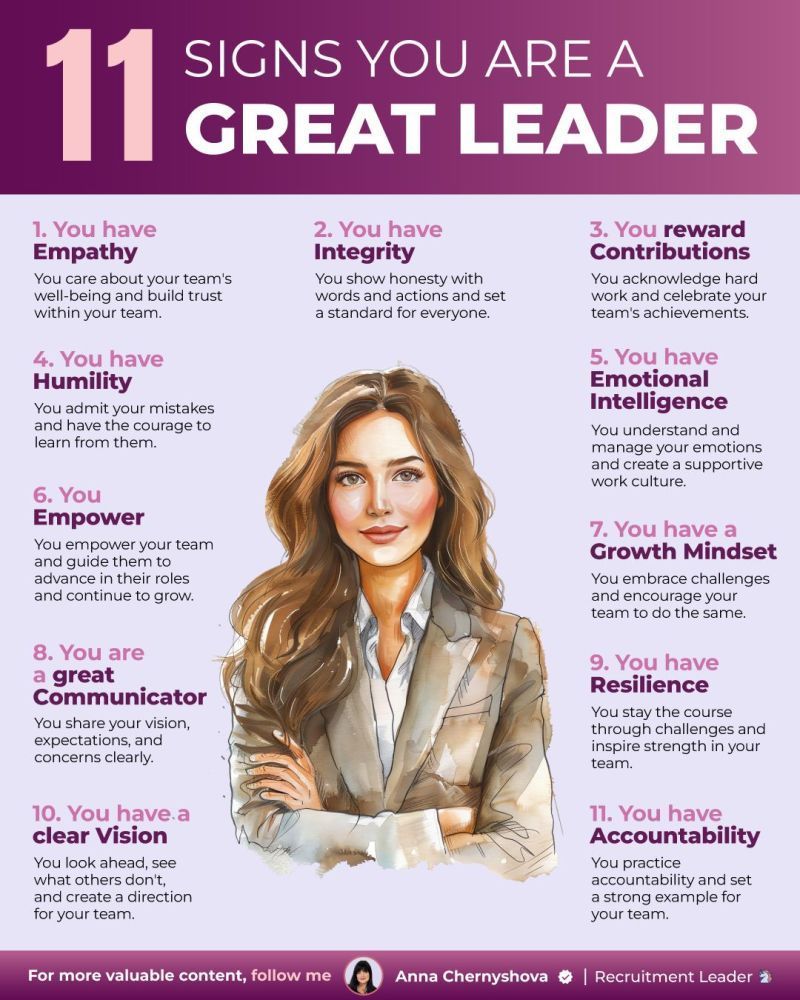
Leadership isn’t about a title.
It’s about the things you do every day.
True leaders inspire, empower, and lead with empathy.
Here 11 Signs you are a great leader:
1. You have Empathy:
↳ You care about your team’s well-being and build trust within your team.
2. You have Integrity:
↳ You show honesty with words and actions and set a standard for everyone.
3. You reward Contributions
↳ You acknowledge hard work and celebrate your team’s achievements.
4. You have Humility
↳ You admit your mistakes and have the courage to learn from them.
5. You have Emotional Intelligence
↳ You understand and manage your emotions and create a positive culture.
6. You Empower:
↳ You empower your team and guide them to advance in their roles.
7. You have a Growth Mindset
↳ You embrace challenges and encourage your team to do the same.
8. You are a great Communicator:
↳ You share your vision, expectations, and concerns clearly.
9. You have Resilience:
↳ You stay the course through challenges and inspire strength in your team.
10. You have a clear Vision:
↳ You look ahead, see what others don’t, and create a direction for your team.
11. You have Accountability:
↳ You practice accountability and set a strong example for your team.
Great leadership isn’t about being perfect.
It’s about the ability to lead with empathy, integrity, and vision.
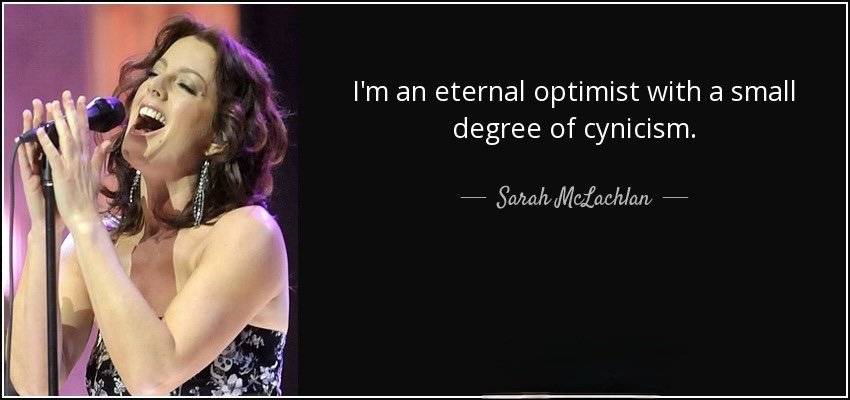
The Eternal Optimist: Why We Keep Showing Up, Even When It Makes No Sense
Have you ever clung to hope so tightly that even when logic begged you to let go, you stayed?
Let me tell you a story.
A close friend of mine was sharing about signing up for a 6-day workshop — She was excited. The schedule looked promising, and her expectations were sky high.
Day 1 came and went. Nothing special.
Day 2? Still flat. A lot of repetitive points, content was very high-level, didn’t get into the meat of things!
But she stayed.
“Maybe tomorrow will be the day it gets better,” she said.
Day 4. Day 5. Still waiting for that aha moment.
By Day 6, it was pretty clear: this wasn’t the experience she’d signed up for.
So I told her, “I felt it was a waste of time after 5-6 minutes.”
She smiled and said, “I kept hoping it would get better.”
That, right there, is the eternal optimist.
The Beautiful Curse of Eternal Optimism
There’s something quietly heroic about people who keep hoping.
People who stay when most would leave.
Who believe even when there’s no proof.
Who bet on “maybe” when “nope” feels more likely.
They’re the ones who believe the last chapter redeems the entire book.
Who stick around thinking maybe the next conversation heals the friendship.
Who see a spark even when the fire is nearly out.
We often tease optimists — call them naive, overly trusting, maybe even delusional.
But secretly, we wish we had their faith.
When Optimism Feels Like a Flaw
Sure, she “lost” 6 days. But did she really?
She walked away with a story. A lesson in patience. And maybe more importantly, she walked away with her hope intact.
Because being an eternal optimist isn’t about ignoring reality.
It’s about choosing to believe that reality can still change.
It’s not foolish. It’s resilient.
It’s not weakness. It’s heart.
And in a world so used to quitting, that kind of hope is radical.
The Takeaway
So whether you’re stuck in a workshop that didn’t live up to the hype, holding on to a dream that hasn’t taken off, or investing in something others gave up on — don’t be ashamed of your optimism.
Being an eternal optimist doesn’t mean you’re blind.
It means you’re brave.
Sometimes the win isn’t in the result.
It’s in the fact that you kept showing up when it made no sense to.
Even if it takes all six days!
Respond, Don’t React

The strongest person in the room—
Is the one who stays calm:
We often let our emotions take over.
When we react, we feel:
❌ Less in control
❌ Less productive
❌ Filled with regret
❌ Drained by conflict
❌ Disconnected from others
❌ Stressed and overwhelmed
Responding in the correct ways leads to:
🟢 Higher emotional intelligence
🟢 Improved decision-making
🟢 Increased peace of mind
🟢 Strong relationships
🟢 Control
🟢 Clarity
Use my sheet to respond with calm.
Choose your response.
Own your outcome.
Build a life of peace.
Build a life of power.
Trust Over Surveillance: The Real Key to Unlocking Potential
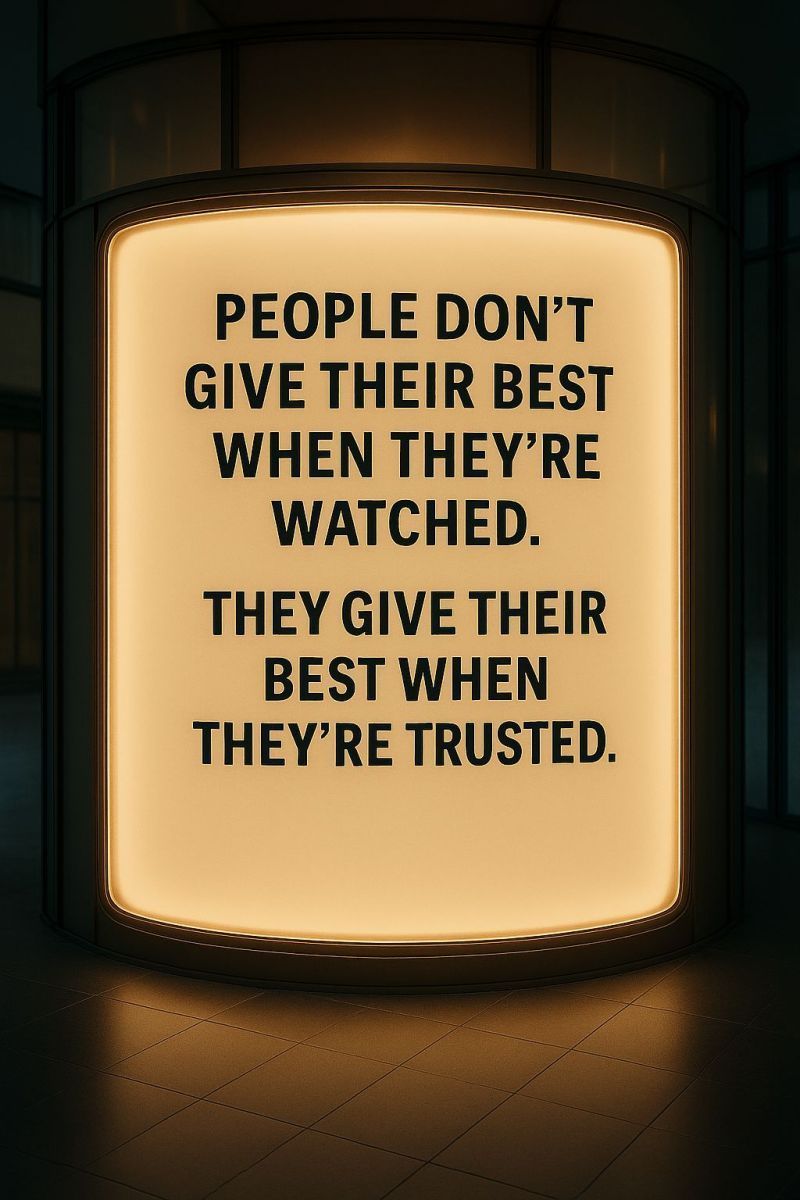
We’ve all been there — the feeling of eyes on you during a task, the pressure to perform, the sense that any mistake will be instantly noticed and judged. While it may create short-term compliance, this kind of oversight rarely inspires greatness. What does? Trust.
The Illusion of Control
Many organizations still operate under the belief that constant monitoring guarantees results. That watching people closely — with dashboards, status reports, surveillance tools — will somehow motivate better performance. But in reality, it often breeds anxiety, fear, and a bare-minimum mindset.
People don’t rise to their potential because someone is watching. They rise when they feel valued, respected, and trusted. When trust replaces micromanagement, something powerful happens: ownership.
Trust Builds Ownership
Trust sends a signal: I believe in you. It tells someone that their judgment, skill, and initiative are not only welcome, but expected. This unleashes creativity, accountability, and self-motivation — things that can never be forced from the outside.
A trusted employee asks, “How can I make this better?”
A monitored employee asks, “What can I do to avoid getting in trouble?”
See the difference?
Culture of Trust = Culture of Excellence
The best teams in the world don’t run on fear. They run on mutual respect and autonomy. Whether in sports, startups, or service industries, trust-based cultures consistently outperform those where people are merely performing for the camera.
Trust doesn’t mean blind faith or lack of accountability. It means setting clear expectations, equipping people with the tools and support they need, and then giving them the space to rise.
Managers, Take Note
If you want your team to give their best:
- Stop hovering.
- Start believing.
- Replace “Did you do this?” with “How can I support you?”
- Recognize effort and initiative, not just output.
Surveillance may get you obedience.
Trust gets you brilliance.
Because in the end, people don’t give their best when watched — they give their best when trusted.
Prompt Like A Pro
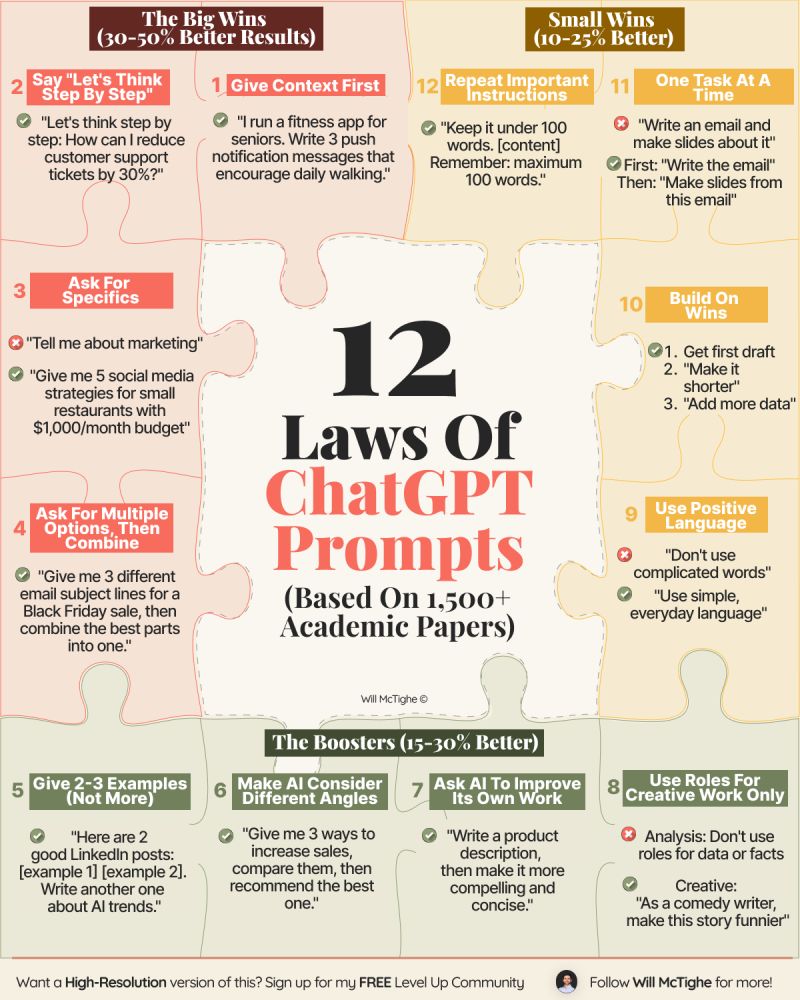
Most people use ChatGPT wrong.
Everyone seems like an “AI expert” these days.
So I asked Claude’s latest model to analyze 1,500 academic papers to find what actually works.
No fluff. No theory. Just data-backed results.
Here are the 12 prompting laws that have elevated my game 👇
1/ Include the context
→ First 2 lines = background + goal (AI needs both)
2/ Force structured thinking
→ “Let’s solve this step-by-step” unlocks better logic
3/ Ask for specifics
→ “500 words” beats “short post” every time
4/ Generate then curate
→ Ask for 3 versions, steal the best bits from each
5/ Give 2-3 examples (not more)
→ 2 examples > 10 examples (research-backed)
6/ Switch perspectives
→ Customer POV + Expert POV = fuller picture
7/ Push for better
→ “How would you improve this?” = instant upgrades
8/ Role-play strategically
→ Characters for stories, direct asks for facts
9/ Frame it positively
→ “Make it punchy” > “Don’t be boring”
10/ Build on wins
→ Good answers spark better questions
11/ One task at a time
→ Single focus = sharper output
12/ Repeat what matters
→ Key details twice = better results
Mastering these prompting laws?
That’s step 1.
But the reality is that, 90% of AI content fails because of 𝘸𝘩𝘢𝘵 you write, not 𝘩𝘰𝘸 you write it.
The topics, the tone, and more.
 Kenrick Vaz