
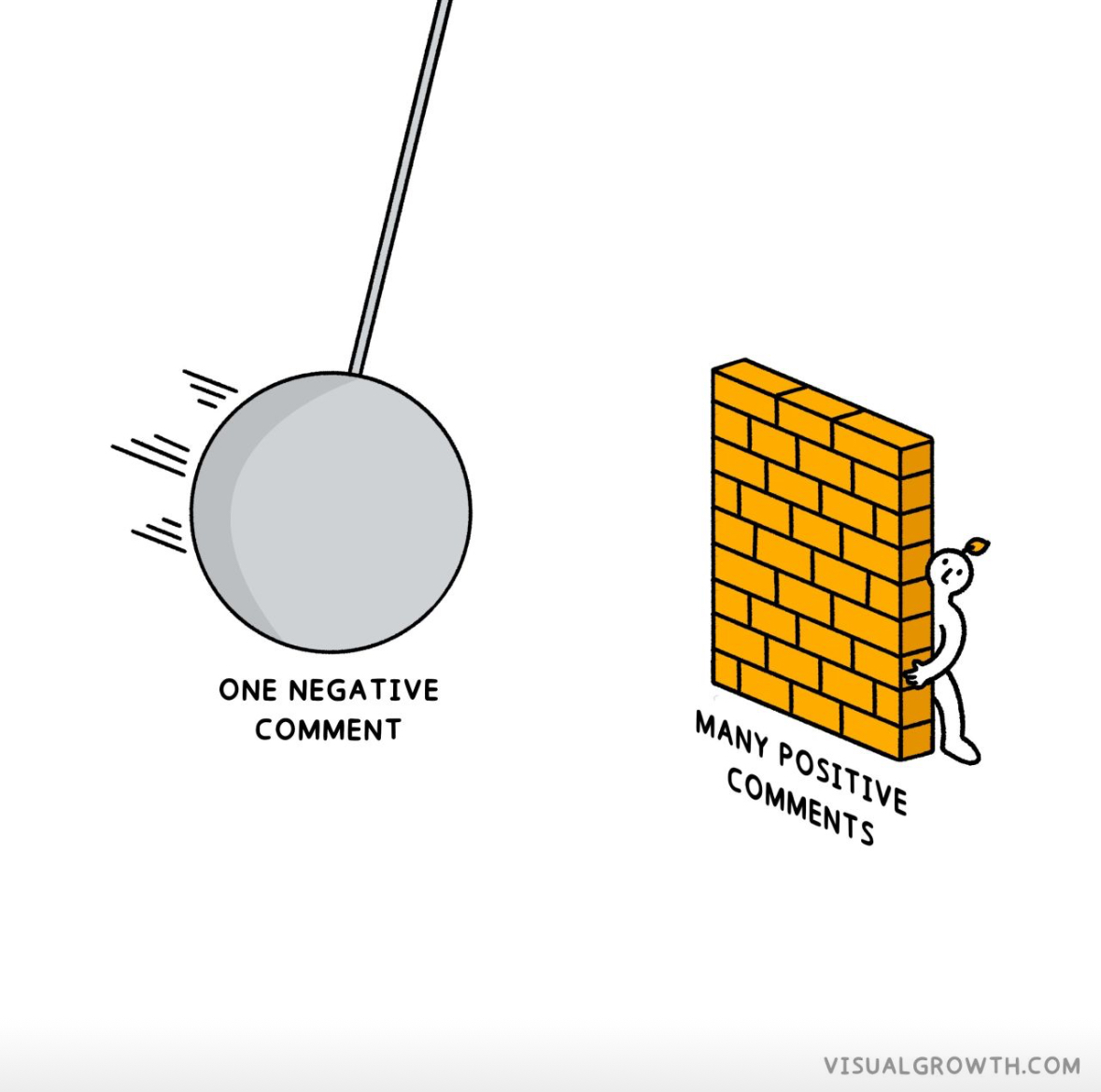
In the vast sea of human interactions, it’s remarkable how one negative comment can stand out and affect us profoundly. Despite receiving numerous positive remarks, our minds often fixate on that single piece of criticism, allowing it to overshadow our self-esteem and outlook.
The Psychology Behind It
Human psychology plays a significant role in this phenomenon. Known as the “negativity bias,” our brains are wired to give more weight to negative experiences and comments than positive ones. This evolutionary trait, which once helped our ancestors survive by focusing on threats, now manifests in our tendency to dwell on criticism.
Imagine presenting a project at work. You receive several compliments and a few constructive suggestions, but one colleague harshly criticizes your effort, calling it “uninspired.” Despite the positive feedback, your mind fixates on that negative remark. You start doubting your abilities and questioning your worth, even though the majority of the feedback was positive.
Emotional Impact
This negative comment can trigger a cascade of emotions. Feelings of self-doubt, inadequacy, and anxiety may surface, affecting not only your mood but also your performance and interactions with others. The fear of future criticism can lead to a reluctance to take risks or share ideas, stifling creativity and growth.
Breaking the Cycle
To counteract this tendency, it’s important to cultivate resilience and a balanced perspective. Here are a few strategies:
- Acknowledge the Positives: Make a conscious effort to focus on the positive feedback and accomplishments. Keep a record of compliments and achievements to remind yourself of your strengths.
- Seek Constructive Feedback: Constructive criticism is valuable for growth. View it as an opportunity to improve rather than a personal attack.
- Practice Self-Compassion: Treat yourself with the same kindness and understanding you would offer a friend. Recognize that everyone makes mistakes and faces criticism.
- Challenge Negative Thoughts: When a negative comment lingers, challenge its validity. Is it based on fact or just one person’s opinion? Reframe it in a more balanced context.
- Surround Yourself with Support: Engage with supportive colleagues, friends, and mentors who uplift and encourage you.
While it’s natural to be affected by negative comments, allowing them to dominate our thoughts and emotions can hinder personal and professional growth. By understanding the psychological underpinnings and actively working to shift our focus, we can mitigate the impact of negativity and foster a healthier, more resilient mindset. Remember, one negative comment does not define your worth or capabilities.
 Kenrick Vaz