
Most people think great teams are built with smart hiring, clear goals, and the right tools.
Those things matter. They just aren’t enough.
You can put ten talented people in the same room and still watch them fail. Not because they lack skill, but because they don’t trust each other.
Trust changes everything.
When trust is missing, meetings become performances. People nod even when they disagree. Problems stay hidden until they become expensive. Emails get copied to half the company because nobody wants to be blamed later. Everyone protects their own piece instead of protecting the outcome.
It looks like work is getting done. It isn’t.
Now picture a team where trust exists.
Someone admits they made a mistake before anyone else finds it. Another person asks what they think is a stupid question because they know they won’t be judged. A junior developer challenges a senior architect because the idea matters more than the title. Feedback is direct. Credit is shared. Problems surface early because nobody is afraid of looking imperfect.
That team moves faster.
Trust is often mistaken for being nice. It isn’t.
Nice teams avoid uncomfortable conversations. Trusting teams have them.
A manager who says, “I don’t know. Let’s figure it out together,” earns more respect than one who pretends to have every answer. A teammate who keeps a promise five times in a row builds more trust than someone who gives one inspiring speech.
People don’t trust words. They trust patterns.
You can feel the difference within minutes of joining a new team.
Do people interrupt each other? Does everyone look at the manager before speaking? Are mistakes discussed openly or quietly buried? Does success belong to the loudest person or the whole group?
The answers tell you more than any mission statement on the wall.
Trust also has a cost.
It takes months to build and seconds to lose.
One broken promise. One public humiliation. One meeting where someone gets blamed instead of supported. People remember those moments. After that, they stop taking risks. They stop sharing ideas. They start doing only what’s required.
The team still functions. It just stops improving.
The strongest leaders know this. They spend less time trying to look perfect and more time creating an environment where everyone else can be honest.
That doesn’t happen through motivational speeches.
It happens when leaders keep their word. When they listen without interrupting. When they give credit in public and feedback in private. When they admit they were wrong before expecting anyone else to do the same.
Trust spreads through small moments.
It grows every time someone follows through. Every time a difficult conversation ends with more respect instead of less. Every time a person leaves a meeting feeling heard instead of dismissed.
People stay at companies because of salaries for a while.
They stay with teams because of trust.
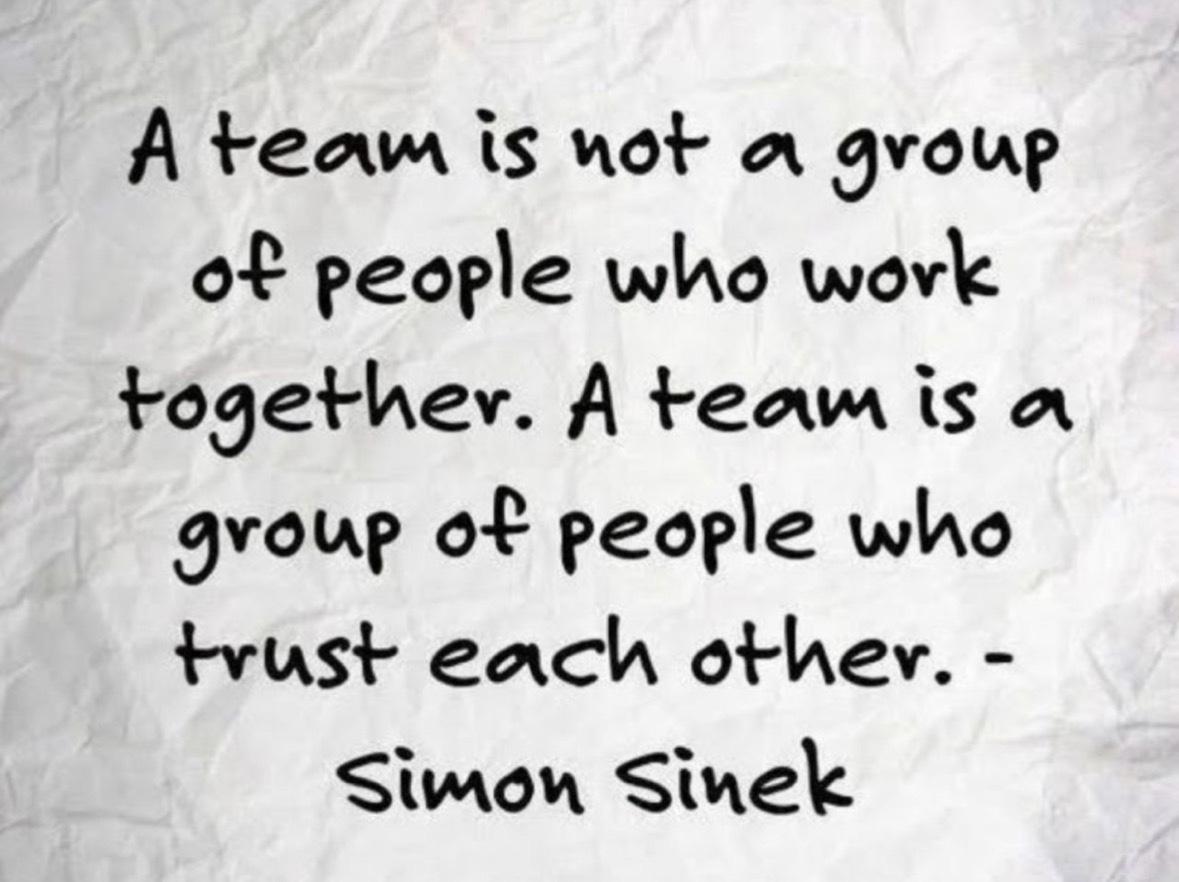
Simon Sinek said, “A team is not a group of people who work together. A team is a group of people who trust each other.”
That’s why the best teams are rarely remembered for the tools they used or the processes they followed.
They’re remembered for how safe it felt to speak up, how confident people were that someone would have their back, and how much they accomplished because nobody wasted energy protecting themselves.

