
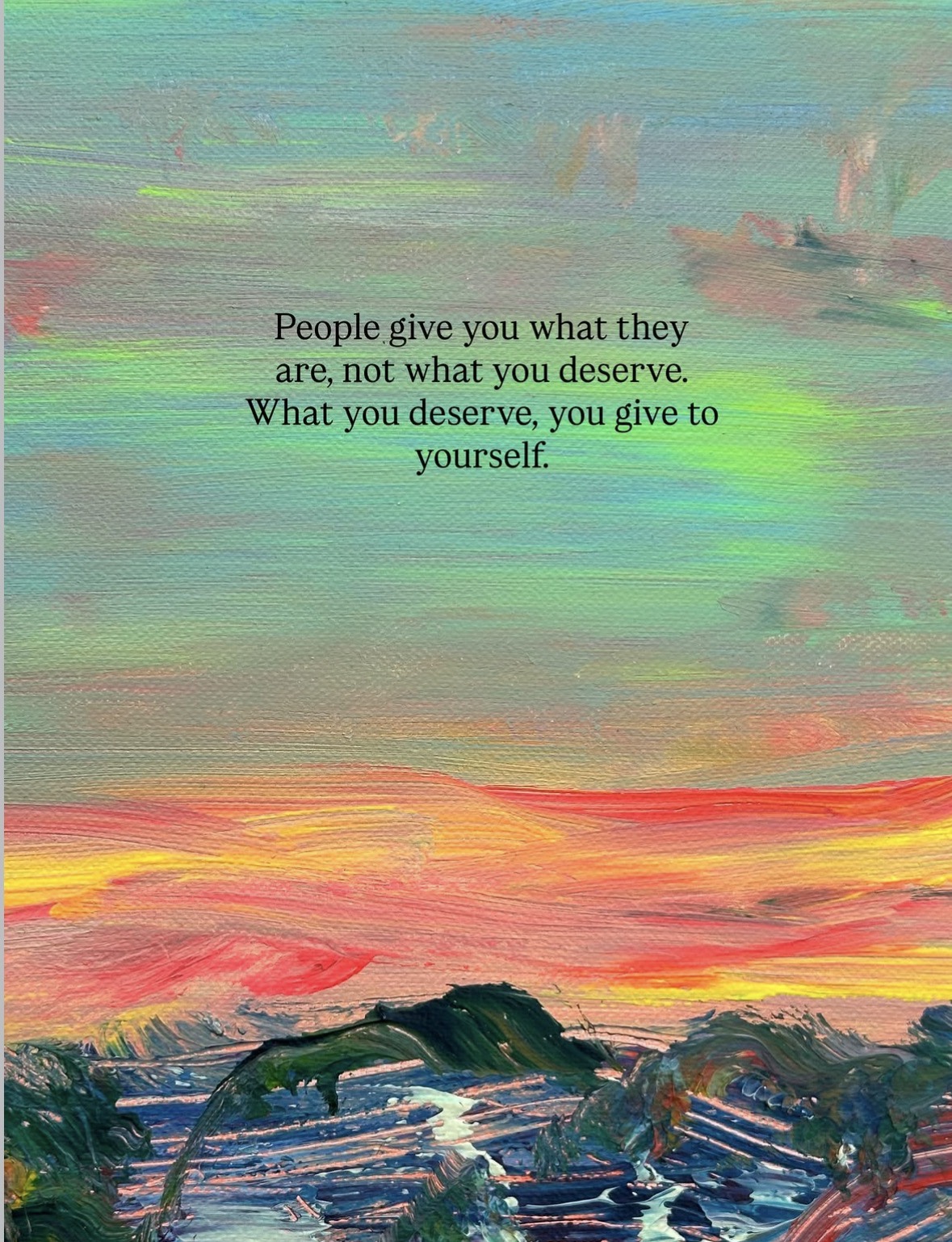
People give you what they are capable of giving.
Some people will show up with kindness. Some will give you patience, respect, honesty, and a genuine effort to understand you. Others will give you distance, criticism, inconsistency, or silence.
That says something about them.
It doesn’t always say something about you.
We spend a lot of time trying to figure out why someone treated us badly. We replay conversations. We wonder what we could have said differently. We question whether we expected too much. Sometimes we even lower our standards because we want a particular person to meet them.
That can become exhausting.
You can be loyal to someone and still discover that loyalty isn’t something they know how to return. You can communicate clearly and still be misunderstood. You can give someone several chances and watch them make the same choice every time.
People can only give from what they carry.
A person who has learned to communicate will communicate.
A person who respects boundaries will respect yours.
A person who is comfortable with honesty will tell you the truth, even when it is uncomfortable.
Someone who has never learned those things may leave you constantly asking for the basics.
That is where the second part of the quote becomes important.
“What you deserve, you give to yourself.”
You give yourself permission to walk away from conversations that leave you feeling small.
You stop chasing people who keep making you question where you stand.
You choose friends who make time for you without needing to be reminded.
You take yourself seriously when something keeps hurting you.
You stop waiting for someone else to validate a decision you already know you need to make.
This isn’t about becoming cold or expecting everyone to behave exactly the way you would. People have different personalities, experiences, communication styles, and ways of showing care.
It is about knowing your own floor.
What is the minimum level of respect you need in a relationship?
What kind of communication can you live with?
What behavior tells you that someone belongs close to you?
Those answers matter because people will teach you how they intend to treat you. Sometimes they tell you with words. Often they tell you through patterns.
Pay attention to the pattern.
A friend who cancels once may have had a terrible day.
A friend who cancels every time you make plans is giving you useful information.
A colleague who makes one mistake can learn from it.
A colleague who repeatedly takes credit for your work is showing you something about how they operate.
A relationship can survive mistakes. It struggles when the same mistake becomes the relationship.
You don’t need to convince someone to see your worth.
You don’t need to build a case for why you deserve basic respect.
You don’t need to keep performing for someone who has already decided what they are willing to give.
There is a strange freedom in accepting that.
You can appreciate people for who they are without giving them unlimited access to you.
You can love someone and still set a boundary.
You can forgive someone and still choose distance.
You can understand why someone behaves a certain way without volunteering to absorb the consequences.
Your standards aren’t demands placed on everyone around you. They are decisions about what you will participate in.
That changes the question.
Instead of asking, “Why don’t they treat me the way I deserve?”
Ask, “Am I treating myself the way I deserve?”
Sometimes the answer starts with something very simple.
Leave the conversation.
Say no.
Stop explaining.
Choose better company.
Give yourself the respect you keep hoping someone else will give you.
That part is yours!

