
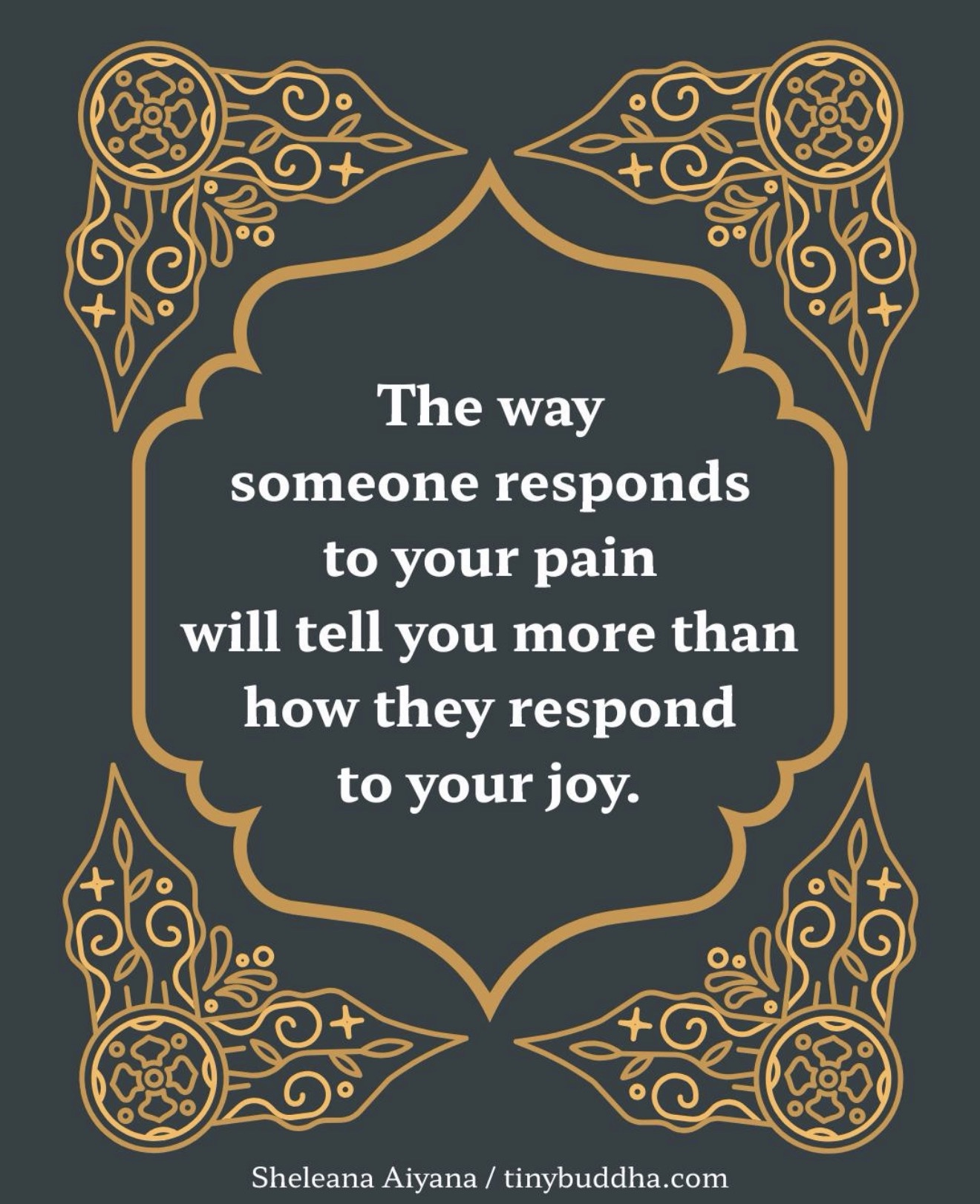
Joy is easy to be around.
When life is going well, people know what to do. They celebrate with you. They like the photos. They send congratulations. They show up for birthdays, promotions, weddings, new homes, holidays and all the moments that come with smiles already built in.
Pain is different.
Pain makes people uncomfortable because there is often nothing to fix. There may be no useful advice to give. Sometimes there isn’t even a clear reason for what you’re feeling. You just need someone who can sit beside you without trying to rush you out of it.
That is where you learn a lot about people.
Watch what happens when you tell someone you’re struggling.
Some people immediately make it about themselves. You tell them what happened, and within minutes you’re listening to their story. Maybe they mean well. Yet somehow you leave the conversation carrying your pain and theirs.
Some people try to solve it.
“Have you tried this?”
“You should just…”
“Don’t think about it so much.”
The advice arrives before they have even understood what happened.
Then there are people who listen.
They don’t check their phone while you’re speaking. They don’t look for the perfect sentence. They let you finish. If you go quiet, they allow the silence to stay for a few seconds.
They might ask, “Do you want to talk about it?”
Or, “What do you need from me?”
Sometimes they simply say, “I’m here.”
Those two words can carry more weight than a twenty-minute speech.
We often judge relationships by happy memories. The vacations. The dinners. The laughter that went on until midnight. The ridiculous inside jokes nobody else understands.
Those moments matter. Of course they do.
But there is another side of a relationship that only appears when life gets messy.
You lose someone you love.
A job disappears.
A relationship falls apart.
Something you worked years for doesn’t happen.
You receive news you weren’t prepared for.
Or you wake up one morning and realize you’re exhausted in a way sleep isn’t fixing.
That is when people’s responses become clearer.
Someone who cares about you won’t always know what to say. They may get the words wrong. They might sit there awkwardly searching for something useful.
What matters is that they stay.
They call again a few days later.
They remember the thing you told them when everyone else has moved on.
They ask how you’re doing after the first wave of attention has disappeared.
They don’t demand that you become cheerful so they can feel comfortable around you again.
There is something deeply human about being allowed to have a bad day in front of another person.
No performance.
No pretending you’re fine.
No pressure to turn pain into a lesson while you’re still living through it.
Just space to be exactly where you are.
And this works both ways.
We spend a lot of time thinking about who shows up for us. It is worth paying attention to how we show up when someone trusts us with their pain.
Do we listen?
Do we give them room to speak without comparing their experience to ours?
Do we remember to check on them next week?
Do we sit with the uncomfortable parts instead of reaching for a quick motivational quote?
Someone telling you they are hurting is an act of trust. They are handing you something fragile and hoping you won’t make them regret it.
You don’t need special words.
You don’t need answers.
Sometimes the kindest thing you can do is put the phone down, look at them and say, “Tell me.”
Then listen!

