
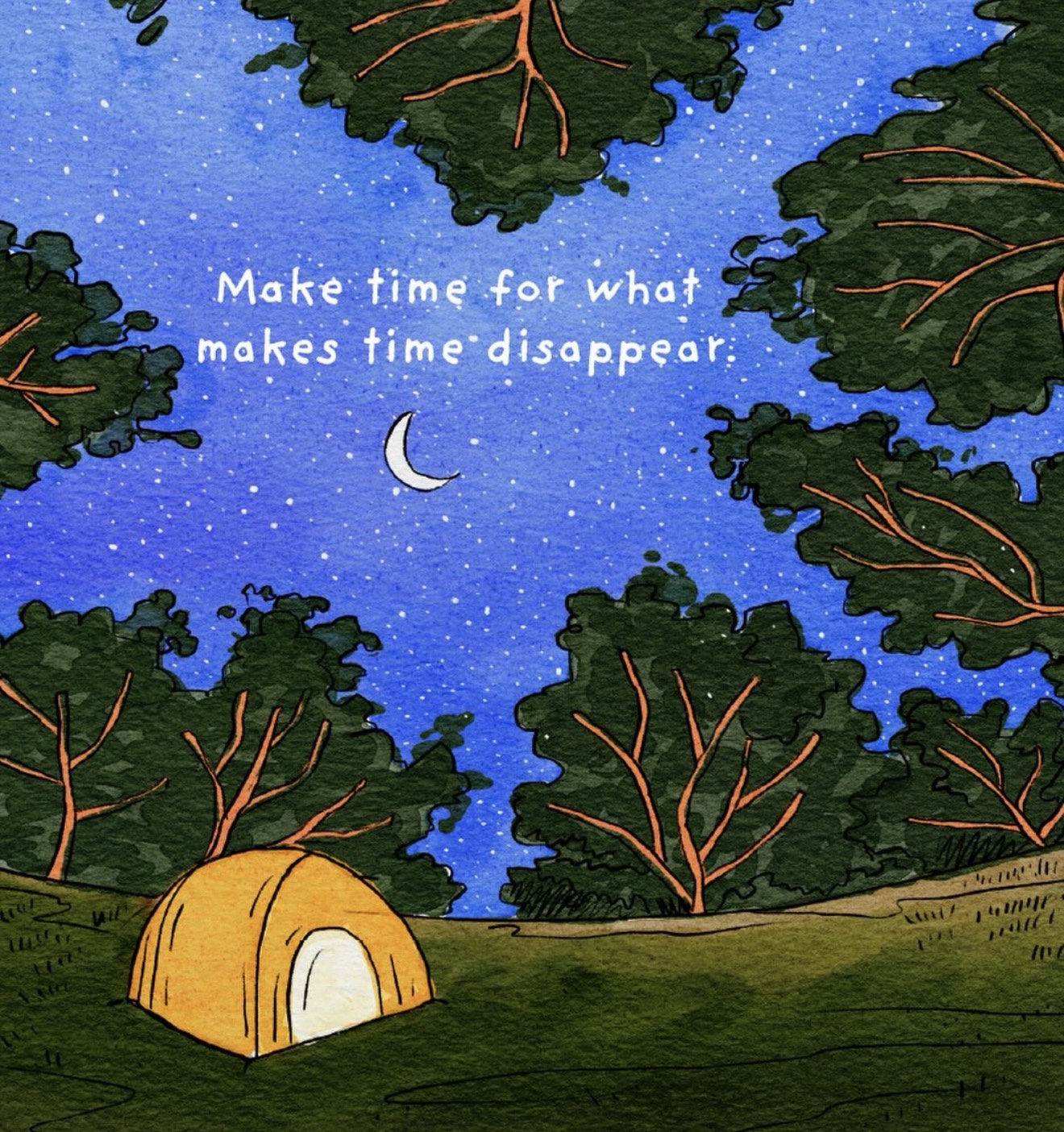
Some of the best moments in life are the ones where you forget to check the clock.
You sit down with an old friend for what was supposed to be a quick coffee, and suddenly three hours have passed. The conversation has wandered through childhood memories, embarrassing stories, people you’ve lost touch with, and things you haven’t told anyone in years. Somewhere along the way, your coffee went cold. You barely noticed.
Or you’re playing with your child, building something out of blocks, inventing ridiculous characters, laughing at jokes that would make absolutely no sense to anyone else. You glance at the clock and realise an entire afternoon has disappeared.
Those hours feel different.
Most of our days are organised around time. We wake up to alarms, rush through breakfast, answer messages between meetings, and keep mental lists of everything that still needs doing. Even our breaks have become scheduled activities. We give ourselves twenty minutes to relax before moving on to the next thing.
And somewhere in all that planning, we forget what it feels like to be completely absorbed in something.
Think about the last time you were doing something you loved and lost track of time. Maybe you were reading a book that kept you turning pages long after you intended to sleep. Perhaps you were cooking a meal with music playing in the background, experimenting with ingredients and enjoying the process. It could have been a long drive with your favourite songs, a walk through an unfamiliar neighbourhood, or an evening spent doing absolutely nothing productive with someone whose company you enjoy.
Whatever it was, you probably remember how you felt more clearly than how long it lasted.
There’s something worth paying attention to in that.
We spend so much energy trying to manage our time that we rarely ask whether we’re enjoying the way we spend it. We measure productive hours, track screen time, plan our weekends, and sometimes feel guilty when a day passes without anything obvious to show for it.
I find that a little strange when I think about it.
Imagine spending an entire Sunday laughing with your family, eating a long lunch, listening to music, and watching the evening slowly arrive. By conventional standards, you might have accomplished very little. The laundry could still be waiting. Your inbox might have a few unread messages. That book you’ve been meaning to finish is still sitting on the bedside table.
Yet you might go to bed feeling more content than you have in weeks.
Why should that count for less?
I think adulthood has a way of convincing us that enjoyment needs to be earned. We tell ourselves we’ll pick up that guitar once work settles down. We’ll take that trip when things are less hectic. We’ll spend more time with friends after the next big milestone.
The trouble is that life has an impressive ability to keep filling whatever space we give it.
One deadline ends and another appears. The children grow older. Friends move away. Our parents age. The things we kept postponing quietly become things we wish we’d done more often.
And sometimes the opportunity was sitting right there on an ordinary Tuesday evening.
A child asking you to play for five more minutes. Your partner suggesting a walk after dinner. A friend calling just to catch up. A song coming on that makes you want to turn up the volume and sing along.
It’s easy to overlook these invitations when your mind is already occupied with tomorrow.
I’ve started thinking that one of the most useful questions we can ask ourselves is surprisingly simple.
What makes me forget about time?
The answer will be different for everyone.
Some people find it in painting, gardening, photography, or making things with their hands. Others come alive during long conversations, while travelling, playing a sport, or sitting quietly beside the sea. For someone else, it might be solving a difficult problem, writing something meaningful, or learning a skill simply because they’re curious.
There’s a name for that feeling of being completely immersed in what you’re doing. Psychologists call it flow. Your attention settles into the activity, distractions fade, and the usual awareness of passing minutes becomes less noticeable.
I like the idea because it explains something we’ve all experienced without necessarily having a word for it.
Remember being a child and playing outside until someone called you home? You weren’t thinking about whether the afternoon had been worthwhile. You were busy being part of it.
Somewhere along the way, many of us became better at organising our lives and less comfortable letting ourselves get lost in them.
Of course, responsibilities still need attention. Bills have to be paid, work needs doing, and there will always be days when the calendar dictates what happens next. That’s part of being an adult.
But surely we can make room for the things that make those responsibilities worth carrying.
Perhaps that means protecting one evening a week for something you enjoy. It might mean putting your phone away when you’re with family, taking the longer scenic route home, or saying yes when someone invites you to do something spontaneous.
Sometimes it means giving yourself permission to stay a little longer.
Finish the conversation. Play another round. Watch the sunset change colours. Let the music keep playing while you cook. Read one more chapter because the story has you completely hooked.
There will be plenty of moments in life when you’ll need to watch the clock.
And then there will be moments when someone you love is laughing so hard they can barely speak, when the view in front of you makes you stop walking, or when you’re so absorbed in something that the rest of the world seems to have gone quiet.
Those are the moments I’d happily lose an afternoon to.
Especially when someone looks at the clock and says, “How is it this late already?”
And nobody quite feels ready to leave.

