
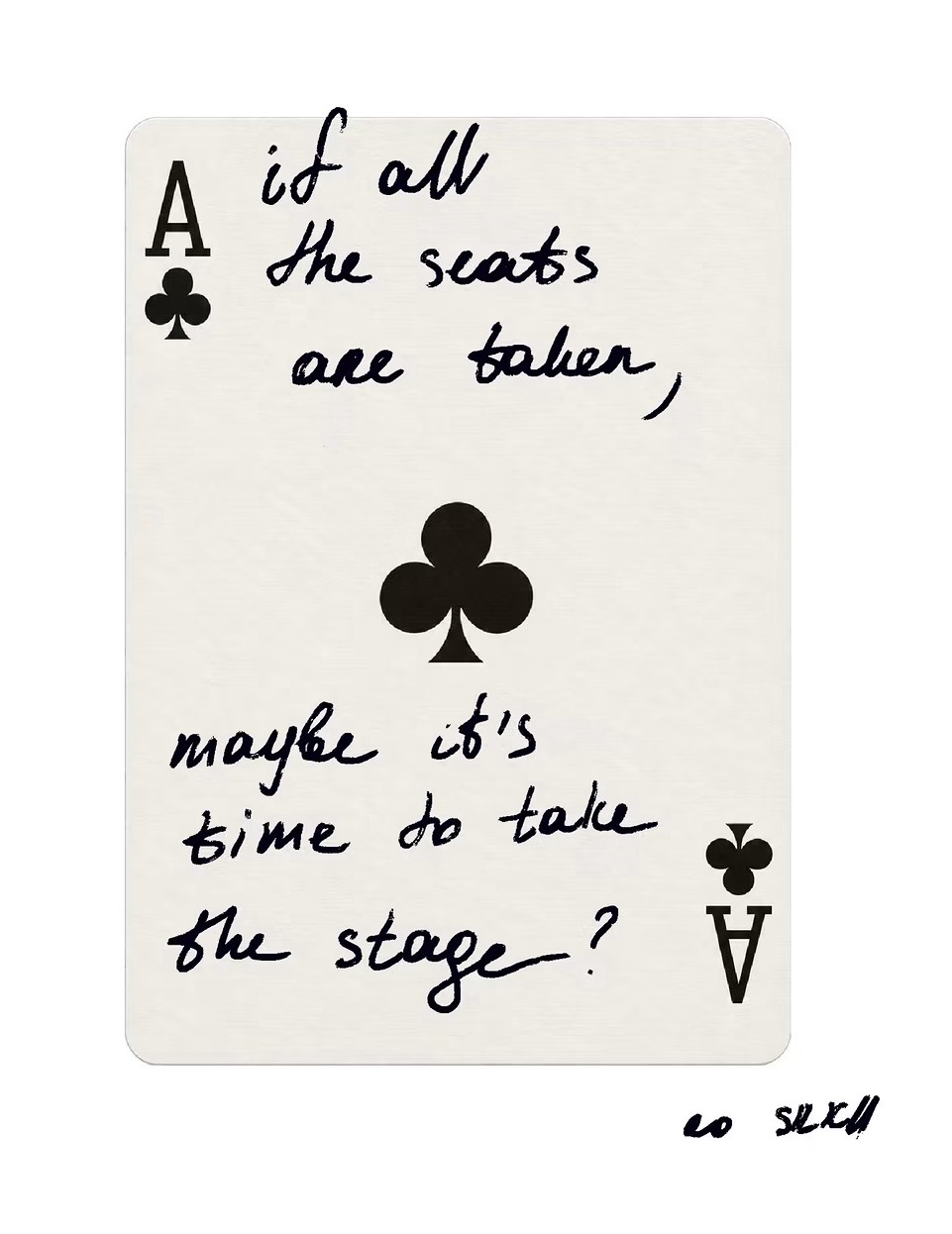
There’s something interesting about walking into a room and finding every seat taken.
You look around, hoping someone will move over. Maybe there’s a chair tucked away in the corner. Maybe someone will notice you standing and make some space. You wait a little longer than you should, trying to figure out where you belong.
And then comes a thought that changes everything.
What if you were never meant to sit in the audience?
I came across this line recently, and it stayed with me.
“If all the seats are taken, maybe it’s time to take the stage.”
I love how much possibility sits inside those few words.
Think about how much of our lives we spend looking for a seat. We want to be included in conversations, invited into opportunities, welcomed into groups, and given a chance to show what we can do. We look for someone who believes in us enough to make room.
And there’s nothing wrong with wanting that. Belonging matters. Being welcomed feels good. Sometimes all we need is one person to pull out a chair and say, “Come, sit here.”
But what happens when that invitation never comes?
I’ve been thinking about how easily we can spend years waiting for someone else to decide we’re ready.
We wait for a promotion because we believe a title will finally give us permission to lead. We hold back an idea in a meeting because someone more senior is speaking. We keep putting off something we’ve always wanted to try because the people around us seem to have already figured it out.
Sometimes we even convince ourselves that the room is full because we arrived too late.
I wonder how many good ideas have been abandoned because someone couldn’t find a place to share them.
How many talented people have spent their careers quietly doing excellent work, hoping someone would eventually notice?
How many dreams have been postponed because the right person never opened the right door?
I’ve seen this happen at work. Someone has an idea that could solve a problem everyone has been discussing for months. They understand the problem, they’ve thought through the solution, and they know where to begin. Yet they hesitate because presenting the idea feels like stepping beyond their role.
Meanwhile, the conversation moves on.
It’s strange how often we give other people the authority to decide what we’re capable of.
Of course, taking the stage sounds wonderful until you imagine yourself standing there.
Because a stage is a very different place from a seat.
When you’re sitting in the audience, you can observe. You can listen, learn, agree, disagree, and quietly decide what you might have done differently. There’s comfort in being one voice among many.
On stage, people can see you.
Your ideas are out in the open. Someone might challenge them. You might stumble over your words or discover halfway through that your plan needs more work.
And yes, you might fail.
I think that’s what makes the thought so powerful. Taking the stage asks us to become comfortable with being seen before we’ve figured everything out.
It reminds me of the first time you speak up in a room full of people who seem to know more than you. Your heart beats a little faster. You rehearse the opening sentence in your head. You wonder whether your question is worth asking.
Then you ask it.
And something changes.
Maybe the answer surprises you. Maybe someone else admits they were wondering the same thing. Perhaps the conversation heads somewhere useful because you were willing to speak.
That small moment can stay with you for years.
I also think taking the stage means different things at different points in life.
For someone early in their career, it might mean volunteering to lead a project they’ve never handled before.
For someone who’s spent years building a career, it could mean starting again in a new environment, where their reputation has yet to catch up with their experience.
For a person who has always wanted to write, it might mean publishing the first article and accepting that a handful of people may read it.
For someone who has spent a lifetime putting everyone else’s needs first, taking the stage might be as simple as finally making time for something they love.
There doesn’t have to be an audience of hundreds.
Sometimes the stage is a conversation you’ve been avoiding. Sometimes it’s a decision you’ve been putting off. It could be an application you finally submit, a business you begin from your dining table, or an honest opinion you share even though your voice shakes.
I’ve also come to appreciate that we can create stages for other people.
One of the most meaningful things a leader, mentor, teacher, or friend can do is give someone the confidence to step forward.
I remember how much it meant when someone trusted me with a responsibility I wasn’t entirely sure I could handle. That trust made me work harder. It made me ask better questions and learn things I might otherwise have avoided.
Sometimes a person’s confidence begins with someone else saying, “Why don’t you give it a try?”
And when we find ourselves in a position to make that invitation, I hope we remember what it felt like to be standing at the back of the room.
There’s room for generosity here, too.
Taking the stage doesn’t mean pushing someone else aside. You can build something of your own and invite others into it. You can share what you’ve learned, encourage a quieter voice, or give someone their first chance to lead.
I’ve always admired people who can stand confidently in the spotlight and still notice the person waiting nervously at the edge.
There’s something beautiful about that kind of confidence.
Of course, some rooms are worth leaving. Some opportunities simply aren’t meant for us. And sometimes we need more practice before we’re ready to do what we’re dreaming about.
But I wonder how often we mistake a lack of invitation for a lack of ability.
How often do we look at people doing remarkable things and assume they must have been chosen, when perhaps they simply decided to begin?
Someone started writing before anyone called them a writer. Someone built a company before anyone believed it would succeed. Someone became a leader by taking responsibility long before the title arrived.
And somewhere today, someone is standing at the back of a crowded room, waiting for a chair to become available.
Maybe that’s you.
Maybe you’ve been patient for a long time. You’ve prepared, learned, helped others, and quietly hoped your turn would come.
Look around once more.
And if every seat is still taken, walk towards the stage.
You might find a microphone waiting there!

