
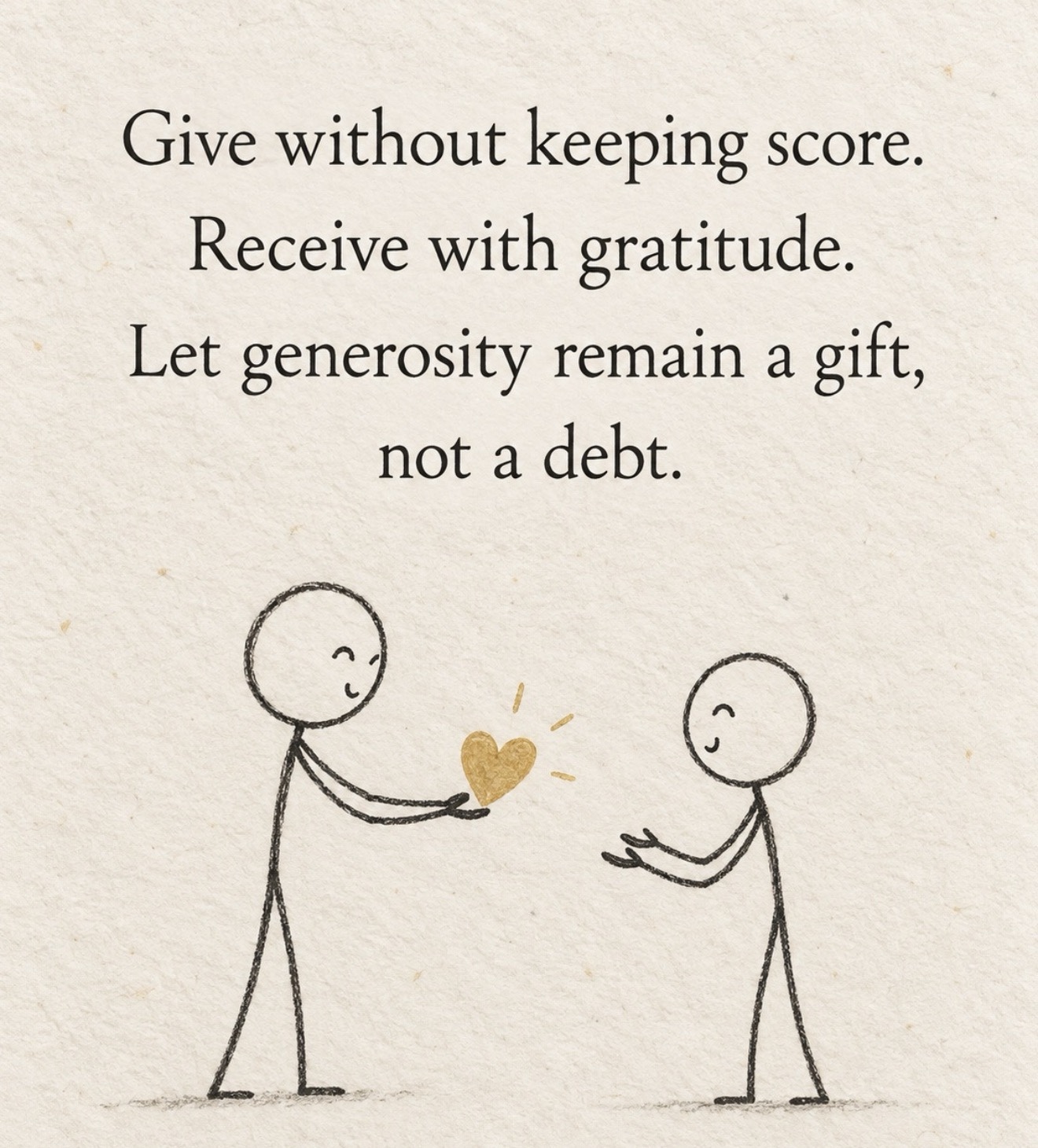
Some of the most beautiful things people have done for me are things they probably don’t even remember. A phone call when I was going through a difficult time. Someone picking up the bill when money was tight. A friend who rearranged their day because I needed someone to talk to.
Years later, I still remember how those gestures made me feel. And what made them particularly special was that nobody ever brought them up again.
There’s something beautiful about being on the receiving end of generosity that comes without expectations. You feel cared for without feeling indebted. You can accept someone’s kindness without wondering what they’ll eventually ask of you.
Yet, somewhere along the way, many of us develop a habit of keeping an invisible ledger in our relationships. We remember how often we’ve reached out, how much we’ve spent, who showed up for whose birthday and how many times we’ve gone out of our way for someone.
Sometimes, even a simple act of kindness comes with an unspoken expectation of being treated the same way in return.
Think about how often we hear someone say, “After everything I’ve done for them.”
There’s often a history of hurt behind those words. Perhaps someone has repeatedly taken advantage of their kindness. Perhaps they have spent years giving more than they could afford emotionally. Those experiences deserve attention.
But sometimes, those words also reveal expectations that were quietly attached to acts of generosity. The person receiving the kindness may have had no idea that something was expected in return.
Imagine receiving a birthday gift from a friend and discovering months later that they were disappointed because yours cost considerably less. Suddenly, what was once a lovely memory becomes uncomfortable.
Keeping score can take the joy out of giving.
People go through different seasons of life. A friend who has plenty of time for you today might barely manage to return your calls next year. Someone you helped financially may spend years getting back on their feet. A sibling who once depended heavily on you might eventually become the person you lean on.
Life rarely follows a neat accounting system. Relationships would become exhausting if every kindness had to be matched within a reasonable period.
Give what you can comfortably give. When you offer to help someone move house, do it because you have the time and want to help. When you invite someone over for dinner, enjoy their company without counting how many times they’ve invited you to theirs.
There is also room for boundaries. You can be generous and still say that you’re unavailable this weekend. You can care deeply about someone while recognising that their repeated requests are becoming too much for you. Being clear about what you can offer helps prevent resentment from building up.
Receiving deserves just as much attention.
Some of us struggle to accept kindness. Someone buys us lunch, and we’re already planning how to repay them. A colleague helps us finish something, and we immediately feel the need to return the favour. Even a compliment can make us uncomfortable enough to change the subject.
We sometimes become so preoccupied with settling the balance that we forget to enjoy the kindness we’ve received.
A warm, sincere thank you can be enough.
Allow people the pleasure of doing something for you. Think about how good you feel when someone appreciates a meal you’ve cooked or a thoughtful gift you’ve picked out for them. Other people deserve to experience that same happiness when they give to you.
Gratitude can also travel beyond the person who first showed you kindness. Perhaps a teacher once spent extra time helping you understand something. Years later, you find yourself patiently mentoring a young colleague. Perhaps someone welcomed you into their home when you were new to a city, and you remember that experience when a new neighbour moves in.
The original giver may never know how far their kindness travelled.
I also think there’s a quiet dignity in giving without making the recipient feel small. Bringing up a favour during an argument can undo years of goodwill. Reminding someone repeatedly about how much you’ve helped them can make them regret ever accepting your help.
Once you’ve given something freely, allow the other person to enjoy it without carrying the weight of your sacrifice.
Some of my favourite moments of generosity are the small ones that happen without much thought. Someone saving a seat for you at a crowded table. A neighbour bringing over something they’ve cooked. A friend remembering a passing remark you made months ago and surprising you with something you wanted.
There’s a lovely simplicity to these gestures.
The next time someone insists on paying for your coffee, resist the urge to turn it into a negotiation. Smile, thank them and enjoy the conversation. You might even find yourself sitting there a little longer, ordering another coffee and talking about something neither of you had planned to discuss.

