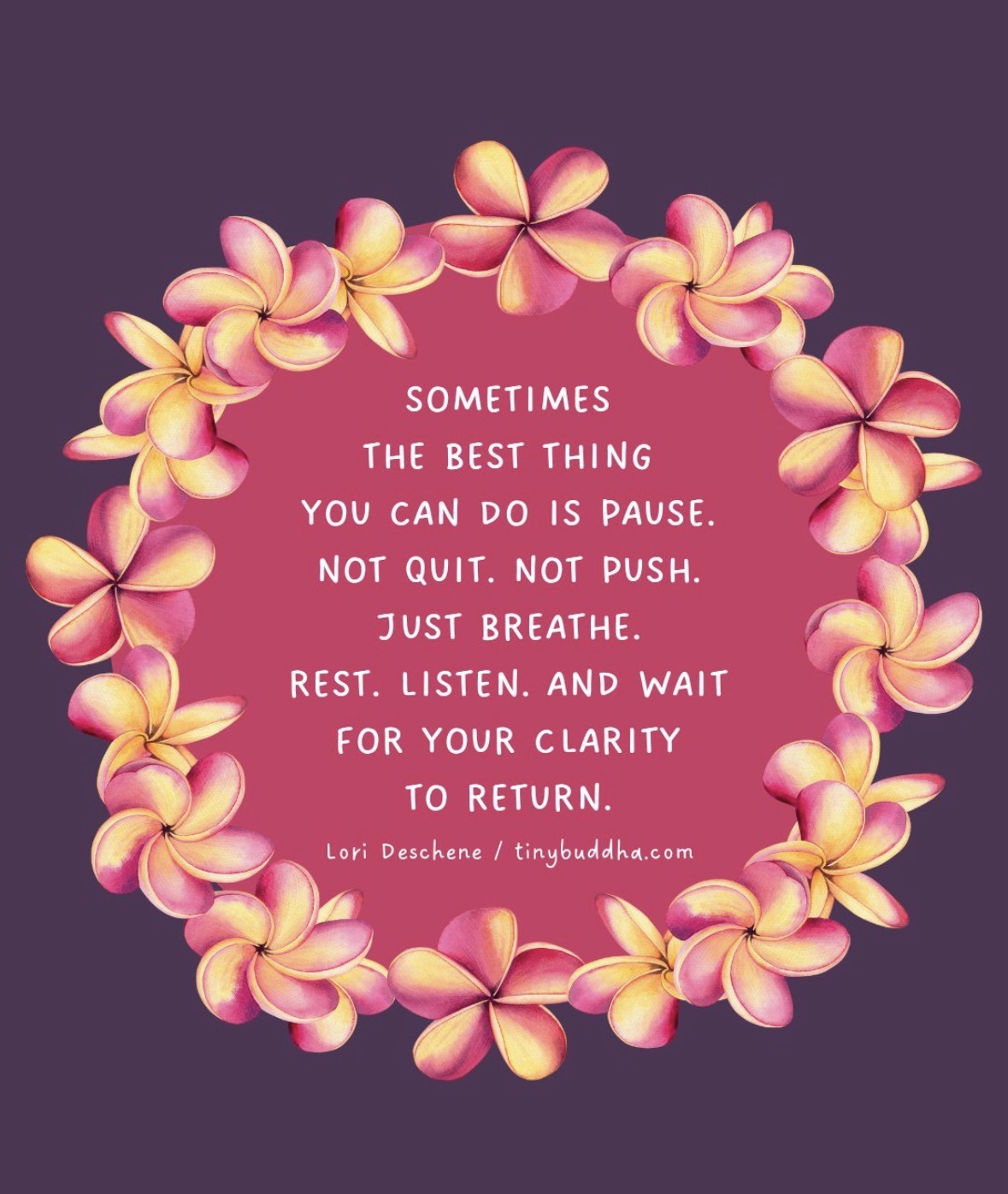
The Quiet Power of Not Forcing It

We live in a world that treats momentum like a moral virtue. If you’re not moving forward, you must be falling behind. If you’re tired, the answer is more effort. If you’re unsure, the solution is to decide faster. Push through. Hustle harder. Figure it out on the fly.

But sometimes the bravest, wisest thing you can do is stop.

Not quit. Not give up on the dream or abandon the work you care about. Just pause.

There’s a difference, even though the world loves to blur it. Quitting is walking away because you no longer believe. Pausing is staying because you do—but you recognize that something inside you needs space to breathe.

Most of us don’t pause because we’re lazy. We avoid pausing because we’re afraid of what we’ll feel when things go quiet. Without the noise of productivity and constant motion, the doubts get louder. The fatigue becomes undeniable. The truth you’ve been outrunning taps you on the shoulder and asks to be heard.

So we keep going. We push past the tightness in our chest, the dullness in our thinking, the irritability that shows up in conversations we care about. We tell ourselves rest will come later—after this deadline, this milestone, this phase of life. And somehow, later never arrives.

The problem is that clarity doesn’t respond well to force. You can’t bully your way into insight. You can’t exhaust yourself into wisdom. The harder you push when you’re depleted, the further clarity seems to drift away.

Pausing isn’t doing nothing. It’s doing something very specific and very intentional. It’s choosing to breathe instead of react. To rest instead of prove. To listen instead of fill the silence with noise.

When you pause, you give your nervous system permission to settle. You let your thoughts slow down enough to sort themselves out. You create room for your intuition—the quiet, easily drowned-out voice that usually knows what you need long before your mind catches up.

Think about the moments when things finally made sense for you. The decision that became obvious. The next step that suddenly felt clear. Chances are, it didn’t happen in the middle of frantic activity. It happened in the shower, on a walk, late at night when everything else went still. Clarity tends to arrive when it’s invited, not demanded.

Rest has a bad reputation. It’s often confused with weakness or indulgence. But real rest is disciplined. It requires honesty about your limits and courage to respect them. It means trusting that you don’t have to constantly perform in order to be worthy of progress.

Listening is just as uncomfortable. When you slow down, you might hear that you’ve been saying yes to too many things. Or that you’ve been carrying expectations that aren’t yours. Or that the path forward isn’t wrong—it just needs to be walked at a different pace.

Waiting, too, feels countercultural. We’re taught that waiting is wasted time. But waiting, when done with intention, is active. It’s observing patterns. Noticing what pulls at you even when you stop pushing. Letting the fog thin on its own instead of thrashing around inside it.

This kind of pause doesn’t last forever. It’s not an escape from responsibility. It’s a recalibration. A return to center. And when clarity does come back—and it usually does—it tends to be quieter but stronger. Less frantic. More grounded.

You move again, not because you’re panicking, but because you know. The step feels steadier. The direction feels truer. The effort feels aligned instead of desperate.

So if you’re in a season where everything feels heavy, unclear, or just slightly off, consider the possibility that the answer isn’t more pressure. It might be less.

Pause. Breathe. Rest your mind and body. Listen without rushing to fix. Wait without judging yourself.

You’re not falling behind. You’re giving clarity the time and space it needs to find you again.
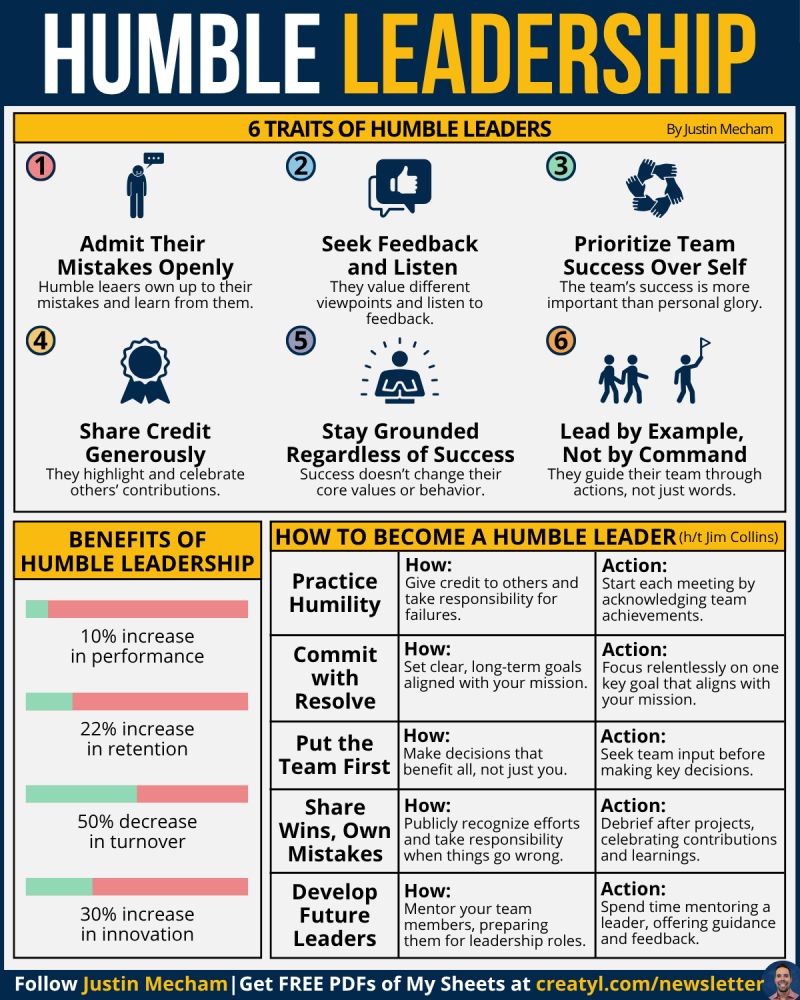
Humble Leadership

Most leaders want credit—

The best ones give it away:

Humble leaders don’t need the spotlight.

They build a team that
doesn’t need one either.

And the results speak louder than any title:

🟢 10% increase in performance
🟢 30% more innovation
🟢 50% drop in turnover
🟢 22% rise in retention

That’s not fluff. That’s data.

And it comes from a different
kind of leadership.

Here’s what humble leaders actually do:

✅ Put the team first
✅ Admit their mistakes
✅ Share credit generously
✅ Stay grounded in success
✅ Listen more than they speak
✅ Lead by example, not command

But humility isn’t a personality trait—

It’s a practice.

Make this your new default.

Because what you do in power—

Reveals who you are without it.

Nemawashi

Ever notice how some people get their ideas approved effortlessly while others face constant pushback?

The difference isn’t charisma.
It’s preparation.

I am in Japan this week and found this.

In Japan, they have a word for this: Nemawashi.
It means “preparing the roots” before you plant.

Smart leaders never walk into important meetings cold.
They build consensus one conversation at a time.

Here’s the 6-step system that turns skeptics into supporters:

1. Map Your Stakeholder Tree
↳ List everyone affected by your decision
↳ Note their concerns and influence level

2. Start With Your Skeptics
↳ Meet them first, not last
↳ They’ll help you spot real problems early

3. Listen More Than You Pitch
↳ Ask what worries them about your idea
↳ Understanding beats convincing every time

4. Co-Create Solutions Together
↳ Ask how they would approach the challenge
↳ Include their ideas in your final plan

5. Circle Back With Updates
↳ Show how you used their feedback
↳ People support what they help build

6. Make Meetings a Formality
↳ When everyone arrives already aligned
↳ Your proposal passes without debate

I’ve seen this transform outcomes:

✅ A project no one believed in suddenly gets full support
✅ A budget that usually faces scrutiny gets approved fast
✅ A major change goes smoothly instead of causing chaos

This isn’t about manipulation.
It’s about giving people a voice before decisions are made.

Try this with your next big proposal.
Start with one skeptic.
Have one honest conversation.

You’ll be surprised how quickly resistance becomes partnership.

Still Worth Waking Up For

Some days feel heavy before they even begin. You wake up already tired, already bracing yourself for whatever the day might throw your way. It’s not always one big thing either. Sometimes it’s a collection of small, quiet weights—unfinished conversations, lingering worries, plans that didn’t work out, or just the sense that you’ve been carrying more than your share for a while now.

In moments like that, it’s easy to slip into survival mode. Do what needs to be done. Get through the hours. Count down until the day is over. Hope tomorrow feels lighter, even if you’re not quite sure why it would.

But every now and then, something interrupts that loop.

A song comes on unexpectedly. Not even a dramatic one—just something familiar, something that knows you. For a few minutes, your shoulders drop. You remember a different version of yourself, or maybe you remember that you’re still the same person, just a bit more tired these days. Music has a quiet way of reminding us that feeling deeply is not a weakness. It’s proof we’re still here.

And then there’s moonlight. That soft, steady presence that doesn’t ask anything of you. You don’t have to be productive for it. You don’t have to explain yourself. You can just stand there, or sit by a window, and let the world be quiet for a moment. The moon has seen every kind of human night—grief, joy, waiting, hoping—and it never rushes us through any of it. It simply stays.

Mornings, too, have their own kind of stubborn grace. Even when you wish the world would pause, morning shows up anyway. Light spills in, birds make their case for starting again, and somewhere deep down, there’s a small invitation: you can try today. Not perfectly. Not heroically. Just honestly.

This doesn’t mean everything is suddenly okay. It doesn’t mean the hard parts disappear or that answers magically arrive. It means that alongside the struggle, there are still reasons—sometimes very small ones—to stay engaged with life. Reasons that don’t demand optimism, just presence.

We often think we need a grand purpose to keep going. A big breakthrough. A clear sign that things will improve. But more often than not, it’s the ordinary, almost unremarkable moments that keep us tethered. A favorite song. The way the night air feels on your skin. The quiet promise of coffee in the morning. These aren’t solutions, but they are anchors.

There’s something grounding about noticing what still exists even when everything feels off. The world doesn’t stop being beautiful just because we’re struggling to see it. Sometimes beauty waits patiently until we’re ready to look again.

If you’re going through something right now, you don’t have to minimize it. What you’re carrying matters. But it’s also okay to let small joys coexist with your pain. Let them sit side by side. Let them remind you that your story is still unfolding, even on days when it feels like nothing is moving.

You don’t need to have it all figured out. You don’t need to feel hopeful every day. You just need to remember this: there is still music. There is still moonlight. There are still mornings worth waking up for. And sometimes, that’s more than enough to take the next breath, the next step, the next day.

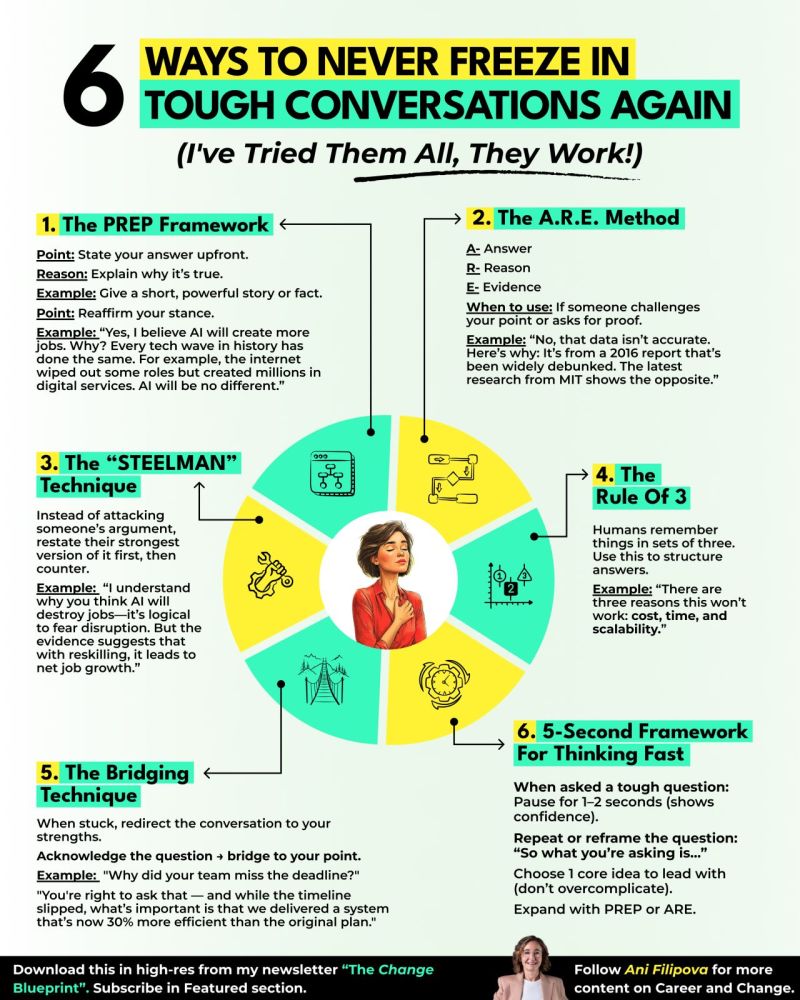
6 Ways to Never Freeze in Tough Conversations

3am. Still awake. Still replaying that meeting.

The perfect response hits you now. 6 hours too late.

I used to have sleepless nights rewriting conversations in my head.
Angry at myself for freezing when it mattered.

The worst part?
Knowing exactly what to say.
Just… afterwards.

Then I cracked the code:
Quick thinking isn’t a talent. It’s a system.

Here are 6 frameworks that turn tongue-tied into articulate:

1. The PREP Power Move
Point → Reason → Example → Point
Make your stance unshakeable in under 30 seconds.

2. The A.R.E. Shield
Answer → Reason → Evidence
When they challenge you, hit back with facts, not feelings.

3. The “Steelman” Surprise
Restate their argument better than they did.
Then dismantle it with grace.

4. The Rule of 3
“Three reasons this won’t work…”
Humans remember things in sets of three.
Use it

5. The Bridge Escape
Acknowledge their point.
Redirect to your strength.
Control the narrative.

6. The 5-Second Reset
Pause. Reframe. Choose ONE idea. Expand.
Confidence beats speed every time.

(Full breakdown with examples in the visual – save it before your next big meeting)

Last week, one of my coaching clients texted me:
“Used the Steelman technique with my CEO. He actually said ‘great point’ for the first time ever.”

That’s what happens when you stop trying to be naturally quick.
And start being systematically prepared.

Your 3am revenge fantasies?
Time to make them tomorrow’s victories.

What conversation are you still replaying?

12 Secrets to Double Your Free Time

You don’t need more time.

You need smarter systems.

Here are 12 that will change everything.

1. “Swallow the frog”
2. 2-Minute Rule
3. 4 Quarter Method
4. Chunk bigger tasks
5. 5-Second Rule
6. Airplane Mode
7. 5-Year Filter
8. 3:3:3 Plan
9. Ask powerful questions
10. Grayscale Mode
11. Take imperfect action
12. Make ‘No’ your default

If you had more time, you could:

Build Your Wealth:
• Learn a high-income skill (AI, coding, sales)
• Start that side business you’ve been dreaming about
• Network with industry leaders over coffee

Optimize Your Health:
• Get in the best shape of your life
• Cook nutritious meals instead of fast food
• Sleep 8+ hours nightly (your body will thank you)

Deepen Your Relationships:
• Spend quality evenings with family
• Plan regular date nights with your partner
• Reconnect with old friends you’ve lost touch with

Set up these systems,
And start reclaiming time today.

How to be an Outstanding Coach

Great coaches don’t give answers.

They guide others to find their own ⬇️

Outstanding coaches know it’s not about control.
It’s about clarity, questions, and confidence.

Coaching isn’t fixing. It’s not leading with ego.

And it’s definitely not about having all the answers.

It’s about creating space…
For reflection, ownership, and growth.

Here’s the extended GROWTH model:

Goal – What do they truly want to achieve?
Reality – Where are they now in relation to that?
Options – What’s possible from here?
Will – Why does this matter to them?
Tactics – What’s the action plan?
Habits – How will they sustain momentum?

That’s the structure.
But these are the skills that make it work:

↳ Active listening
↳ Asking powerful questions
↳ Empathy without judgment
↳ Clarifying key insights
↳ Encouraging ownership
↳ Supporting emotional growth

These skills can’t be scripted.
They take practice.
But when done right, they unlock breakthrough moments.

Want to avoid derailing the session?

❌ Don’t wing it.
❌ Don’t make it about you.
❌ Don’t rush to give advice.
❌ Don’t skip clear goal setting.

Because when coaching becomes advice-giving,
you strip away their ability to grow on their own.

Instead, use questions that spark self-discovery:

↳ What goals are you looking to achieve?
↳ How would you like me to support you?
↳ What’s the first action you’d like to take?
↳ What might be getting in your way right now?
↳ What does success look like to you?

✅ Great coaching builds confidence.
✅ It strengthens decision-making.
✅ And it creates real accountability.

🧠 Remember; coaching isn’t about steering the ship.
It’s about helping others find their own compass.

What’s the one coaching habit that’s helped you the most?

Master Goal Setting

83% of New Year’s resolutions fail by February.

After years of setting ambitious goals only to
abandon them, I discovered something interesting:

The most successful people don’t count on motivation.

Instead, they use proven frameworks that make
success automatic.

4 goal-setting frameworks that actually work:

1. CLEAR Framework (h/t Adam Kreek)
↳ Get your team rowing in the same direction
↳ Stop chasing everything. Focus on fewer, better goals
↳ Connect goals to what truly motivates you
and your team
↳ Break big dreams into bite-sized steps
↳ Be willing to adjust when reality hits

2. Backward Goal-Setting (h/t Stephen Covey)
↳ Start with the end clearly in mind
↳ Map out every milestone needed to get there
↳ Break each milestone into specific actions
↳ Set clear deadlines for everything
↳ Begin with the very first step TODAY

3. The 5-3-1 Model
↳ Set ONE bold 5-year vision that excites you
↳ Define THREE annual targets that move you closer
↳ Check alignment QUARTERLY and course-correct
↳ Share your vision often to build team enthusiasm
↳ Stay agile. Pivot fast when something’s not working

4. Three Wins Method (h/t Peter Drucker)
↳ Identify 3 meaningful “wins” to achieve each day
↳ Write them down to stay laser-focused
↳ Prioritize your best energy for these wins
↳ Reflect on progress every evening
↳ Make it a daily habit

One final thought:

Goals not written down are just wishes.
And frameworks without action are just theory.

But goals written down + frameworks + action?
That’s how you make 2025 your breakthrough year.

Which method will you try first? Share below 👇

P.S. Want a PDF of my Goal Setting Cheat Sheet?

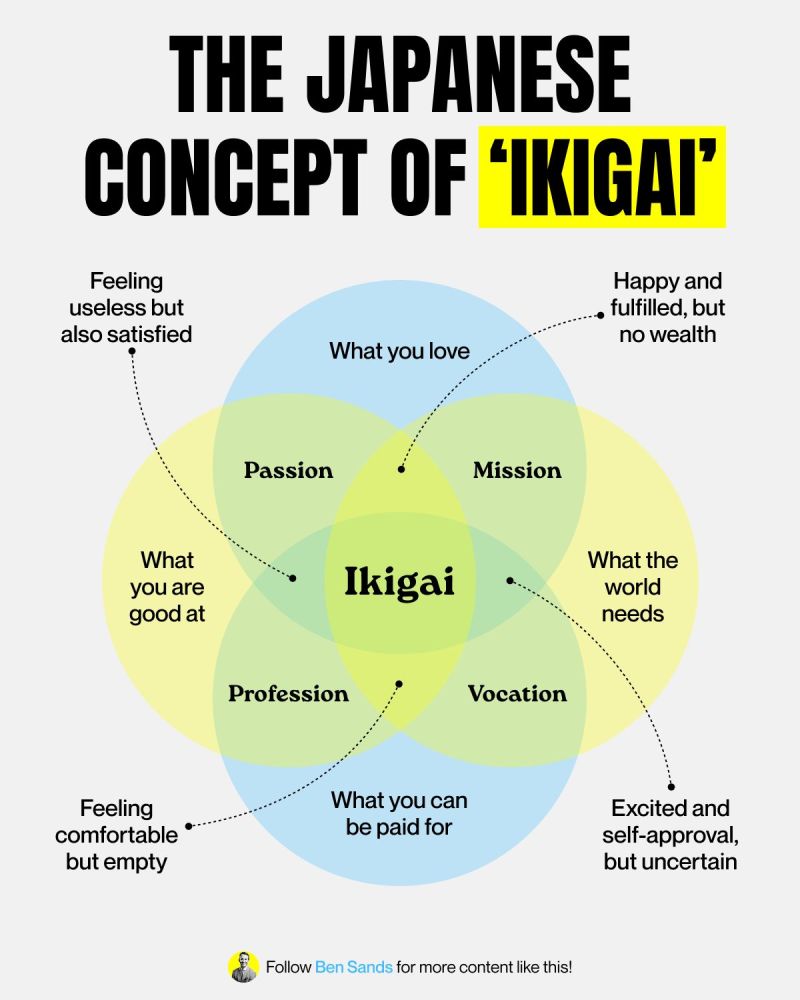
Ikigai

Success isn’t the same as alignment.

Most leaders learn this too late.

I’ve coached many who’ve felt off.

They’re at the top of their game at work,
but still, something was missing for them.

They’re checking the boxes but are disconnected.
Goals are hit, but they don’t feel like wins.
The life they thought they wanted doesn’t fit.

I’ve been there.

In my early career, I travelled the world
consulting for global companies.

On paper, it looked like success.

But something felt misaligned.

I was great at the work, but it wasn’t what I was meant to do.

Knowing about Ikigai would have been really helpful for me back then.

It’s a Japanese concept that reflects your reason for being.

At the center point between:

→ What you love
→ What you’re good at
→ What the world needs
→ And what you can get paid for

Is what you’re meant to do.

And when your life starts aligning around it,
things begin to shift.

→ You move with purpose, not pressure.
→ Work feels energizing, not draining.
→ You start leading with what you value.

Your values become your direction.
And everything else falls into place.

What does alignment look like to you day-to-day?

78 Habits of Top Leaders

Leadership isn’t about titles—

It’s about habits:

Not the habits you perform when it’s easy.

The ones you reach for when it’s not.

How you handle stress.
How you listen when you’re rushed.
How you give feedback when things fall apart.

That’s what people remember.

Not what you meant to say.

Not what you intended to do.

What you repeated.

Here are a few habits worth building:

🟢 Build trust with consistent actions
🟡 Listen actively so others feel heard
🔵 Keep learning, even when you lead
🟠 Stay resilient when things get tough
🟣 Give feedback that helps people grow
🔴 Set clear goals to give people direction

You don’t need 78 new habits.

You need the right one for
where you are right now.

That one small shift?

It can change your team,
your culture, your future.

Print the full list.

Pick your one.

Start today.

Because in the end, your habits
won’t just define how you lead—

They’ll define how you’re remembered.

Last day to register:
🔥I’m teaching a free live 30 day challenge to
build & launch any offer you can dream of.
➡️ Save your seat: https://lnkd.in/gVeRnVSt