

The quietest leaders often make the biggest impact.
Not through bold declarations or power moves.
But through something deeper: empathy.
It’s more than just listening to words.
It’s hearing the unspoken.
Understanding the unsaid.
Real empathy in leadership means:
➟ Noticing when your star performer seems off
➟ Reading between the lines in conversations
➟ Sensing team tension before it erupts
When you lead with empathy:
✅ Trust deepens naturally
✅ Problems surface early
✅ Solutions emerge more easily
But here’s what many miss:
Empathy isn’t soft. It’s strategic.
It’s the difference between:
➟ A team that hides problems
➟ And one that solves them together
Between:
➟ People who do the minimum
➟ And those who give their best
Between:
➟ A group that works side by side
➟ And a team that moves as one
Want to strengthen your empathy?
Start with silence.
Listen more than you speak.
Watch for what isn’t being said.
Because in leadership, the greatest power
isn’t in being heard, but in truly hearing others.
That’s how you build teams that last.
That’s how you create impact that matters.
That’s how you leave a legacy worth leaving.
Your next level of leadership
starts with two simple words:
“I’m listening.”
Mean them.
6 Life Automations

6 life automations that will save you hundreds of hours:
1. Automate Your Finances
2. Automate Your Passive Income
3. Automate Your Wardrobe
4. Automate Your Meals
5. Automate Your Calendar
6. Automate Your Mornings
Remember:
Time is your most valuable resource.
You deserve to win back as much of it as possible.
Use these automations to get started today.
P.S. One of my favorite life automations?
Turning knowledge into passive income.
If you’re sitting on expertise that could help others,
platforms like Kajabi make it simple to monetize what you already know.
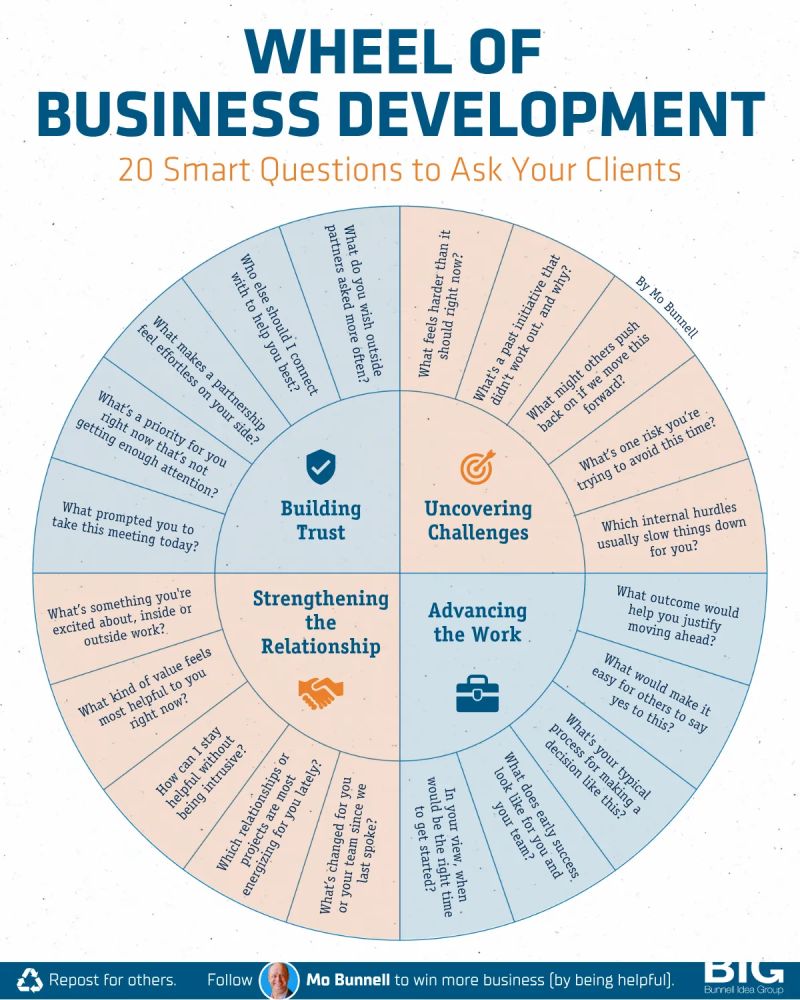
Wheel of Business Development
Stalled deals often have a common cause.
(And it’s easier to fix than you think.)
You didn’t ask the one thing they needed to hear.
Most client-facing professionals mean well.
But in conversations, good intent isn’t enough.
What matters is asking the right questions.
The kind that uncover what actually moves the work forward.
Having coached 50,000+ professionals through this exact challenge, I’ve learned something crucial.
Questions are a business developer’s greatest tool.
They move relationships forward when everything else stalls.
They uncover challenges no deck could reveal.
They open doors that presentations can’t.
They build trust faster than any credential.
Here are 20 smart questions to ask your clients, organized into 4 categories:
Building Trust
✅ What prompted you to take this meeting today?
✅ Who else should I connect with to help you best?
✅ What do you wish outside partners asked more often?
✅ What makes a partnership feel effortless on your side?
✅ What’s a priority for you right now that’s not getting enough attention?
Uncovering Challenges
✅ What feels harder than it should right now?
✅ What’s one risk you’re trying to avoid this time?
✅ What’s a past initiative that didn’t work out, and why?
✅ Which internal hurdles usually slow things down for you?
✅ What might others push back on if we move this forward?
Advancing the Work
✅ What outcome would help you justify moving ahead?
✅ What would make it easy for others to say yes to this?
✅ In your view, when would be the right time to get started?
✅ What does early success look like for you and your team?
✅ What’s your typical process for making a decision like this?
Strengthening the Relationship
✅ How can I stay helpful without being intrusive?
✅ What kind of value feels most helpful to you right now?
✅ What’s changed for you or your team since we last spoke?
✅ What’s something you’re excited about, inside or outside work?
✅ Which relationships or projects are most energizing for you lately?
I always tell my coaching clients:
Don’t rush the pitch.
Slow down.
Ask better questions.
And listen.
I mean, really listen to what they are telling you.
Because real relationships and real results start with a question that makes someone feel seen.
Try one of these in your next client conversation.
Listen for what surprises you.
Stress Leadership Types
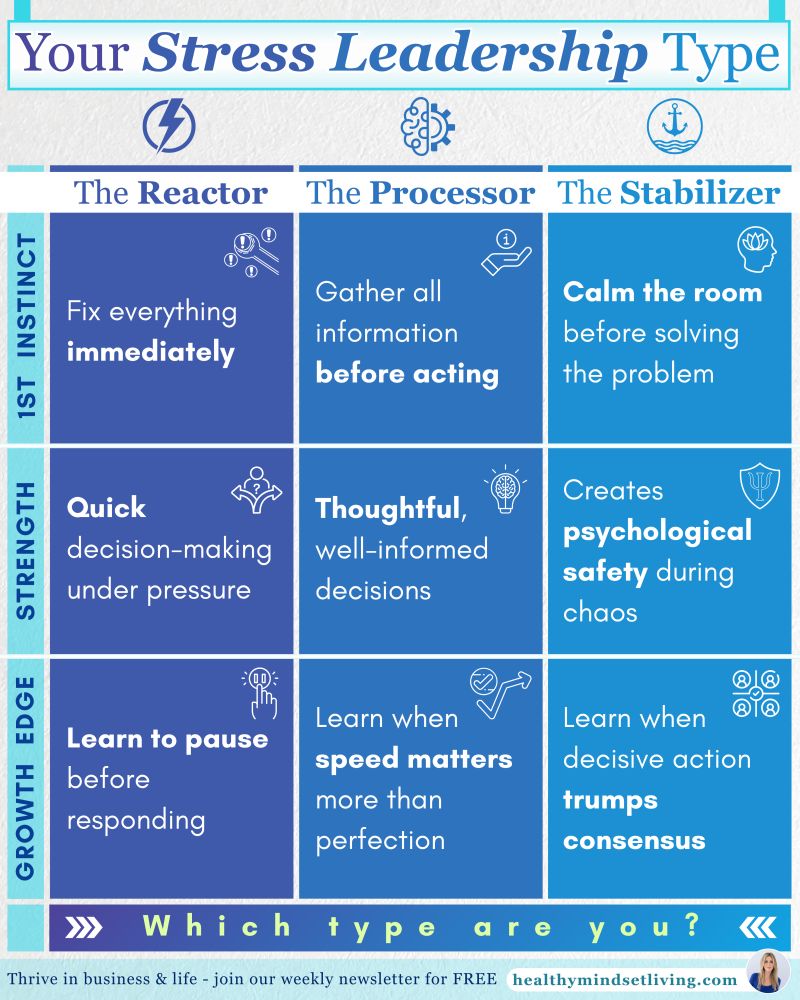
Your stress response reveals your leadership type.
Here’s how to decode yours👇🏼
Most people think stress kills leadership potential.
Wrong.
It reveals it.
3 stress leadership types:
1) ⚡ The Reactor
↳ First instinct: Fix everything immediately
↳ Strength: Quick decision-making under pressure
↳ Growth edge: Learn to pause before responding
↳ In action: “I’ll handle this” becomes your default response
2) 🧠 The Processor
↳ First instinct: Gather all information before acting
↳ Strength: Thoughtful, well-informed decisions
↳ Growth edge: Learn when speed matters more than perfection
↳ In action: “Let me think about this” is your go-to phrase
3) 🎯 The Stabilizer
↳ First instinct: Calm the room before solving the problem
↳ Strength: Creates psychological safety during chaos
↳ Growth edge: Learn when decisive action trumps consensus
↳ In action: “Everyone take a breath” starts most of your responses
Your stress response isn’t broken.
It’s your leadership signature.
Master it.
Don’t hide from it.
Which type resonates most with you right now?
The Rarest Thing We Carry
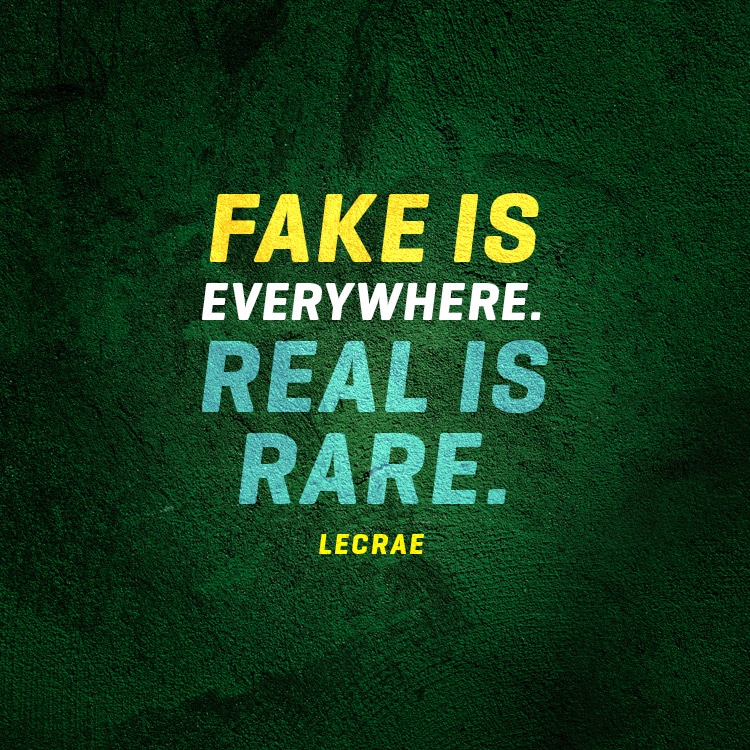
We live in a world where everything looks polished, filtered, edited, and staged. It’s almost funny how often I come across perfectly curated moments online—sunsets that look like they were painted by AI, “candid” smiles that were obviously rehearsed, quotes that sound deep but mean nothing when you really sit with them. You don’t even have to look far. Fake is everywhere. Real is rare. It’s the kind of line you read somewhere, nod to, and then suddenly start noticing in your everyday interactions.
Today, that thought found its way into a conversation with a colleague. We were talking about work when they suddenly said, “You know what I appreciate? When I can be myself with my manager and team. No extra layers, no politics, no filters, no performance.” It caught me off guard because it echoed exactly what I’d been thinking while looking at this illustration earlier. That simple line—Fake is everywhere. Real is rare.—felt like it had climbed out of the picture and sat right there between us.
And it stayed with me.
There’s a kind of relief that comes with realness. We spend so much of our time trying to manage impressions, maintain images, and present the most acceptable version of ourselves. When someone shows up without their armor, just as themselves, it hits different. It reminds you of how exhausting pretending can be. It makes you want to exhale.
Realness isn’t about oversharing or being brutally honest to the point of hurting people. It’s not about being raw 24/7 or saying whatever crosses your mind. It’s something softer, more grounded. It’s when your words match your intentions. When your actions match your promises. When the energy you give people is consistent whether someone’s watching or not.
Maybe that’s why authenticity feels so rare—because it requires courage. It requires slowing down long enough to know who you actually are beneath the expectations, the personas, and the habits you’ve collected over the years. It requires resisting the temptation to fit neatly into someone else’s idea of you.
The irony is, everyone claims to want authenticity, yet so many people retreat into masks because they fear judgment. And fair enough—being real comes with risk. You can be misunderstood. You can be rejected. You can be told you’re “too much” or “too honest” or “too sensitive.” But the rewards of being real? They’re worth every bit of that risk.
The relationships you build become deeper. Conversations become more meaningful. Trust becomes effortless. And life, oddly enough, becomes much simpler because you’re no longer juggling multiple versions of yourself.
Maybe that’s why I appreciated that conversation today. It wasn’t long or philosophical, but it was honest enough to remind me that authenticity still exists. People still crave it. And sometimes, the universe just nudges you with the right words at the right moment—whether on a piece of art or in a casual chat at work—to say, “Stay true. Stay real.”
Because in a world full of filters and illusions, being genuine might just be the rarest, most valuable thing you can offer.
Top 65 Books You Need
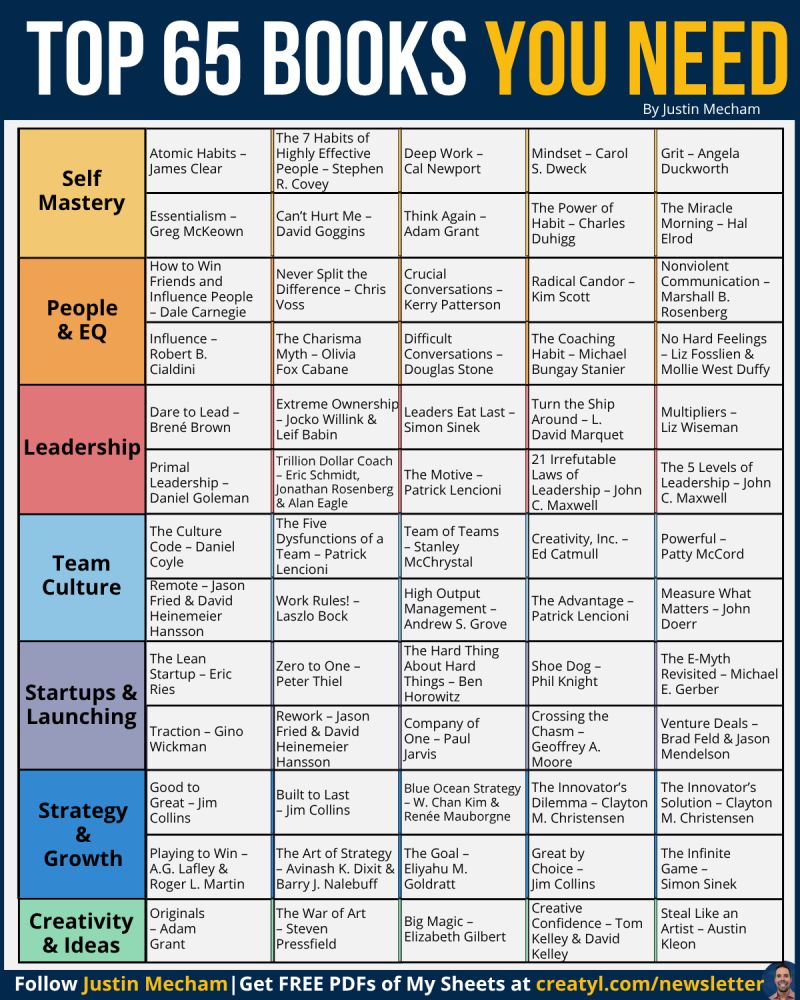
65 of the best books on planet earth—
Condensed into one list:
If you’re building anything—
a career, a company, or a better life,
These are the books that show up
again and again in the libraries
of leaders, builders, creators,
and decision-makers.
They don’t just share good ideas.
They change how you think, lead, and operate.
Because real breakthroughs don’t come
from more scrolling.
They come from deeper thinking.
And these books will take you there.
Inside you’ll find:
🟢 Creativity tools
🟠 People & EQ titles
🔵 Team culture guides
🟣 Startup and launch books
🟡 Self-mastery books
🔴 Leadership reads
🟤 Strategy plays
One book can shift your values.
One idea can change your decisions.
One page can stop bad habits from repeating.
One insight can build the life you actually want.
It only looks small—until it’s not.
Phrases That Break Client Trust
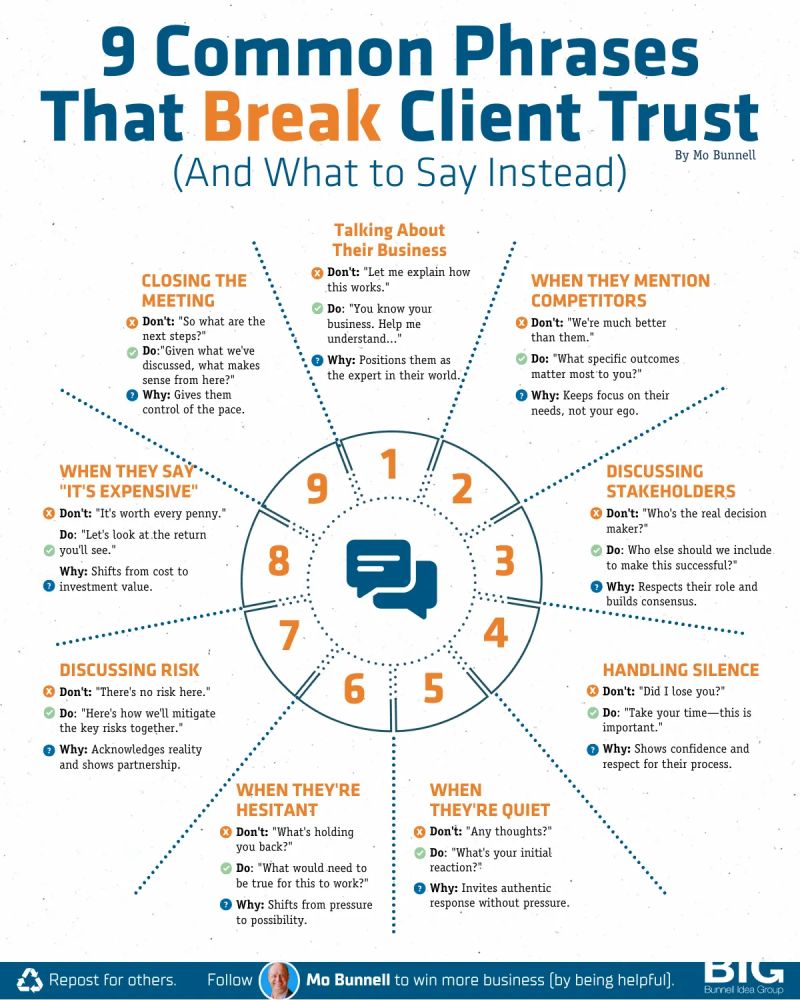
In every client conversation, your words are doing one of two things:
Building trust or breaking it.
And it doesn’t take much to tip the scale the wrong way.
A recycled line.
A rushed phrase.
A question that makes them pull back.
We’ve all said something with good intent…
That landed the wrong way.
But here’s the upside:
Better language earns better outcomes.
Not perfect.
Not polished.
Just better.
Your language matters.
Here’s what often breaks trust:
❌ “Who’s the real decision maker?”
❌ “Let me explain how this works.”
❌ “So what are the next steps?”
❌ “What’s holding you back?”
❌ “We’re better than them.”
❌ “It’s worth every penny.”
❌ “There’s no risk here.”
❌ “Did I lose you?”
❌ “Any thoughts?”
And what builds it instead:
✅ “What’s your initial reaction?”
✅ “Who else should we include?”
✅ “Take your time, this is important.”
✅ “Let’s look at the return you’ll see.”
✅ “What outcomes matter most to you?”
✅ “What would need to be true for this to work?”
✅ “After our discussion, what makes sense next?”
✅ “Here’s how we’ll mitigate the key risks together.”
✅ “You know your business, help me understand…”
The beauty in it all?
Even small shifts in language can lead to big leaps in trust.
Because when your words reflect empathy, not ego, your clients lean in.
And that’s exactly how long-lasting partnerships are formed.
Which of these feels most natural to you?
And what’s one phrase you’ve retired lately?
12 Habits That Kill Growth
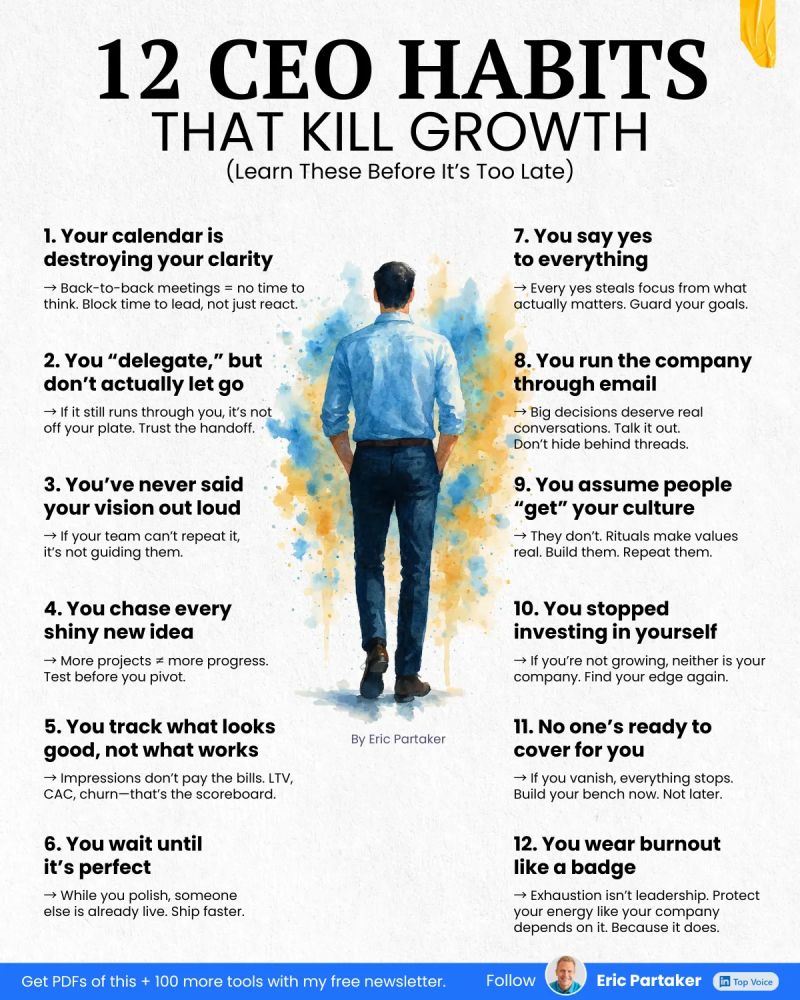
12 Brutal CEO Habits That Kill Growth
(This applies to you in your role too!)
1. Your Calendar Is Destroying Your Clarity
→ Back-to-back meetings leave no space to lead.
You’re reacting, not thinking.
2. You “Delegate,” But Don’t Let Go
→ If it still runs through you, it’s not really off your plate.
Don’t micromanage. Empower, then step back.
3. You’ve Never Said the Vision Out Loud
→ If your team can’t repeat it, it’s not guiding them.
4. You Chase Every Shiny New Idea
→ Constant pivoting kills momentum.
Test it before you toss the roadmap.
5. You Track What Looks Good, Not What Works
→ Likes and impressions don’t equal traction.
LTV, CAC, churn. That’s the truth.
6. You Wait for Perfect
→ While you polish, someone else ships.
Launch faster. Iterate later.
7. You Say Yes to Everything
→ Every yes steals focus from
what actually moves the needle.
8. You Run the Company Through Email
→ Long threads kill alignment.
One real conversation moves faster.
9. You Assume Everyone “Gets” the Culture
→ They don’t. Rituals make values stick.
Repeat them often.
10. You Stopped Investing in Yourself
→ If you’re not growing, neither is the business.
Find your edge again.
11. No One’s Ready If You Step Away
→ If you vanish, everything stops.
Build your bench now.
12. You Wear Burnout Like a Badge
→ Exhaustion isn’t leadership. Protect your energy
like your business depends on it. Because it does.
The truth is…
Most CEOs don’t fail because of one big mistake.
They get dragged down by small habits that
they thought were harmless.
💬 Which of these hits you hardest right now?
Quiet Places, Quiet People
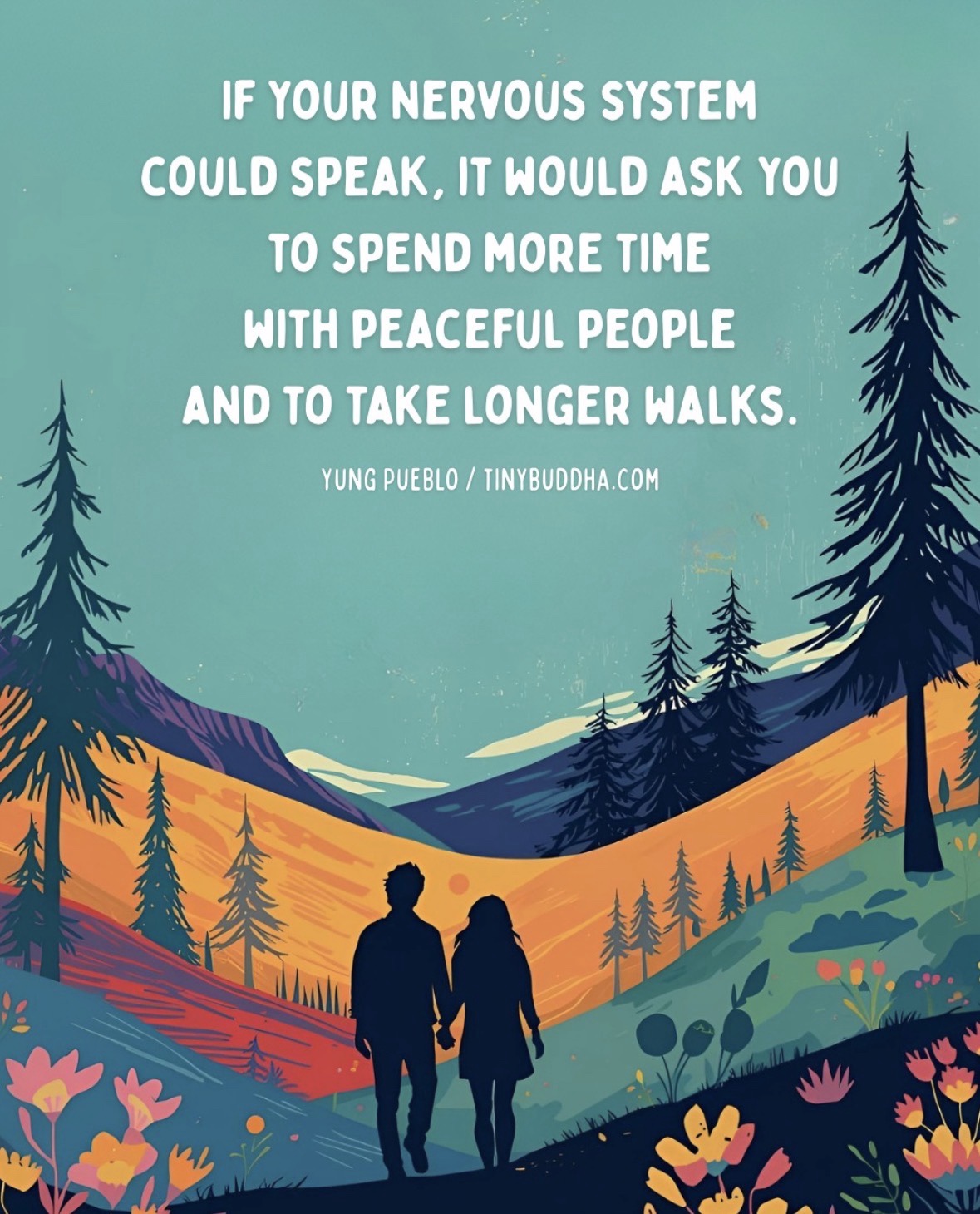
If my mind could speak without all the noise of the day, I think it would sound a lot like that line. Something soft. Something honest. Something I probably already know but ignore more often than I should.
It’s funny how we pretend we’re machines that can run forever on deadlines, pressure, and back-to-back obligations. We keep pushing, thinking a break is optional, rest is a reward, and calm is something we’ll “get to eventually.” But the body remembers what we force it to forget. It nudges us quietly at first—tired mornings, shorter patience, the sense that everything feels heavier than it should. And when we still don’t listen, it whispers a little louder: slow down, soften, reset.
I’ve learned that the people we spend our time with shape our inner weather more than we admit. There are people who bring storms—maybe unintentionally, maybe because they’ve never learned to sit with their own. And then there are the peaceful ones, the ones who don’t raise their voice to be heard, who make rooms feel safer just by being in them, who remind you—not by lecturing, but simply by living—that life doesn’t always have to be a rush.
Being around people like that feels like stepping into shade on a brutal summer day. Nothing dramatic. Just relief. Just quiet. Just the kind of company your nervous system would choose if it had the final say.
And then there are the walks… the simplest medicine we keep forgetting exists. There is something about putting one foot in front of the other without a destination, without a timer, without a purpose bigger than “let me breathe for a bit.” The world slows down when you walk. Your thoughts spread out instead of piling on top of each other. You start noticing small things—light on leaves, birds you’ve never seen before, the way the wind shifts around corners. It’s gentle, grounding, and strangely reassuring, as if life is reminding you it’s not as complicated as your mind makes it.
Maybe that’s the secret no one teaches us: peace isn’t a luxury, it’s a form of alignment. The more time you spend around peaceful people, the more you remember what it feels like to be calm inside. The more often you take unhurried walks, the more you learn to trust your own rhythm again.
And when your mind is calmer, everything else gets clearer. Decisions don’t feel like battles. Conversations don’t feel like performances. Even the problems that looked overwhelming start looking manageable, simply because you’re no longer approaching them from a place of exhaustion.
What I love most about this idea—your nervous system asking for peaceful company and longer walks—is that it doesn’t require a big life change. No dramatic escape. No perfect routine. Just small choices that tell your body: I’m listening now.
So maybe today, or this week, or whenever you finally feel the nudge, choose the gentler people. Choose the slower path home. Choose the walk with no goal except to breathe.
Your mind might not speak out loud, but trust me… it’s been trying to tell you this for a long time.
Master the Art of Saying No
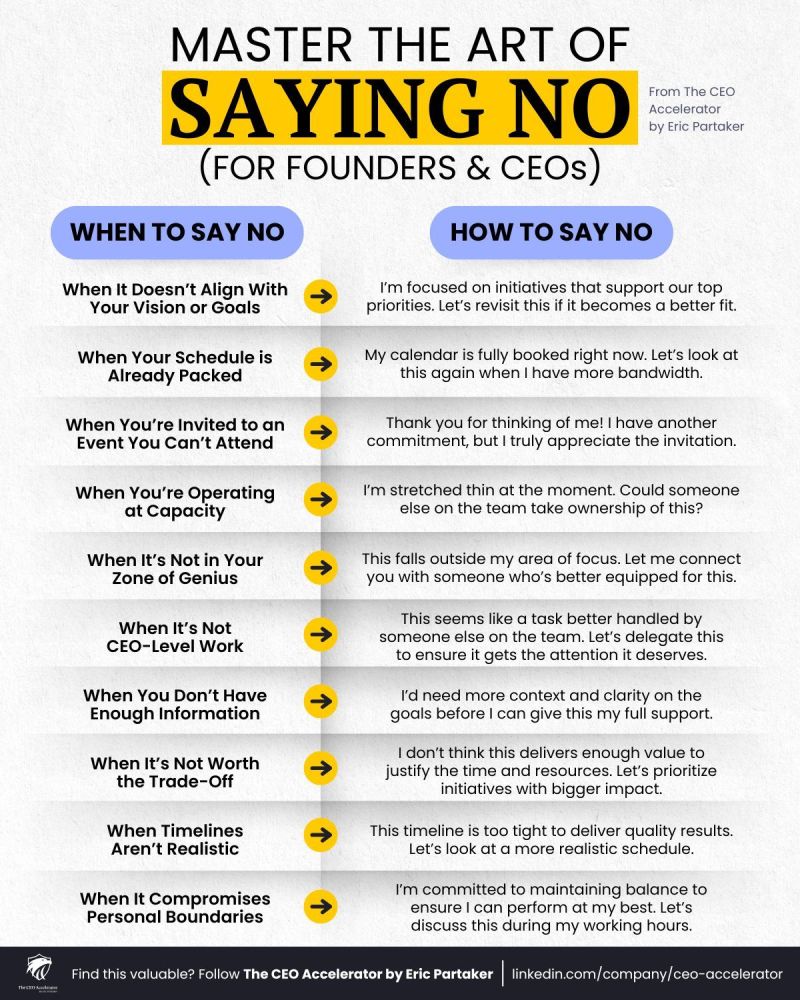
That word? “No.”
Most of us struggle to say it.
We worry about letting people down.
About missing opportunities.
About not being a “team player.”
But after decades in leadership I’ve learned this brutal fact:
Your ability to say “no” determines your success as a CEO.
Let me share the exact phrases that will help you
say “no” gracefully:
When your calendar is packed:
“My calendar is fully booked right now.
Let’s look at this again when I have more bandwidth.”
When it doesn’t match your vision:
“I’m focused on initiatives that support our top priorities.
Let’s revisit this if it becomes a better fit.”
When you’re at capacity:
“I’m stretched thin at the moment.
Could someone else on the team take ownership of this?”
When it’s not your expertise:
“This falls outside my area of focus. Let me connect you
with someone who’s better equipped for this.”
When you need more information:
“I’d need more context and clarity on the goals
before I can give this my full support.”
When the timeline isn’t realistic:
“This timeline is too tight to deliver quality results.
Let’s look at a more realistic schedule.”
When it affects your boundaries:
“I’m committed to maintaining balance so I can perform
at my best. Let’s discuss this during my working hours.”
Here’s what most leaders miss:
Every “yes” you give is actually saying “no” to
something else.
Every time you agree to a meeting that could have been
an email, you’re saying “no” to deep work.
Every time you take on a task someone else could handle,
you’re saying “no” to strategic thinking.
Every time you accept an unrealistic deadline,
you’re saying “no” to quality.
Master the art of saying “no,” and you’ll find yourself
saying “yes” to what truly matters.
Your legacy as a leader depends on it.
 Kenrick Vaz