
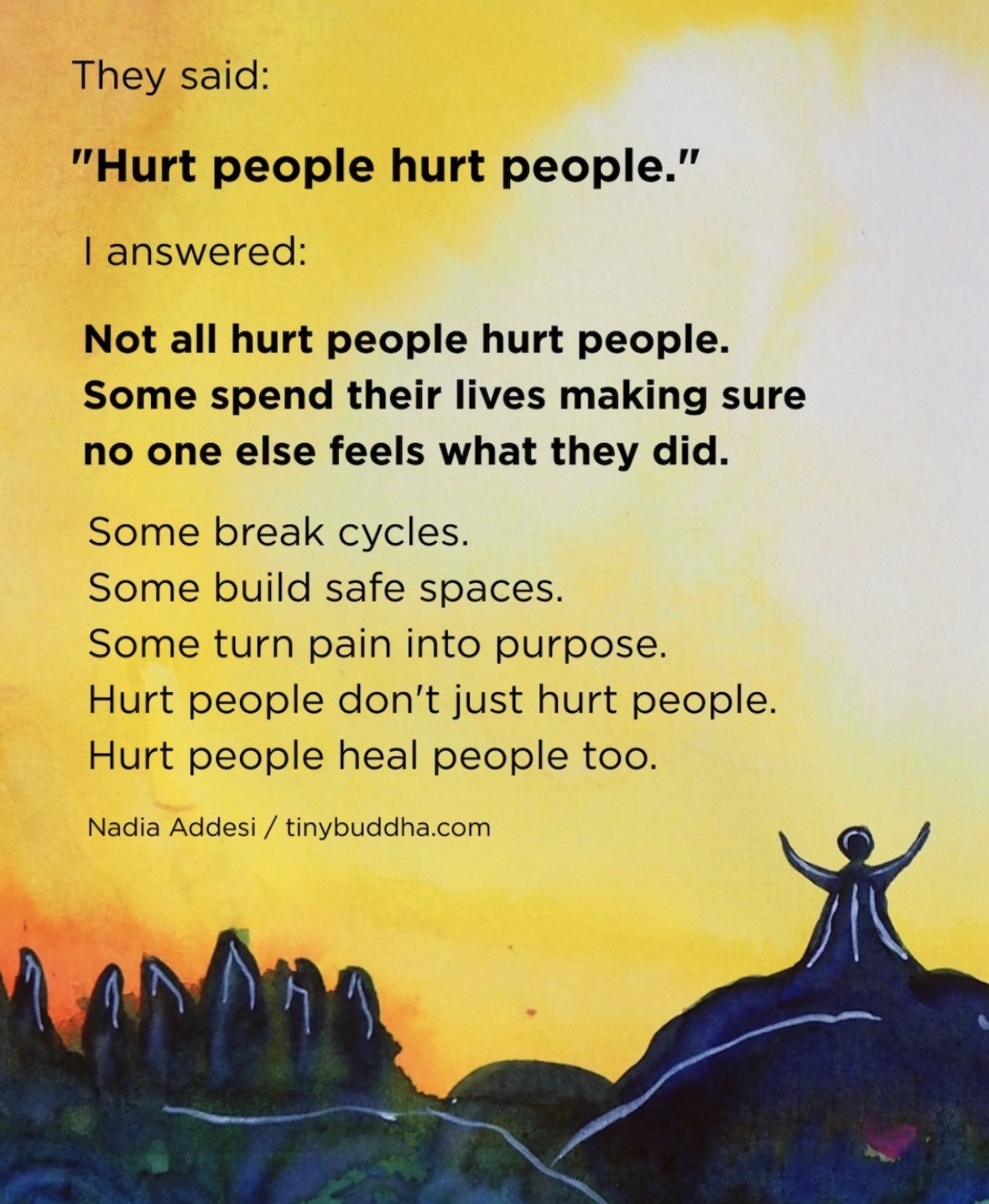
They said, “Hurt people hurt people.”
I’ve heard it a hundred times. It rolls off the tongue like a warning label. Like damage is contagious. Like pain has only one direction to travel.
But I don’t think that’s the whole story.
Not all hurt people hurt people.
Some of them become the gentlest souls you’ll ever meet. Not because life was soft with them, but because it wasn’t. Because they remember exactly how it felt. They remember the silence. The confusion. The sting of words that landed too hard. The loneliness of wishing someone would notice.
And instead of passing that forward, they interrupt it.
Some spend their lives making sure no one else feels what they did.
You see it in the friend who checks in when everyone else moves on. The leader who listens a little longer than necessary. The parent who chooses patience even when they’re tired. The partner who communicates clearly because they know what it’s like to be left guessing.
That kind of intentionality doesn’t come from comfort. It comes from contrast.
Pain can harden you. That’s true. It can make you guarded, reactive, sharp at the edges. When you’ve been bruised enough, it’s easy to start swinging before anyone gets close.
But pain can also deepen you.
There are people who look at their scars and decide they’re not going to be proof of what broke them. They’re going to be proof of what they rebuilt.
They break cycles.
And breaking cycles is not dramatic work. It’s quiet. It’s daily. It’s choosing to respond differently than what you were shown. It’s swallowing words that were once thrown at you. It’s going to therapy when your family didn’t. It’s apologizing when no one ever apologized to you.
It’s uncomfortable. It’s humbling. It’s slow.
But it changes everything.
Some hurt people build safe spaces because they know what it’s like to feel unsafe. They create rooms where people can exhale. Teams where opinions are welcomed. Homes where love isn’t conditional. Friendships where vulnerability isn’t weaponized.
They become what they once needed.
And maybe that’s the most powerful transformation of all.
Turning pain into purpose doesn’t mean pretending it didn’t hurt. It doesn’t mean spiritualizing trauma or wearing suffering like a badge of honor. It means allowing what happened to shape your empathy instead of your bitterness.
It means asking, “How can this make me more aware?” instead of “How can I make someone else pay for this?”
There’s strength in refusing to replicate what wounded you.
There’s courage in staying soft in a world that rewarded your armor.
There’s maturity in realizing that your story can end differently than it began.
The truth is, hurt amplifies whatever you feed it. If you feed it resentment, it spreads. If you feed it reflection, it transforms. If you feed it intention, it redirects.
That’s why the phrase feels incomplete to me.
Yes, hurt people can hurt people.
But hurt people can also heal people.
They can sit across from someone in pain and say, “I get it,” and actually mean it. They can recognize silent struggles because they’ve lived through their own. They can hold space without trying to fix everything, because they know what it’s like to just need someone to stay.
They become cycle breakers, bridge builders, safe harbors.
They become proof that pain doesn’t get the final word.
And maybe that’s the quiet hope in all of this. That what wounded you doesn’t have to define how you show up. That your scars can make you more compassionate, not more cruel. That your history can inform you without imprisoning you.
The bruise may still be there.
But what you do with it — that’s where your power lives.
 Kenrick Vaz