
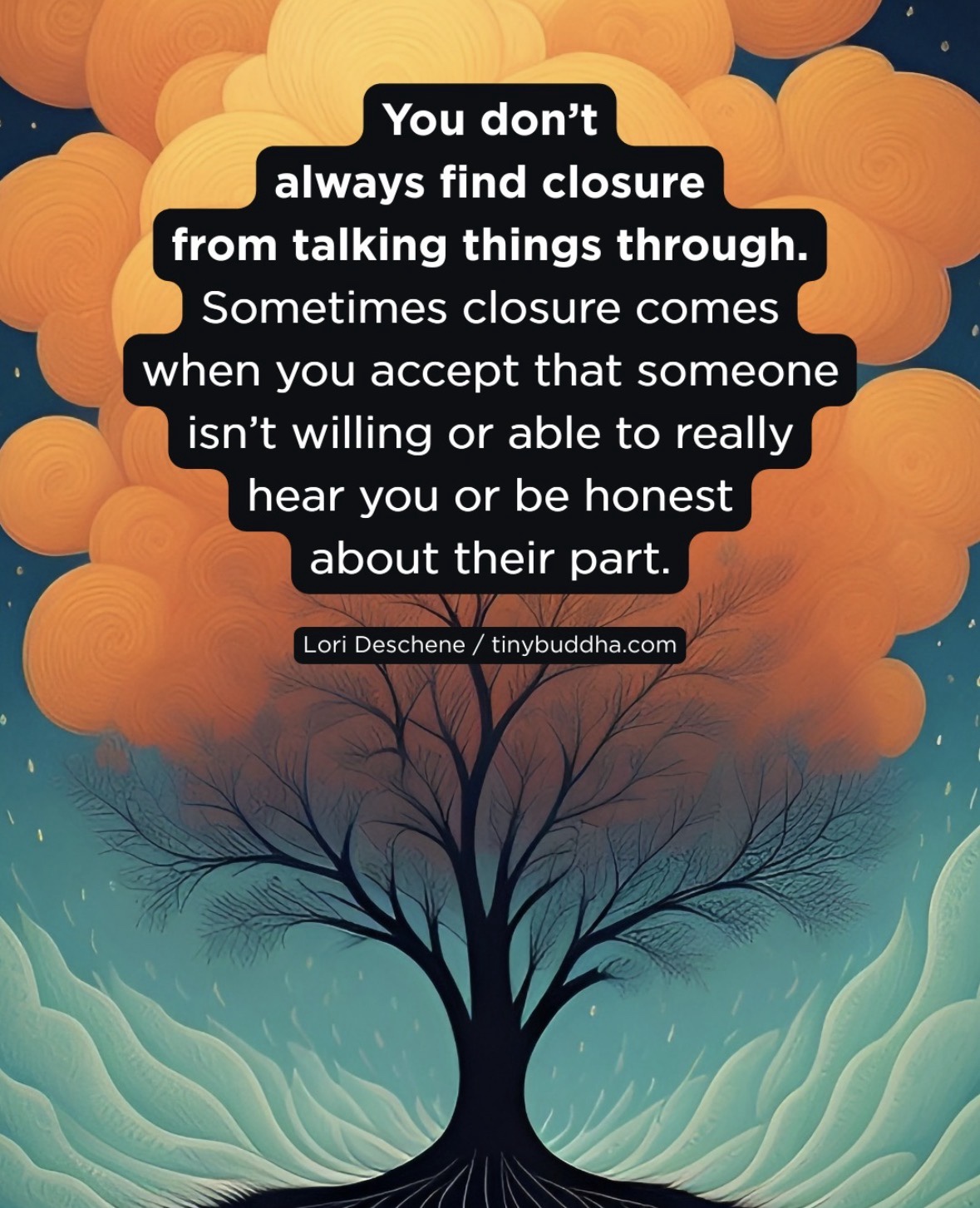
We grow up believing that every story deserves an ending. Not just any ending, but one where everything is explained, feelings are acknowledged, and loose ends are tied neatly together. We imagine conversations where both sides finally understand each other. Where someone admits they were wrong, where we say everything we’ve been holding in, and somehow the air clears.
But life doesn’t always work that way.
Sometimes the conversation never happens. Sometimes it happens, but it goes nowhere. And sometimes you leave it feeling more unheard than before.
That’s the uncomfortable truth about closure. It doesn’t always arrive through words.
We often hold onto the idea that if we could just explain ourselves better, if we could just get the other person to truly listen, things would make sense. We rehearse the conversation in our heads. We imagine the moment they finally understand our perspective. We picture the apology, the accountability, or at least the acknowledgment.
But there are moments when the hardest realization isn’t what someone did.
It’s realizing they’re not willing to see it.
Or they can’t.
Some people simply don’t have the ability to reflect on their own role in things. Others avoid uncomfortable truths because it threatens the story they’ve built about themselves. And some people hear you—but only enough to defend themselves, not enough to understand you.
When you’re dealing with someone like that, no amount of explaining will change the outcome. You can speak calmly, carefully, and honestly, and still feel like your words are bouncing off a wall.
That’s the moment many people get stuck.
Because we think closure is something the other person gives us. We think it arrives when they validate our feelings or admit their mistakes. Until then, we keep trying to reopen the door.
But sometimes closure isn’t something that’s handed to you across a table in a heartfelt conversation.
Sometimes it’s something you quietly claim for yourself.
It comes in the moment you stop expecting the other person to understand. Not because what you felt was wrong, and not because your experience didn’t matter. But because you recognize that their willingness—or ability—to face it simply isn’t there.
That realization can feel disappointing at first. Even unfair.
There’s a certain grief in accepting that someone won’t meet you in honesty or accountability. Especially if you cared about them, trusted them, or believed they were capable of more.
But there’s also a strange kind of peace that follows.
Because once you stop waiting for someone else to acknowledge the truth, you stop giving them control over your sense of resolution.
You stop replaying the conversation you wish you could have.
You stop wondering what else you could have said.
You stop carrying the weight of proving your side of the story.
Closure, in those moments, isn’t dramatic. It doesn’t come with a final speech or a perfect exchange of words. It’s quieter than that.
It’s the moment you accept that someone isn’t willing or able to truly hear you.
And instead of chasing that understanding, you choose to move forward without it.
Not everyone will understand you. Not everyone will own their part. And not every relationship will end with clarity.
But your peace doesn’t have to depend on their awareness.
Sometimes closure isn’t about finishing the conversation.
Sometimes it’s about realizing the conversation was never going to give you what you needed—and deciding that you’re done waiting for it.
 Kenrick Vaz