
There’s something powerful about people who choose kindness even when the world gives them every reason not to.
Not performative kindness. Not the kind that waits for applause, likes, or recognition. Just simple, quiet decency. The kind that holds the door open, checks in on someone, responds gently when they could have snapped, or chooses understanding over judgment.
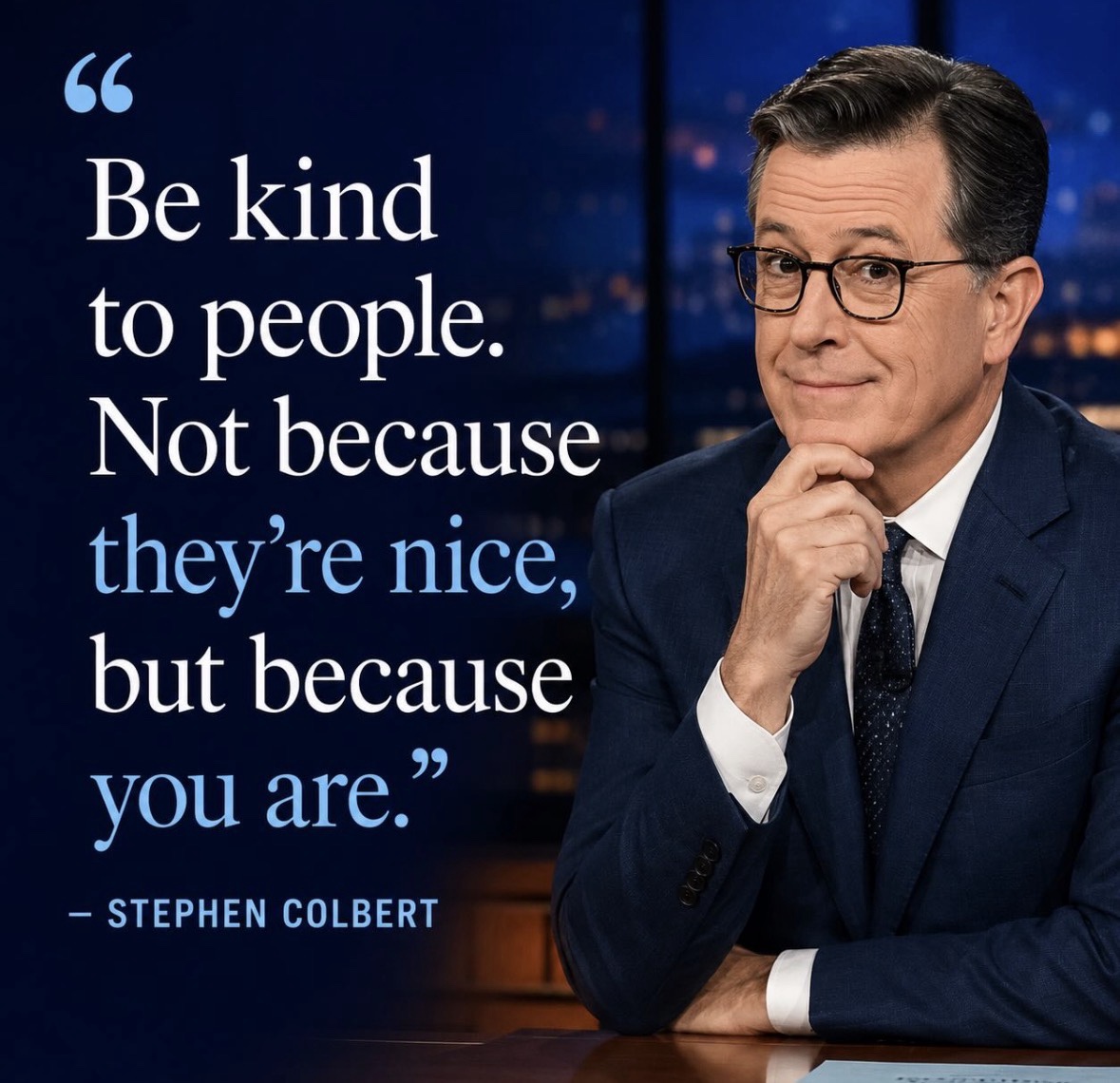
Stephen Colbert once said, “Be kind to people. Not because they’re nice, but because you are.” And honestly, that line stays with you.
Because it completely changes the way we think about kindness.
Most people treat kindness like a transaction. If someone is good to us, we’re good back. If someone is rude, distant, difficult, or cold, we feel justified giving the same energy right back to them. It feels fair. It feels earned.
But kindness that depends entirely on someone else’s behavior is fragile. It disappears the moment life gets inconvenient.
Real kindness is different. It comes from character, not circumstance.
It’s choosing not to let someone else’s bitterness shape who you become. It’s deciding that no matter what kind of day another person is having, you still want to move through life with grace. Not because they deserve it every time, but because you refuse to lose that part of yourself.
And that’s harder than people admit.
Because life gives us plenty of opportunities to become cynical. One rude interaction can ruin your mood. One betrayal can make you guarded. One unfair moment can make you stop trying altogether. Over time, it becomes easy to convince yourself that kindness is weakness or that being “too nice” just gets you hurt.
But some of the strongest people you’ll ever meet are deeply kind.
Not naive. Not soft in a helpless way. Just grounded enough to know that cruelty spreads fast, and someone has to decide not to continue it.
Think about the people you remember most fondly in your life. Chances are it’s not the smartest person in the room or the most successful one. It’s the person who made you feel seen. The person who was patient with you when you were struggling. The person who made space for you when they didn’t have to.
People rarely forget how you made them feel.
And kindness has this strange ripple effect we often don’t notice in real time. A single encouraging conversation can change someone’s entire week. One moment of patience can stop another person from completely breaking down. Sometimes people are carrying battles you know absolutely nothing about, and your kindness becomes the thing that helps them breathe for another day.
The scary part is we usually never get to know the impact we had.
We don’t see the person replaying our encouraging words later that night. We don’t hear about the stranger who needed that small act of humanity more than we realized. We don’t always get closure or proof that being kind mattered.
But it does.
Especially now.
The world feels louder than ever. Everyone is angry about something. Social media rewards outrage more than empathy. People interrupt more, assume more, attack more, and listen less. Somewhere along the way, kindness started looking uncool — like being harsh, detached, or sarcastic was somehow smarter.
But kindness still stands out. Maybe now more than ever.
Not because it’s rare, but because it feels genuine in a world that often doesn’t.
And today, with Stephen Colbert doing his final Late Show, that quote hits even harder. Stephen Colbert has always balanced humor with humanity in a way that made people feel like decency still mattered. Beneath the jokes and interviews was always this reminder that you can be sharp without being cruel, thoughtful without being fake, and kind without losing strength.
That matters.
Because people are exhausted. More than they admit. And sometimes the version of you that stays patient, warm, and compassionate becomes someone else’s proof that goodness still exists.
So be kind to people.
Not because they always deserve it.
Not because they’ll always return it.
Not because it makes life easier.
But because at the end of the day, your kindness says far more about you than it ever will about them.

