
One of the hardest things we do as human beings is accept reality as it is.
Not because reality is always painful. Not because it is always unfair. But because we often become attached to a version of reality that exists only in our minds.
We see people not as they are, but as we hope they will become. We see situations not as they currently stand, but as we wish they would unfold. We fill in the gaps with optimism, assumptions, excuses, and expectations. Sometimes we do it out of love. Sometimes out of fear. Sometimes because the truth feels inconvenient.
The problem is that reality never changes simply because we edit it.
A friend who repeatedly lets you down does not become dependable because you remember their occasional good moments. A toxic workplace does not become healthy because you focus on the few positive interactions. A struggling relationship does not heal simply because you keep imagining what it could be rather than acknowledging what it currently is.
When we resist reality, we often create confusion where clarity already exists.
The signs are there. The patterns are there. The evidence is there.
Yet we keep negotiating with what we already know.
We tell ourselves that maybe things will be different next week. Maybe they didn’t mean what they said. Maybe this time will be different. Maybe if we try harder, wait longer, or care more, reality will eventually match the story we’ve written in our heads.
But clarity rarely arrives through more analysis.
It arrives through honest observation.
It comes when we stop arguing with what is happening and start paying attention to it.
That doesn’t mean becoming cynical. It doesn’t mean assuming the worst about people. It doesn’t mean giving up on hope.
It simply means allowing facts to have a voice that is louder than our wishes.
There is a strange freedom that comes from seeing things clearly.
You stop wasting energy trying to force people into roles they don’t want to play. You stop carrying responsibility for outcomes that are not yours to control. You stop chasing explanations for behavior that has already explained itself through repetition.
The truth may not always feel good, but it is usually simpler than the stories we create to avoid it.
Sometimes clarity reveals that a person genuinely cares about you.
Sometimes it reveals that they don’t.
Sometimes clarity shows that an opportunity is worth pursuing.
Sometimes it shows that it’s time to move on.
In either case, clarity is a gift because it gives you something solid to stand on.
Denial, on the other hand, keeps you suspended between reality and fantasy, unable to fully commit to either.
Many of our biggest frustrations come from expecting reality to be something other than what it is. We want people to think differently, act differently, prioritize differently, or care differently. When they don’t, we experience disappointment not because reality changed, but because our expectations collided with it.
The moment we stop editing reality, we begin making better decisions.
We choose relationships based on who people are rather than who we hope they will become. We evaluate opportunities based on facts instead of fantasies. We spend less time trying to decode mixed signals and more time responding to clear ones.
Clarity is not always comfortable.
Sometimes it asks us to let go of a dream, a relationship, an expectation, or a version of the future we were deeply attached to.
But clarity also makes room for peace.
Because once you see something for what it truly is, you no longer have to spend energy pretending it is something else.
Life becomes lighter when reality no longer needs your approval before you acknowledge it.
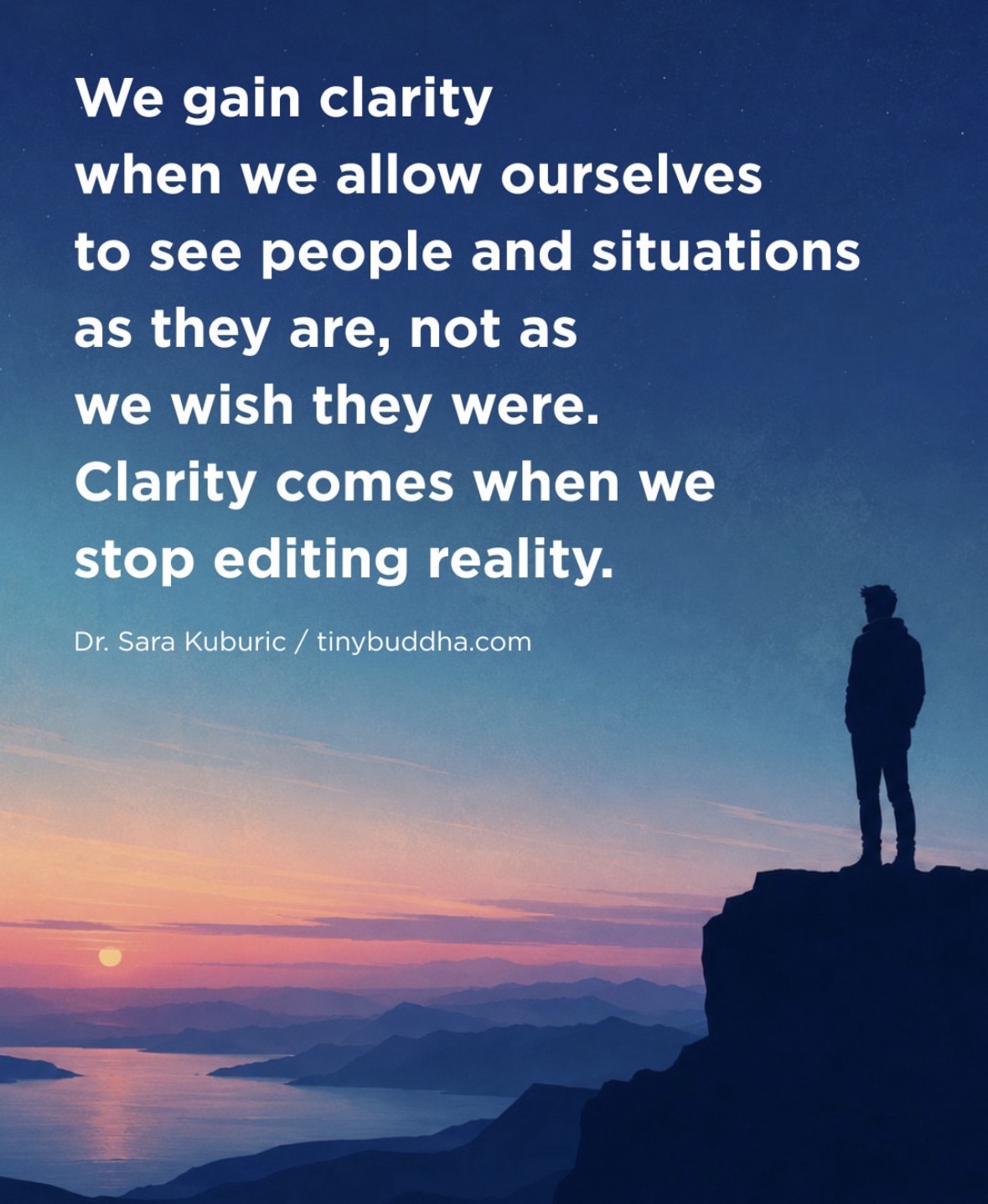
You gain clarity when you allow yourself to see people and situations as they are, not as you wish they were.
And often, the moment you stop editing reality is the moment you finally start moving forward.

