
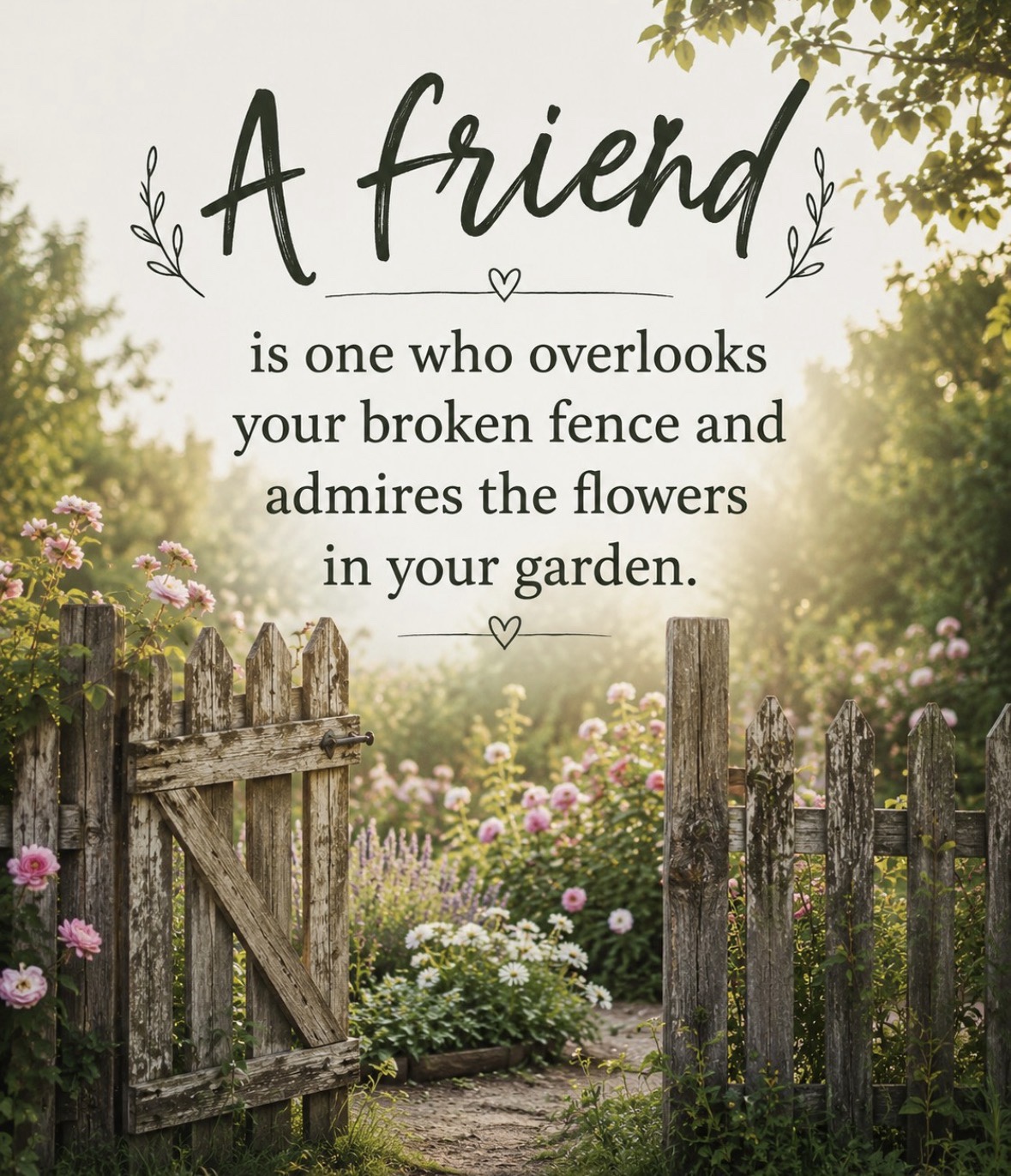
As we get older, friendship becomes less about how many people know our name and more about who truly sees us.
Because the truth is, none of us arrive in each other’s lives perfectly put together.
We all have broken fences.
Some are obvious. Tempers we wish we controlled better. Dreams we abandoned halfway. The habit of canceling plans because life became overwhelming. The seasons when grief made us quieter than usual. The insecurities we hide behind jokes and busy schedules.
Others are hidden behind carefully curated smiles and polite conversations. The parts of ourselves we hope no one notices because we’re afraid they might decide we’re too complicated, too messy, or too much work.
It doesn’t take much to find fault in people. In fact, it’s one of the easiest things in the world.
Spend enough time with anyone and you’ll eventually discover their imperfections. The friend who is always late. The one who forgets to reply to messages. The one who talks too much or too little. The one who struggles to ask for help. The one still trying to heal from things they rarely speak about.
Human beings are wonderfully imperfect.
Real friendship isn’t pretending those broken fences don’t exist. It’s not blindness or denial. It’s seeing them clearly and choosing not to let them define the entire landscape.
It’s noticing that despite the worn-out boards and missing pieces, there are flowers blooming nearby.
The friend who remembers your coffee order without asking.
The one who checks in after your difficult week because they remembered that today mattered.
The person who celebrates your smallest victories with genuine excitement instead of comparison.
The friend who sits beside you in silence when words aren’t enough.
The one who laughs at your stories for the hundredth time as though they’re hearing them for the first.
The flowers are often ordinary. That’s what makes them easy to miss.
We live in a culture that trains us to evaluate people quickly. We make mental lists of strengths and weaknesses, deciding who meets our expectations and who falls short. Sometimes we become expert fence inspectors, carefully documenting every crack and splinter.
But the people who leave the deepest marks on our lives are usually those who choose a different way of seeing.
They acknowledge our flaws without reducing us to them.
They know we’ve made mistakes, yet they continue to believe we are capable of growth.
They understand that difficult seasons are not permanent identities.
They extend grace because they hope someone would do the same for them.
And perhaps that’s the beautiful irony of friendship.
The flowers we admire in others often begin to bloom more freely because someone noticed them in the first place.
People tend to grow in the direction of what is nurtured.
When someone constantly reminds us of our failures, we shrink. We become defensive. We hide.
But when someone notices our kindness, our resilience, our generosity, our humor, our effort, even in imperfect form, something within us straightens its posture.
We try again.
We become a little braver.
A little softer.
A little more ourselves.
Of course, healthy friendships still require honesty. Overlooking a broken fence doesn’t mean ignoring harmful behavior or accepting mistreatment. Love speaks truth when necessary. It sets boundaries when needed.
But it does mean refusing to make another person’s imperfections the headline of their story.
It means remembering that everyone is fighting battles we don’t fully understand. Everyone is carrying disappointments, regrets, fears, and unfinished chapters.
Everyone has fences that need repairing.
And everyone has flowers worth admiring.
Maybe today is an opportunity to think about the people who have done this for you. The friends who stayed. The ones who saw your untidy seasons and chose compassion over criticism. The people who reminded you who you were when you had forgotten.
If you’re fortunate enough to have even one person like that in your life, treasure them.
And perhaps the greater invitation is to become that kind of friend ourselves.
To notice the flowers first.
To speak of people’s strengths as readily as we discuss their shortcomings.
To offer grace without withholding honesty.
To choose curiosity over judgment.
Because in the end, the most beautiful friendships aren’t built between perfect people.
They’re built between ordinary people who know exactly where the fences are and still pause long enough to admire the garden.
 Kenrick Vaz