
For a long time, I thought freedom meant keeping every door open.
No fixed plans. No long-term commitments. No routines that felt restrictive. The fewer obligations I had, the freer I believed I was.
It sounds appealing until you actually live that way.
When every option stays open, nothing really moves forward. You hesitate because something better might appear tomorrow. You delay decisions because choosing one path means letting go of ten others. Days become filled with possibilities instead of progress.
That isn’t freedom. It’s uncertainty wearing a nice disguise.
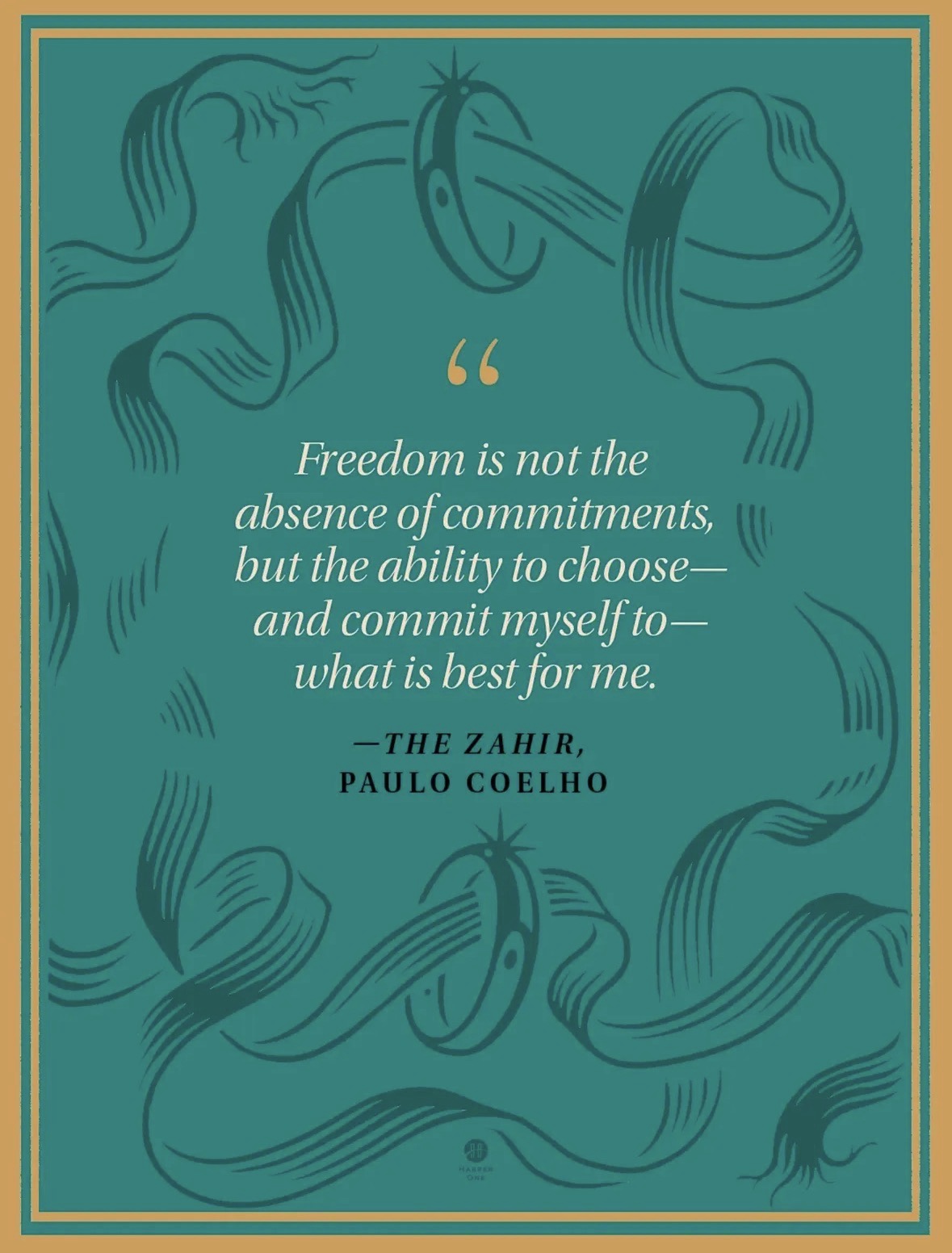
Paulo Coelho wrote, “Freedom is not the absence of commitments, but the ability to choose and commit myself to what is best for me.”
That sentence reminds me of something I learned through Jesuit spirituality.
The Jesuit understanding of freedom isn’t about doing whatever you want whenever you want. It’s about becoming free enough to choose what leads to a fuller, more meaningful life. In the Ignatian tradition, freedom means letting go of the attachments, fears, and ego that keep us from choosing what is truly good. They call it “holy indifference.” Not because you stop caring, but because you’re no longer controlled by comfort, status, money, or the fear of missing out. You’re free to choose what brings you closer to your purpose.
That’s a very different definition of freedom.
The people who build remarkable careers aren’t free because they avoid responsibility. They’re free because they commit to learning a craft for years.
Strong marriages don’t happen because two people keep their options open. They happen because they choose each other every day, especially on ordinary Tuesdays when nothing exciting is happening.
You don’t get healthier by collecting workout plans. You get healthier by following one, even when you’d rather stay on the couch.
Every meaningful result comes from commitment.
The funny part is that commitment often feels restrictive at first.
Setting an alarm for a morning run doesn’t feel like freedom.
Saving money instead of buying something you want doesn’t feel like freedom.
Studying after work instead of watching another episode doesn’t feel like freedom.
Months later, you’re stronger, financially stable, or qualified for opportunities that didn’t exist before. The commitment created choices that weren’t available when you were chasing comfort.
Real freedom grows on the other side of discipline.
We spend so much energy protecting our freedom that we sometimes avoid the very commitments that would improve our lives.
We hesitate to apply for the challenging role because it demands more from us.
We avoid learning a difficult skill because it takes months before we see results.
We hold back from relationships because vulnerability feels risky.
We keep waiting for the perfect moment.
Meanwhile, life keeps moving.
Every yes is also a no.
Choosing one city means not living in another.
Choosing one career means walking away from countless alternatives.
Choosing one person means building a future together instead of endlessly searching for someone who might seem slightly better.
That can feel uncomfortable.
It can also be incredibly peaceful.
Once you’ve made a thoughtful decision, you stop spending every day wondering if you’re missing out. Your energy shifts from deciding to doing.
That’s where growth happens.
The best commitments aren’t made because someone else expects them. They’re made because they reflect the person you want to become.
A parent commits to showing up for their child.
An entrepreneur commits to an idea before anyone believes in it.
An athlete commits to thousands of hours that nobody applauds.
Those choices don’t reduce freedom. They give life direction.
The older I get, the more I appreciate the Jesuit idea that freedom isn’t measured by how many choices I have. It’s measured by whether I’m free enough to choose what matters most without being pulled in every direction by fear, comfort, or ego.
I’d rather have a handful of meaningful commitments that make me a better husband, father, friend, and professional than spend years protecting the illusion of endless possibilities.
Freedom isn’t about escaping responsibility.
It’s about becoming the kind of person who can choose the good, commit to it wholeheartedly, and keep choosing it every day.

