
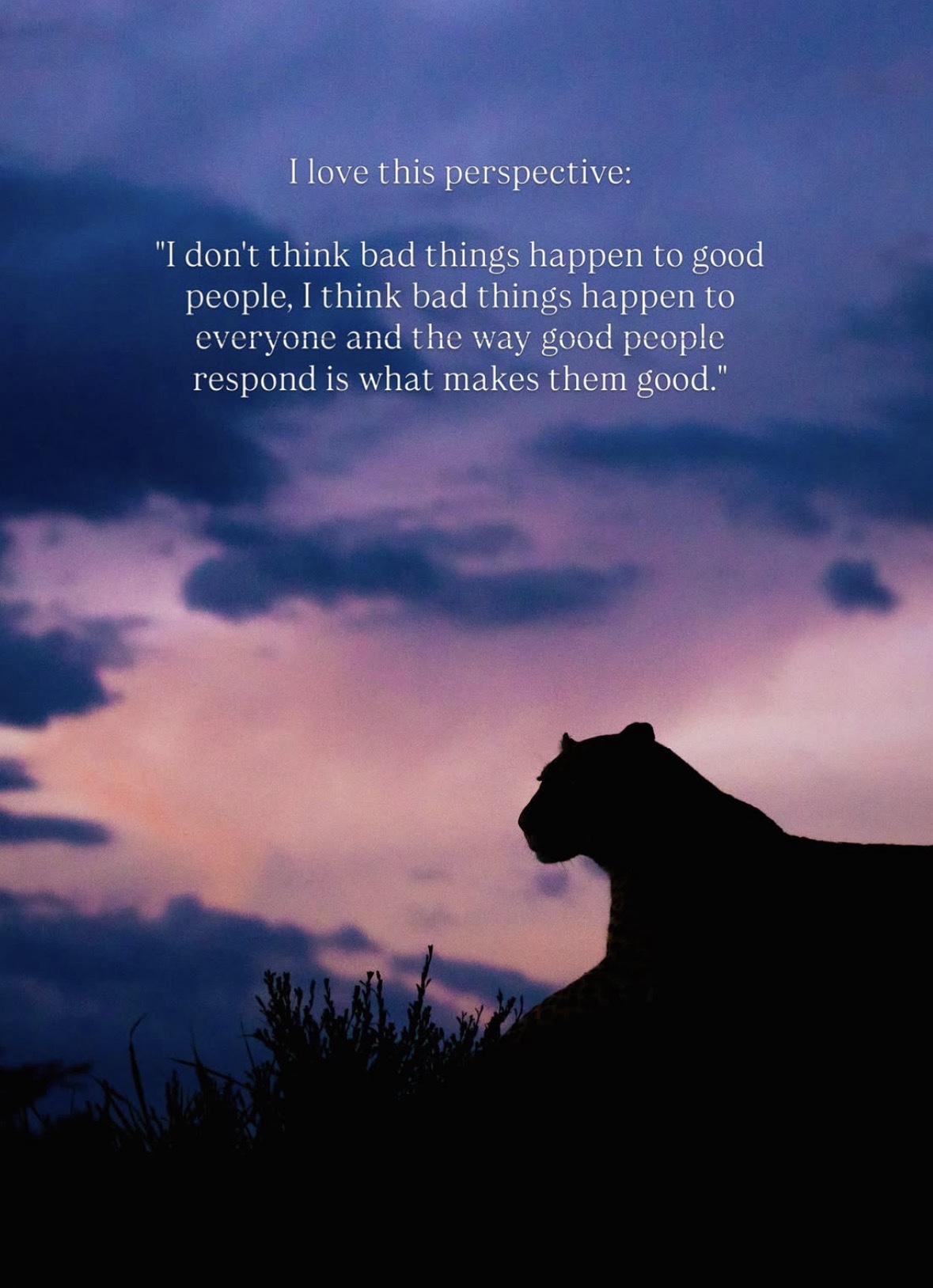
I love this perspective:
“I don’t think bad things happen to good people. I think bad things happen to everyone, and the way good people respond is what makes them good.”
We spend a lot of time trying to understand why bad things happen.
Why did this happen to me?
Why did someone I trusted hurt me?
Why did I lose something I worked so hard for?
Why did life become difficult just when everything seemed to be going well?
There is something deeply human about those questions. We grow up with the idea that life should somehow keep score. Be kind and kindness will find you. Work hard and things will work out. Treat people well and they will treat you well.
Then life happens.
A good person gets sick. Someone who has spent years building a career loses a job. A marriage falls apart. A family loses someone far too early. A friend betrays your trust. Someone lies about you. A carefully planned future disappears after one phone call.
None of these moments checks your character before arriving.
Life does not ask whether you have been kind enough before giving you a difficult year.
That changes the question.
Instead of asking why bad things happen to good people, maybe we should pay more attention to what people do after something bad happens.
Because that is where character becomes visible.
Anyone can be generous when life is generous with them. Patience comes easier when the day is going your way. Forgiveness sounds beautiful when there is nothing serious to forgive.
Then somebody hurts you.
Now you have choices.
You can carry that hurt into the next relationship. You can make someone else pay for what another person did. You can become suspicious of everyone because one person betrayed you. You can decide that kindness made you weak and build walls around yourself.
Or you can feel every bit of that pain and still refuse to pass it on.
That takes strength.
Good people get angry. They lose patience. They say things they wish they could take back. They have mornings when they want to shut the world out. Being good does not mean responding perfectly to every difficult moment.
Sometimes goodness looks much smaller.
It is apologizing after you spoke harshly.
It is choosing not to humiliate someone when you have the perfect opportunity.
It is refusing to gossip about the person who hurt you.
It is sitting beside someone else’s hospital bed while your own life feels heavy.
It is giving your child warmth after a brutal day at work.
It is treating the waiter kindly when your order is wrong.
It is remembering that the stranger who irritated you in traffic might be carrying something you cannot see.
Those moments rarely get noticed. There is no applause. Most of them happen quietly, between ordinary people on ordinary days.
Yet that is where goodness lives.
I have also started to think that difficult experiences reveal parts of us that comfortable seasons never have to test.
You discover whether disappointment makes you cruel.
You find out what you do with power when someone weaker than you makes a mistake.
You learn whether your pain becomes an excuse to hurt others.
You see what remains of your kindness when nobody is rewarding you for it.
Sometimes the answer will disappoint you.
That matters too.
Maybe you snapped at someone who did not deserve it. Maybe bitterness stayed longer than you wanted. Maybe you handled something badly because you were exhausted, scared or hurting.
You still get another choice.
You can call the person.
You can apologize.
You can repair what you damaged.
You can behave differently the next time life puts you in the same situation.
That is one of the things I find hopeful about this perspective. Goodness is not some permanent label stamped on certain people. It shows up through decisions, especially the inconvenient ones.
A painful experience can leave scars without becoming permission to create scars in other people.
You can be disappointed and remain generous.
You can be betrayed and remain trustworthy.
You can lose something precious and still celebrate when someone else receives what you wanted.
You can walk through a terrible season and come out softer toward people who are walking through theirs.
Maybe that is why some of the kindest people we meet have lived through things we know very little about.
Their kindness was not protected from hardship.
It survived it.
And sometimes, it was shaped there.

