
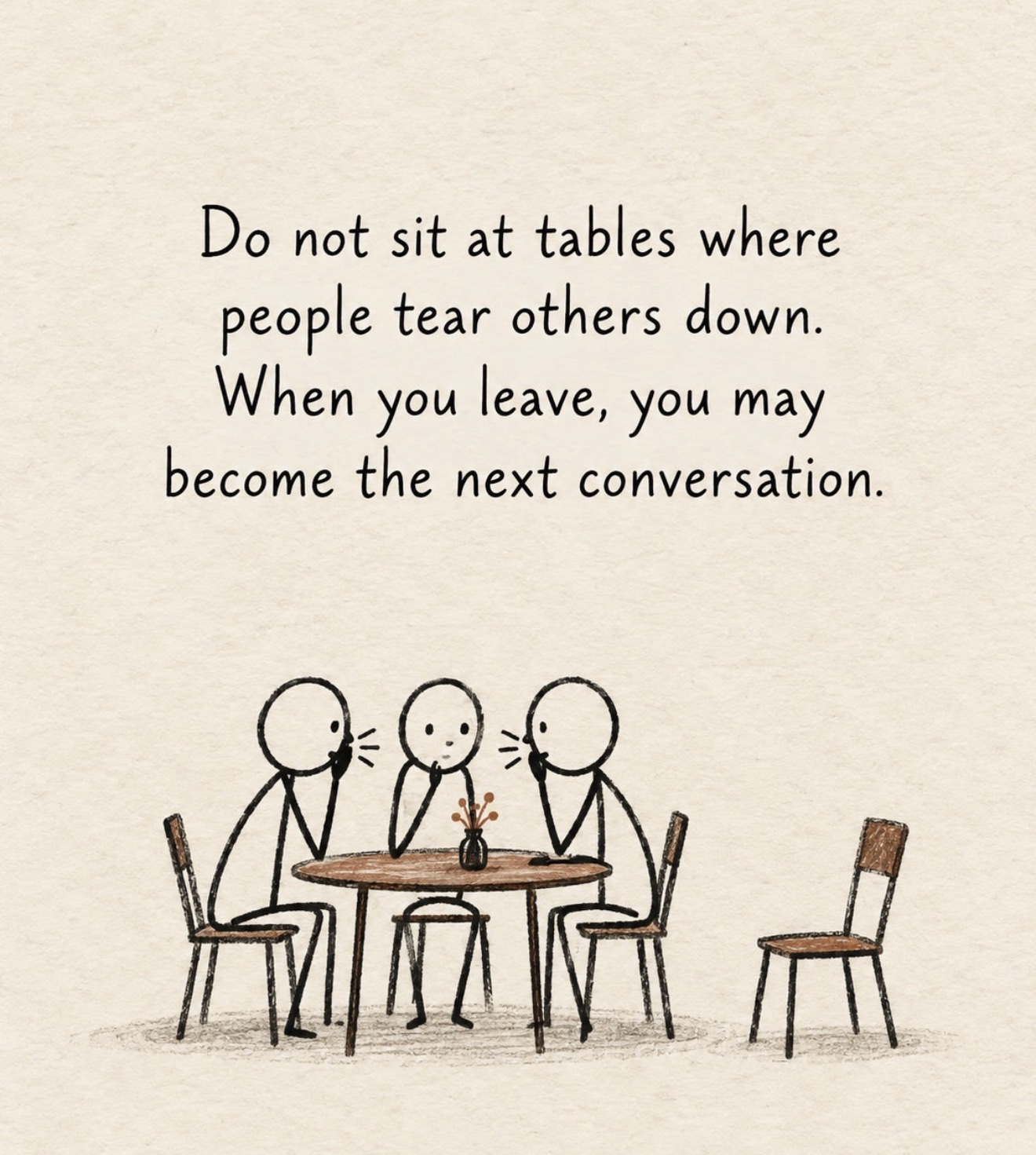
You can learn a lot about people by listening to how they talk about someone who isn’t in the room.
We’ve all been at those tables. A casual lunch, a coffee break at work, a family gathering, or an evening with friends. The conversation starts innocently enough. Someone mentions a person who couldn’t make it, and before long, everyone seems to have an opinion about their life, their choices, or something they supposedly did.
Someone makes a joke. A few people laugh. Another person adds a detail that makes the story sound worse. And suddenly, a person who isn’t there to explain themselves has become the entertainment for the afternoon.
It’s surprisingly easy to get pulled into these conversations.
Sometimes you laugh because everyone else is laughing. Sometimes you nod because you don’t want to make things awkward. And sometimes you find yourself adding something to the conversation, only to wonder later why you said it.
I’ve been thinking about how much these little moments tell us about the company we keep.
There’s a difference between talking about someone because you’re concerned about them and talking about them because their struggles make for an interesting conversation. You can usually tell which one is happening by the way people speak.
Concern sounds like someone wondering how they can help. Gossip often sounds like people enjoying the details a little too much.
And there’s something uncomfortable about watching people tear someone apart over lunch, then greet that same person with a warm smile the next morning.
It makes you wonder what happens when you’re the one who isn’t around.
Because the person being discussed today could easily be you tomorrow.
Think about it. If someone comfortably shares another person’s private struggles with you, what makes your own conversations with them any safer? If they enjoy making fun of a colleague’s mistakes, how might they describe yours when you’re having a difficult week?
Trust is built in these small moments, often when the person who would benefit from your kindness isn’t even present.
I remember hearing someone say that you should pay attention to how people treat those who have nothing to offer them. I’ve always liked that thought. I think the same applies to how people speak about those who aren’t there to hear them.
It’s easy to be kind when someone is standing in front of you. You can see their expression, hear their response, and understand when you’ve gone too far.
Speaking kindly about someone who isn’t present requires a different kind of consideration. You have to care about their dignity even when there’s no immediate consequence for being careless with it.
Of course, people frustrate us. Colleagues make poor decisions. Friends disappoint us. Family members can drive us up the wall. There will be times when we need to talk through those experiences with someone we trust.
That’s part of being human.
A private conversation with a close friend about something that’s bothering you can be healthy. Sometimes we need another perspective before deciding what to do.
What matters is what we’re hoping to get from that conversation.
Are we trying to understand what happened? Are we looking for advice? Or are we simply enjoying the chance to make someone look foolish?
That last one is worth paying attention to.
I’ve noticed that some conversations leave you feeling strangely uncomfortable, even when you haven’t said much. You walk away remembering the things people said about someone else, and you wonder why everyone seemed so comfortable saying them.
That feeling is worth listening to.
You don’t have to turn every uncomfortable conversation into a lecture about kindness. Nobody enjoys being publicly corrected over a cup of coffee, especially when they’re already feeling defensive.
Sometimes a simple “Maybe there’s more to the story” is enough to change the direction of the conversation.
Other times, you can ask whether anyone has spoken directly to the person they’re discussing. It’s a reasonable question, and it often reveals how much of the story is based on assumptions.
And sometimes, the best thing you can do is quietly excuse yourself.
There’s no need for a dramatic exit or a speech about why you’re leaving. You can finish your coffee, smile, and move on.
I’ve also come to appreciate people who protect others in their absence.
The colleague who says, “I think they’re going through a difficult time.”
The friend who refuses to share something told to them in confidence.
The person who gently reminds everyone that they’re hearing only one side of the story.
These are people worth keeping close.
Because when you’re struggling, you want to know that the people around you will treat your story with care. You want friends who can disagree with your decisions without turning your mistakes into entertainment. You want colleagues who will tell you when you’ve got something wrong and give you the chance to put it right.
And perhaps we should ask ourselves how often we offer that same consideration to others.
It’s worth noticing what happens when someone new joins a group. Do people make them feel welcome? Do they find ways to include them in the conversation? Or does belonging seem to depend on joining in when someone else becomes the joke?
That kind of atmosphere can be exhausting. You start watching what you say, worrying about what might be repeated, and wondering which version of you gets discussed after you’ve left.
Friendship shouldn’t require that much caution.
I think one of the nicest things someone can say about you is that they feel safe around you. That they can share a difficult moment without worrying about it becoming tomorrow’s conversation. That they can make a mistake and still be treated with respect.
Imagine being at a table where someone mentions a colleague who has been struggling at work.
Someone starts to make a joke about their performance.
Then another person says, “I worked with them last week. They’ve had a rough time lately. I think they could use some support.”
The conversation changes. Someone asks whether they can help. Another person remembers a time when that colleague helped them.
And somewhere else, completely unaware of what just happened, a person has been treated with a little more kindness.
I’d like to think we can all be that person at the table a little more often!

