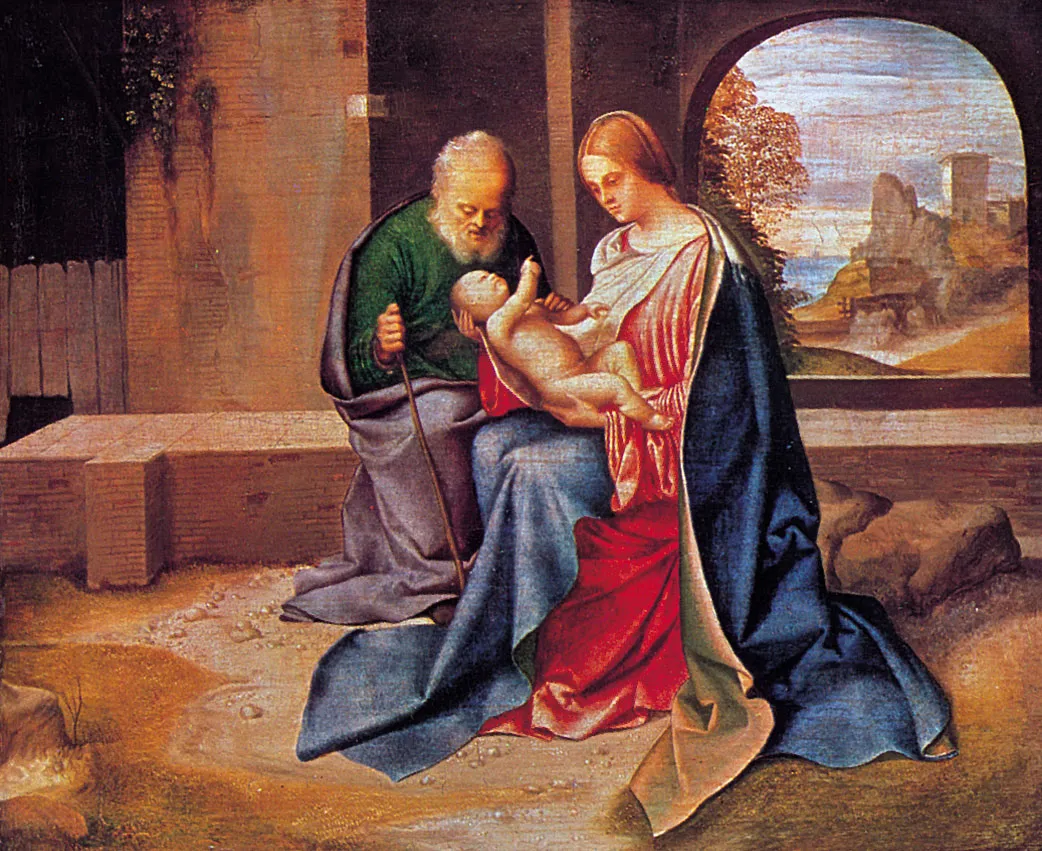
Holy Family- The Model of All Families

Of all the families in human history, the family of Jesus stands above all others. This family is outstanding for its holiness, genuineness, understanding and acceptance of one another.

Not health, wealth, education, location or social status accounts for their place of prominence in human history. To the contrary, Mary and Joseph were poor. They were unschooled country people. Externally, they had nothing to distinguish them above any other Israelite of their time.

Internally, what distinguished them were their holy hearts and their close personal relationship with God. It is this that has given them lasting greatness. It is this that motivates us to look at them as a model family. They illustrate God’s plan for a family. They challenge all of us to pattern our homes after the heart of God.

The Holy Family is a model of faithfulness and love. They were totally devoted to God and his call on their lives. And, they faithfully followed their God-given vocations.

Their love for the Father and their desire to be faithful to him and to please him in all things was what also strengthened their love for each other.

They accepted God’s unique, individual plan for each of their lives and were obedient to His call. Mary accepted God’s plan to be the mother of Jesus. Joseph accepted taking Mary into his home and was obedient to being the foster father of God’s son. Jesus accepted the will of his Father which was often a difficult road to follow but one he followed in obedience.

The Holy Family also models forgiveness. And forgiveness leads to love. In fact, Jesus was the prime model for forgiveness as part of the Holy Family. For example, Jesus didn’t utter a single word in his defence against those who hurt him. Furthermore, he forgave those who put him to death.

So how can we model the Holy Family’s virtues in our own families? How can we take what we’ve learned from the Holy Family and apply it to our own life?

Pray together – First and foremost, as a family, our goal should be to draw each other closer to Christ. And, what better way to do so than through prayer?

Be Faithful to Your Vocation – Jesus, Mary and Joseph showed faithfulness to their vocation. And, we can do the same. Above all, try doing your duties without grumbling or complaining. This can be difficult, I know. Instead offer your vocation to the Lord. As married couples, we can model faithfulness by showing affection to one another, scheduling alone time, or by praying together. By doing so, we are being faithful to our marriage vocation and honouring the marriage covenant.

Honour Each Other – God wants us to honour each member of our family. For example, we can work on parenting our children with love instead of nagging. By the same token, we can show respect and love to our own parents, no matter what their age. Sometimes this is difficult as our own parents age and their health fails. But, no matter what stage of life we are in, God is calling us to be patient and to honour our family members as an act of faithfulness to him.

Accept Each Other – Oh how harmonious our family life could be if we learn to accept our family members without trying to change them! Just like the Holy Family, we are children of God. And we all have our own unique personalities. Similarly, God has a unique plan and purpose for each member of our family. So, not only do we need to accept God’s plan for our own life, but we need to accept that plan for others too.

Forgive Daily – This might be the hardest virtue of all to imitate. Because it’s all too easy to let a hurt fester and grow instead of choosing to forgive and let it go. I recently read a reflection that spoke about turning the family home into a confessional and not a courtroom. Meaning, let’s not become the judge and jury when it comes to our

family. Instead, let’s recognize that we all have imperfections and we are all sinners. When we do sin, let’s take it to the confessional of our homes. Let’s admit to any wrongdoing, ask for forgiveness, show mercy, and move on!

Be Present in Communication – The Holy Family certainly didn’t have as many distractions when it comes to communicating as we do today. It’s ironic that the very devices we use to communicate, such as cell phones, computers, and tablets, actually get in the way of us being present in our communication to one another. To emulate the Holy Family’s means of communicating, we can take simple steps like looking each other in the eye when we speak; putting aside our cell phones or any activity when someone is talking to us; And, basically just listen. To emphasize this point, on the Feast of the Holy Family, Pope Francis challenged all families to put their cell phones away during family meal time encouraging us to communicate just like the Holy Family did.

In this Christmas Season, let us pray that, inspired by the Holy Family, our families may grow in love and holiness.
Our Lady of Guadalupe

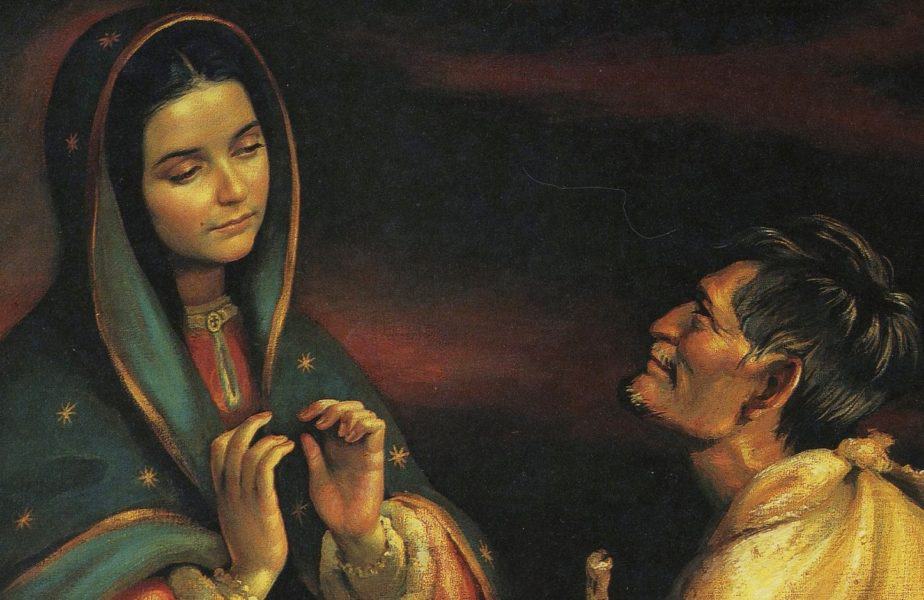
Our Lady of Guadalupe appeared in Mexico as the pregnant Mother of God to Blessed Juan Diego, an Aztec Indian, in 1531 on December 9, 10 and 12. She left a Miraculous Image of her appearance on his cactus fiber cloak, or tilma, which still exists today for all to see in the Basilica of Our Lady of Guadalupe in Mexico City.

Our Lady came to offer faith, hope and consolation to the oppressed natives of Mexico and to reconcile them with their Spanish rulers. She put an end to the bloody human sacrifice of the Aztecs and converted ten million natives in the next 10 years!

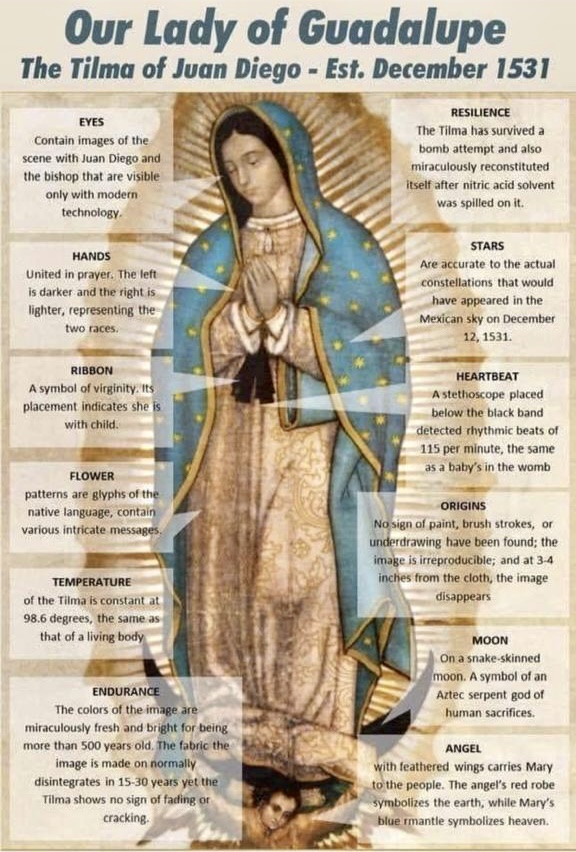
The Image of Our Lady is actually an Aztec Pictograph that was read and interpreted quickly by the Aztec Indians.

  • THE LADY STOOD IN FRONT OF THE SUN: She was greater than their dreaded sun-god “Huitzilopochtli”.
  • HER FOOT RESTED ON THE CRESCENT MOON:She had clearly vanquished their foremost deity, the feather serpent “Quetzalcoatl.”
  • THE STARS STREWN ACROSS THE MANTLE: She was greater than the stars of heaven that they worshipped.  She was a virgin and the Queen of the heavens for Virgo rests over her womb and the northern crown upon her head. She appeared on December 12, 1531 for the stars that she wore are the constellation of stars that appeared in the sky that day!
  • THE BLUE-GREEN HUE OF HER MANTLE: She was a Queen for she wears the color of royalty.
  • THE BLACK CROSS ON THE BROOCH AT HER NECK: Her God was that of the Spanish Missionaries, Jesus Christ her son.
  • THE BLACK BELT: She was with child for she wore the Aztec Maternity Belt.
  • THE FOUR-PETAL FLOWER OVER THE WOMB:She was the “Mother of God.” The flower was a special symbol of life, movement and deity-the center of the universe.
  • HER HANDS ARE JOINED IN PRAYER: She was not God but clearly there was one greater than Her and she pointed her finger to the cross on her brooch.
  • THE DESIGN ON HER ROSE COLORED GARMENT:She is the “Queen of the Earth” for she is wearing a map of Mexico telling the Indians exactly where the apparition took place.

And then there’s what Modern Science has to say about the tilma:
  • The image, to this date, cannot be explained by science.
  • The image shows no sign of deterioration after almost 500 years!  The tilma or cloak of Juan Diego on which the image of Our Lady has been imprinted, is a coarse fabric made from the threads of the maguey cactus. This fiber disintegrates within 20-60 years!
  • There is no under sketch, no sizing and no protective over-varnish on the image.
  • Microscopic examination revealed that there were no brush strokes.
  • The image seems to increase in size and change colors due to an unknown property of the surface and substance of which it is made.
  • According to Kodak of Mexico, the image is smooth and feels like a modern day photograph.  (Produced 300 years before the invention of photography.)
  • The image has consistently defied exact reproduction, whether by brush or camera.
  • Several images can be seen reflected in the eyes of the Virgin. It is believed to be the  images of Juan Diego, Bishop Juan de Zummaraga, Juan Gonzales-the interpreter and others.
  • The distortion and place of the images are identical to what is produced in the normal eye, which is impossible to obtain on a flat surface.
  • The stars on Our Lady’s Mantle coincide with the constellation in the sky on December 12, 1531. All who have scientifically examined the image of Our Lady over the centuries confess that its properties are absolutely unique and so inexplicable in human terms that the image can only be supernatural!

The Mouse & The Jar Of Grains

A “mouse” was put at the top of a jar filled with grains. He was too happy to find so much food around him. Now he doesn’t need to run around searching for food and can happily lead his life. As he enjoyed the grains, in a few days’ time, he reached the bottom of the jar. Now he is trapped and he cannot come out of it. He has to solely depend upon someone to put grains in the same jar for him to survive. He may even not get the grain of his choice and he cannot choose either.

Here are FOUR lessons to learn from this:

1) Short term pleasures can lead to long-term traps.

2) If things are coming easy and you are getting comfortable, you are getting trapped into survival mode.

3) When you are not using your skills, you will lose more than your skills. You lose your CHOICES.

4) The right Action has to be taken at the right time, or else you will lose whatever you have.

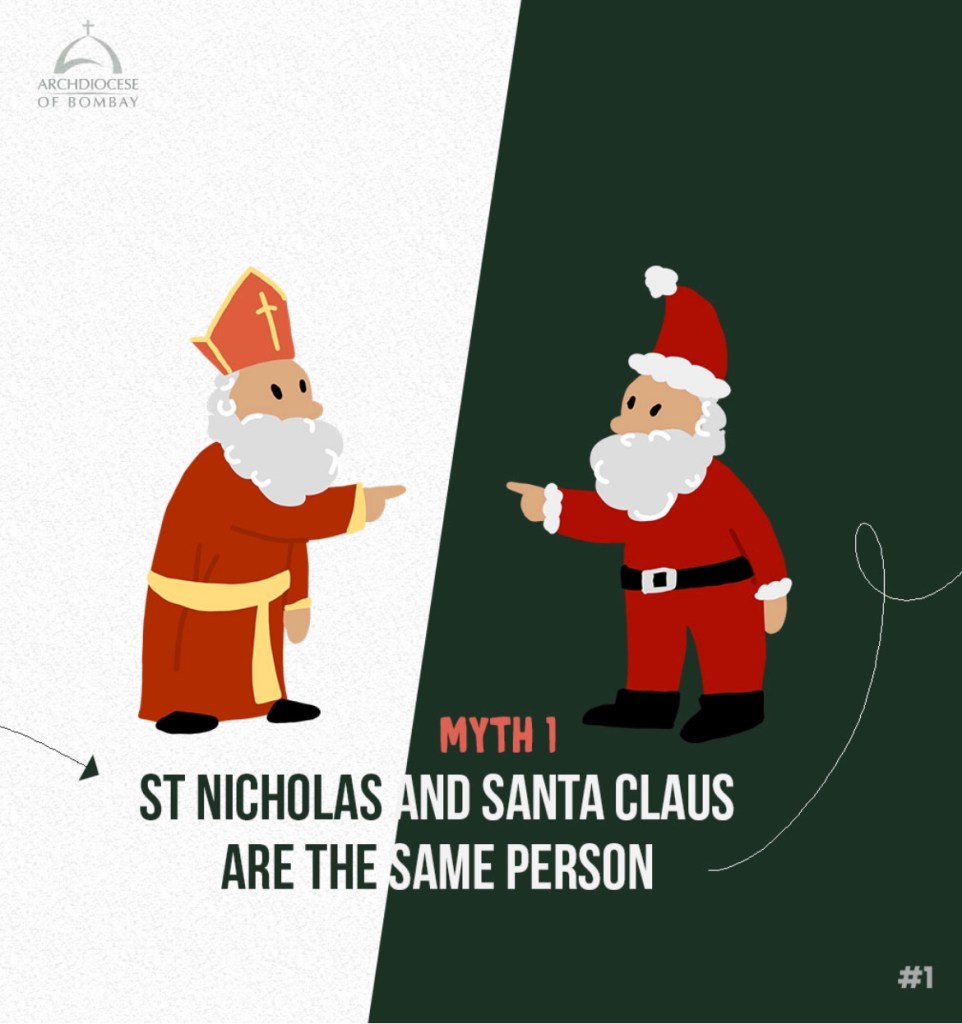
St. Nicholas – Santa Claus?

St. Nicholas was a Bishop who lived in the fourth century, in a place called Myra in Asia Minor (now called Turkey). He was a very rich man because his parents died when he was young and left him a lot of money. He was also a very kind man and had a reputation for helping the poor and giving secret gifts to people who needed it. 

The most famous story about St. Nicholas tells how the custom of hanging up stockings to put presents in first started! It goes like this:

There was a poor man who had three daughters. The man was so poor that he did not have enough money for a dowry, so his daughters couldn’t get married. One night, Nicholas secretly dropped a bag of gold down the chimney and into the house (this meant that the oldest daughter was then able to be married). The bag fell into a stocking that had been hung by the fire to dry! This was repeated later with the second daughter. Finally, determined to discover the person who had given him the money, the father secretly hid by the fire every evening until he caught Nicholas dropping in a bag of gold. Nicholas begged the man to not tell anyone what he had done, because he did not want to bring attention to himself. But soon the news got out and when anyone received a secret gift, it was thought that maybe it was from Nicholas.

Because of his kindness Nicholas was made a Saint. St. Nicholas is not only the saint of children but also of sailors! One story tells of him helping some sailors that were caught in a bad storm off the coast of Turkey. The storm was raging around them and all the men were terrified that their ship would sink beneath the giant waves. They prayed to St. Nicholas to help them. Suddenly, he was standing on the deck before them. He ordered the sea to be calm, the storm died away, and they were able to sail their ship safely to port.

No one really knows when St Nicholas died, it was on 6th December in either 343 (which seems to be the most probable), 345 or 352. In 1087, his bones were stolen from Turkey by some Italian merchant sailors. The bones are now kept in the Church named after him in the Italian port of Bari. On St. Nicholas feast day (6th December), the sailors of Bari still carry his statue from the Cathedral out to sea, so that he can bless the waters and so give them safe voyages throughout the year.

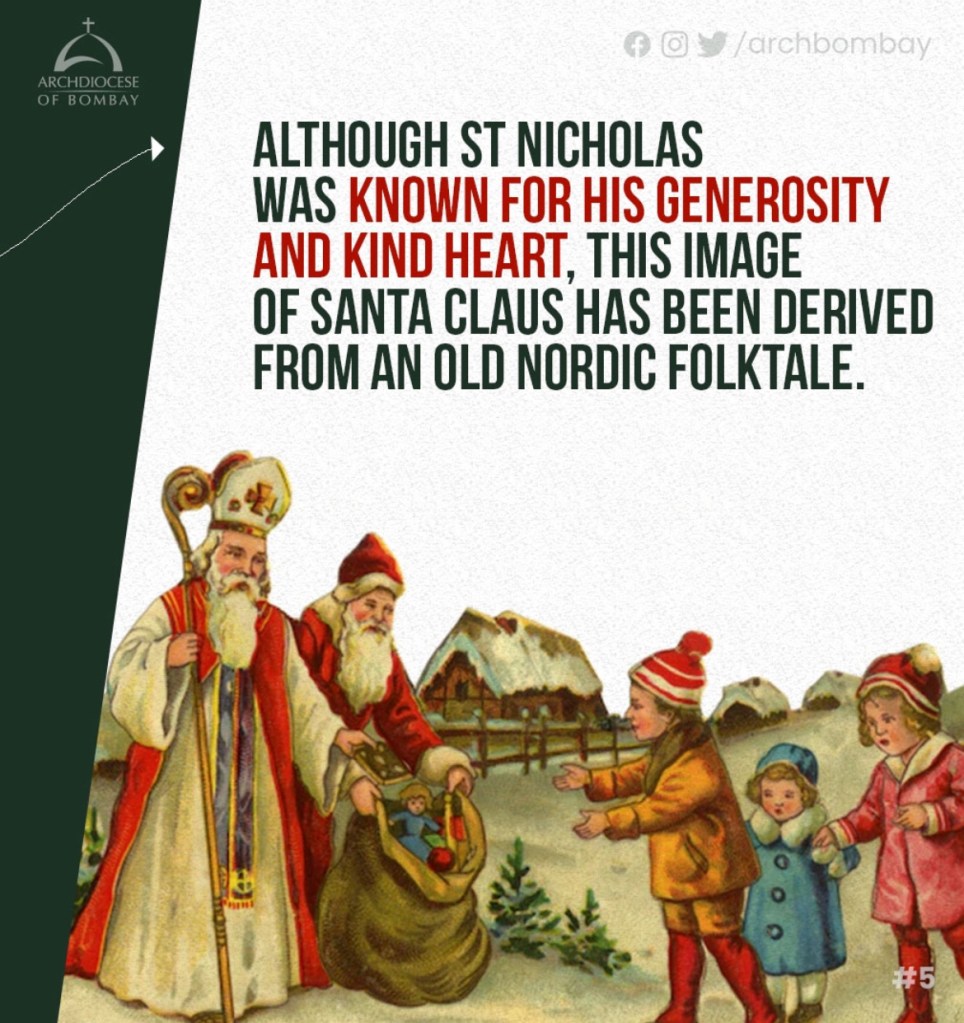
How much of what we hear of Santa Claus today is true? Here is what the Archdiocese of Bombay shared on their Instagram handle today.


St. Andrew

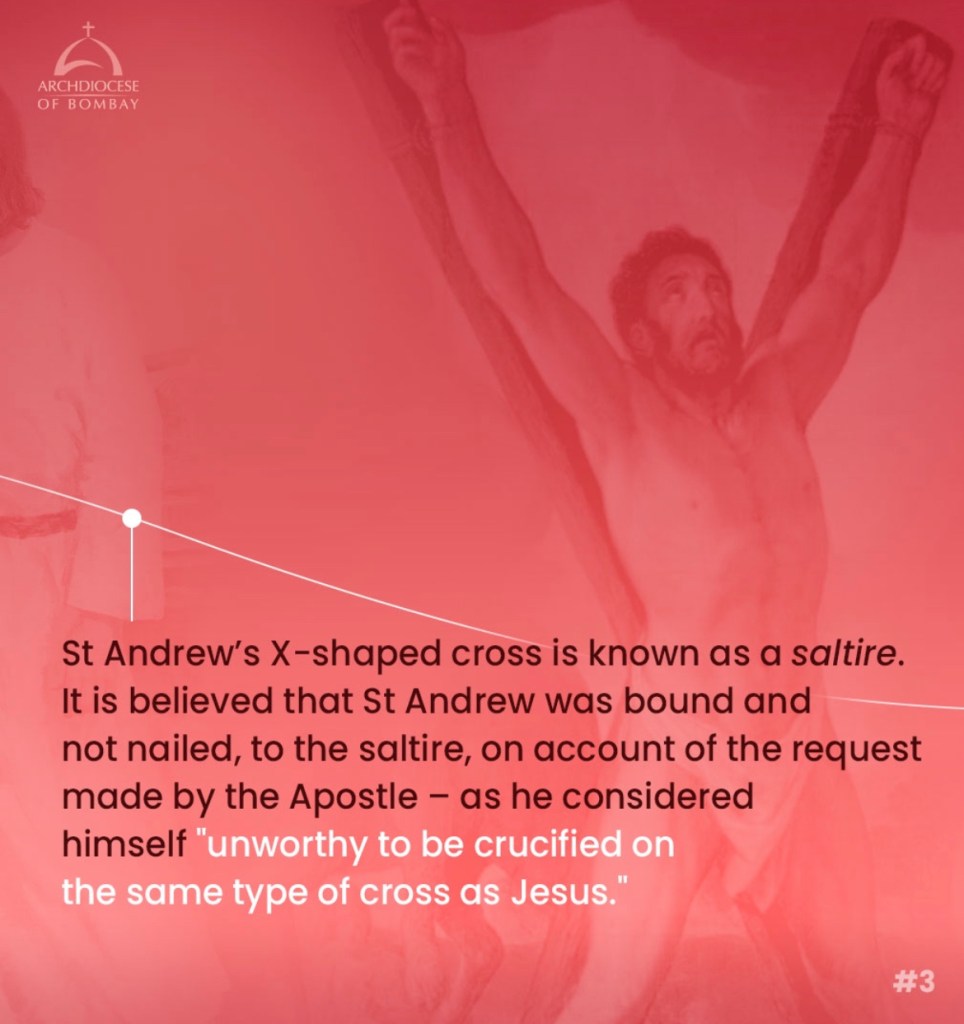
St. Andrew, also called Saint Andrew the Apostle, one of the Twelve Apostles of Jesus and the brother of St. Peter. He is the patron saint of Scotland and of Russia.

Source: Instagram – Archdiocese of Bombay

In the Synoptic Gospels (Matthew, Mark, and Luke), Peter and Andrew—whose Greek name means “manly”—were called from their fishing by Jesus to follow him, promising that he would make them “fishers of men.” With Saints Peter, James, and John, Andrew asked Jesus on the Mount of Olives for signs of the earth’s end, which inspired the eschatological discourse in Mark 13. In The Gospel According to John, Andrew is the first Apostle named, and he was a disciple of St. John the Baptist before Jesus’ call.

Source: Instagram – Archdiocese of Bombay

Do you know you can build Flutter apps in Python? 😮

I am guessing most of you have heard about Flutter. If not, here you go in just one sentence.

Flutter is an open-source framework by Google
for building beautiful, natively compiled applications
​​​​​​​from a single codebase
​​​​​​​for iOS, Android, Web, MacOS, Windows and Linux

Dart is the programming language used to code Flutter apps and at the start most developers find it a little hard to grasp. But once they are able to wrap their heads around it, they absolutely love it! However this article is not about Dart but Python! Let’s deep dive into the world of building flutter apps with Python! 

Say hello to FLET!

FLET enables developers to easily build real-time web, mobile, and desktop apps in Python.

The crazy thing is that no front-end experience is needed, and although the mobile version is still in development, we can still rely on the Progressive Web App.

Mind-blowing features of FLET

  1. It is powered by Flutter.
  2. You can bring an app to life in a few minutes.
  3. It has a simple architecture.
  4. Apart from Python, other languages like Go, C#, etc. will also be supported.

How to get start with FLET

To install FLET, you use this command if you are using a Python version less than version 3:

pip install flet

Otherwise you can use the following:

pip3 install flet

Now let’s build a simple application with FLET. We will be building a simple counter app that has one text field and two buttons, one to increment and one to decrement. Simple enough right?

First, we need to import FLET and other features essential for the counter App

import fletfrom flet import Row, icons, IconButton, TextField, Page;

We define the main function which is the root of our application and also set a title.

def main(page: Page):
page.title = "Counter App"
page.vertical_alignment = "center"

Next let’s arrange the widgets.

To add a widget, we use the page.add(widget…..).

For the rows of the app, we would consider theText Field and Buttons

page.add(Row([
   IconButton(icons.REMOVE),
   TextField(text_align="center",value="0", width=100)
   IconButton(icons.ADD)
  ],
 alignment="center")
)

Now, We define two functions that will handle the press events.


//Decrement
def minus(e) :
  tf.value = int(tf.value) -1
  page.update()
  
//Increment
def plus(e) :
  tf.value = int(tf.value) + 1
  page.update()

‘tf’ in the above functions refers to Text-field we placed into the Row.

The next thing, we used to the text-field value we have to wrap that within a variable itself.

Here is the overall code

import flet
from flet import Row, icons, IconButton, TextField, Page;
​
def main(page: Page):
  page.title = "Counter App"
  page.vertical_alignment = "center"
  tf =TextField(text_align="center",value="0", width=100)
​
#Functions
  def minus(e):
    tf.value = int(tf.value) -1
    page.update()
​
  def plus(e):
    tf.value = int(tf.value) + 1
    page.update()
​
#Widgets
  page.add(
    Row([
       IconButton(icons.REMOVE, on_click=minus),
       tf,
       IconButton(icons.ADD, on_click=plus)
    ],
    alignment="center")
  )
  
flet.app(target=main,view=flet.WEB_BROWSER)

The final part is to run the application which is the last line in the snippet above.

flet.app(target=main)

We add this command which directly targets the “main”

To run the app, type this command 

python filename.py

Below is what the UI looks like on web

Wasn’t that super easy? 

We are in very early days with FLET. Here is a link to their roadmap

And if you’d like to try some more apps, Flet has two tutorials: To Do app and Calculator app. (Click here)

Try them out and share your experience with me! :)

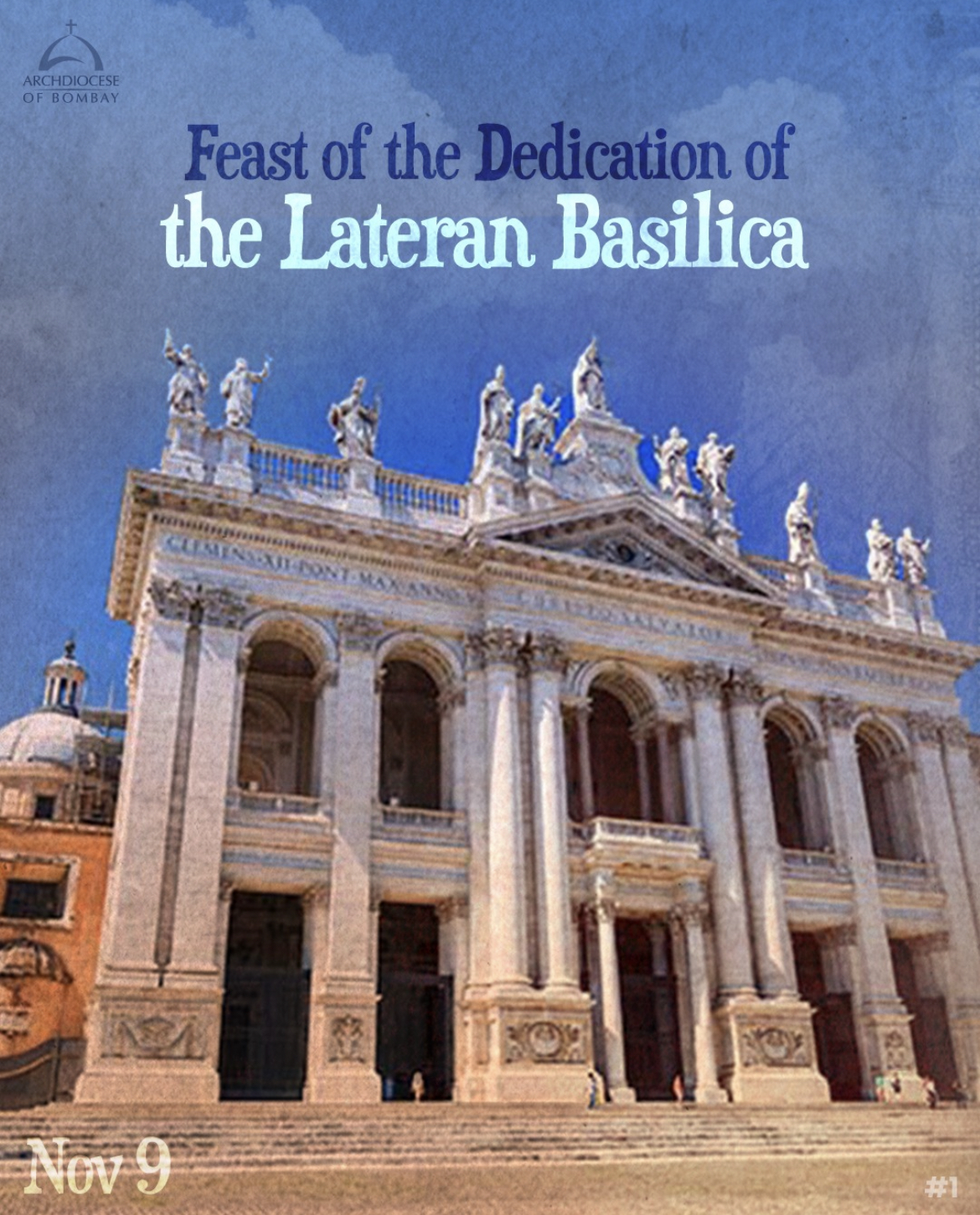
Feast of the Dedication of the Lateran Basilica

The Archbasilica of St. John Lateran is one of the oldest and highest ranking Papal Basilicas in Rome. Holding the unique title of ‘arch basilica’, it is defined as the “mother and head of all the churches of the city and the world”

Source: Archdiocese of Bombay (Instagram)

Most Catholics think of St. Peter’s as the pope’s main church, but they are wrong. St. John Lateran is the pope’s church, the cathedral of the Diocese of Rome where the Bishop of Rome presides.

Source: Archdiocese of Bombay (Instagram)

The first basilica on the site was built in the fourth century when Constantine donated land he had received from the wealthy Lateran family. That structure and its successors suffered fire, earthquake, and the ravages of war, but the Lateran remained the church where popes were consecrated. In the 14th century when the papacy returned to Rome from Avignon, the church and the adjoining palace were found to be in ruins.

Source: Archdiocese of Bombay (Instagram)

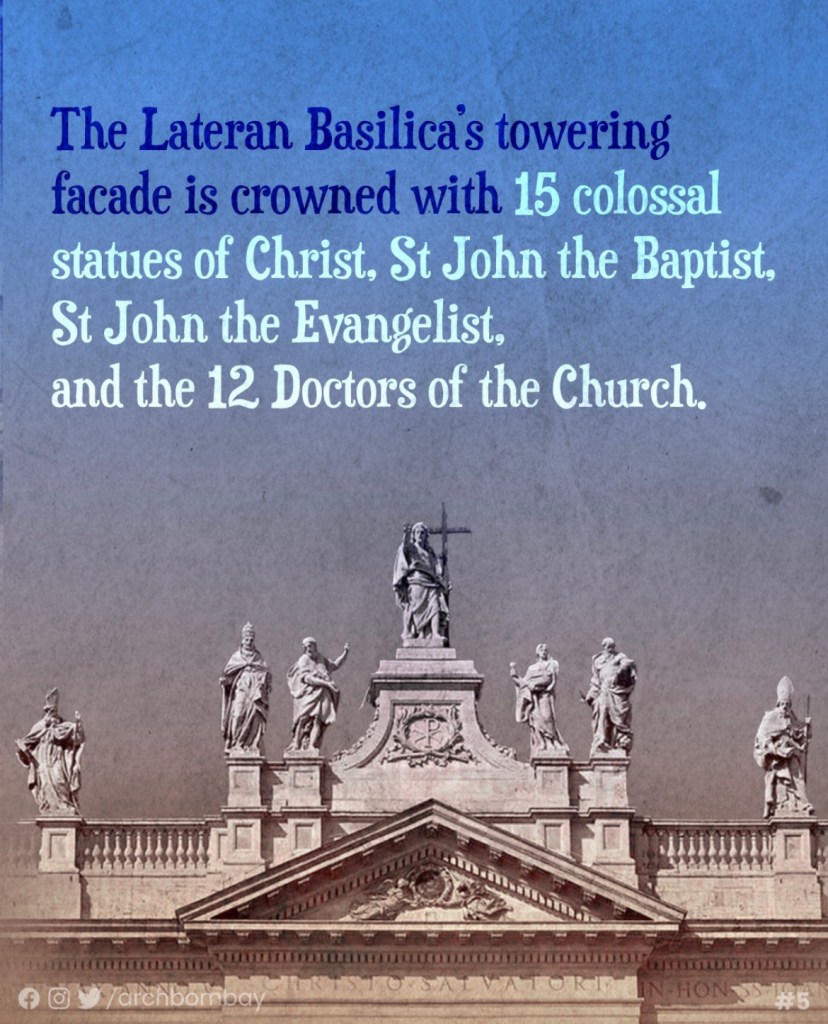
Pope Innocent X commissioned the present structure in 1646. One of Rome’s most imposing churches, the Lateran’s towering facade is crowned with 15 colossal statues of Christ, John the Baptist, John the Evangelist, and 12 doctors of the Church. Beneath its high altar rest the remains of the small wooden table on which tradition holds Saint Peter himself celebrated Mass.

Source: Archdiocese of Bombay (Instagram)

Unlike the commemorations of other Roman churches, this anniversary is a feast. The dedication of a church is a feast for all its parishioners. In a sense, St. John Lateran is the parish church of all Catholics, because it is the pope’s cathedral. 

iOS & Android Quick Actions

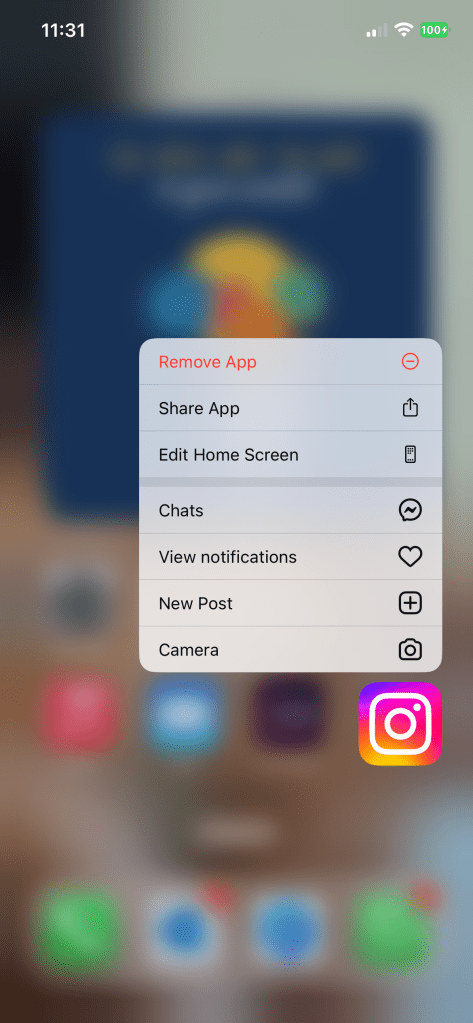
Quick actions are a great way to provide your users fast access to your app’s common functionality within the home screen. iOS 13 introduced the concept of quick actions, where a user can touch and hold an app icon to display a set of shortcuts or actions to perform right from the home screen.

Many of the most commonly used apps consume App Shortcuts to provide users with easy access to its most important features. For example, Instagram provides shortcuts to Camera, New Post, View Activity, and Direct messages, while WhatsApp on Android provides Camera and four conversations.

iOS: Instagram
Android: WhatsApp
iOS: WhatsApp

Developers can also provide their own quick actions to provide users with powerful shortcuts to common app functionality. The iOS Camera app has actions to take different types of photos or to record a video. A shopping app might let you jump directly to your orders or wishlist, and a messaging app might show your favorite contacts so you can easily access them.

I’m sure you can think of ways that quick actions would benefit your users:

  • Static quick actions, which are always available for your app.
  • Dynamic quick actions, which your app can define at runtime.

Static vs. Dynamic Quick Actions

There are two types of quick actions available to you: static and dynamic.

You use static actions for actions that never change in your app, like the Mail app’s New Message action.

Use dynamic actions if your actions might change under certain conditions or depend on specific data or state. For example, the Messages app will add quick actions for all of your pinned conversations.

In both cases, you add code to handle a specific action that gets triggered. 


Native Android and iOS both have their specific ways implement these shortcuts. In Android, the term used is App Shortcut whereas iOS calls it as Home Screen Quick Actions.

Apple Developer Documentation: Home Screen Quick Actions

Android Developer Documentation: App Shortcuts Overview

To achieve this functionality in Flutter you can use a plugin called quick_actions. This Flutter plugin allows you to manage and interact with the application’s home screen quick actions

How to use Flutter’s Quick_Actions Plugin

1. Open pubspec.yaml file and add quick_actions plugin dependency under dependencies and hit the Flutter command package get.

name: quick_action
description: A new Flutter application which demonstrates use of quick actions.
​
version: 1.0.0+1
​
environment:
  sdk: ">=2.1.0 <3.0.0"
​
dependencies:
  quick_actions: ^0.3.0+1
  flutter:
    sdk: flutter
​
dev_dependencies:
  flutter_test:
    sdk: flutter
​
flutter:
  uses-material-design: true

2. Inside your lib folder open main.dart and add
import ‘package:quick_actions/quick_actions.dart’;

3. Initialize the library early in your application’s life-cycle by providing a callback, which will then be called whenever the user launches the app via a quick action.

final QuickActions quickActions = const QuickActions();
    quickActions.initialize((String shortcutType) {
      if (shortcutType == 'action_cart') {
        print('The user tapped on the "cart" action.');
      } else {
        print('The user tapped on the "wishlist" action.');
      }
    });

4. Finally, manage the app’s quick actions

quickActions.setShortcutItems(<ShortcutItem>[
      const ShortcutItem(
          type: 'action_cart', localizedTitle: 'cart', icon: 'cart-icon'),
      const ShortcutItem(
          type: 'action_wishlist', localizedTitle: 'wishlist', icon: 'wishlist-icon')
    ]);

Please note, that the type argument should be unique within your application (among all the registered shortcut items). The optional icon should be the name of the native resource (xcassets on iOS or drawable on Android) that the app will display for the quick action.


What other cool uses of quick actions can you think of? Leave your implementations and ideas in the comments below.

Feast of St. John Paul II

Pope Francis canonized Saint John Paul II with Saint John XXIII in the Vatican City on April 27, 2014, a Divine Mercy Sunday, an observance that he established on April 30, 2000.

October 22 was chosen as his feast day to remember the anniversary of the liturgical inauguration of his Papacy in 1978.

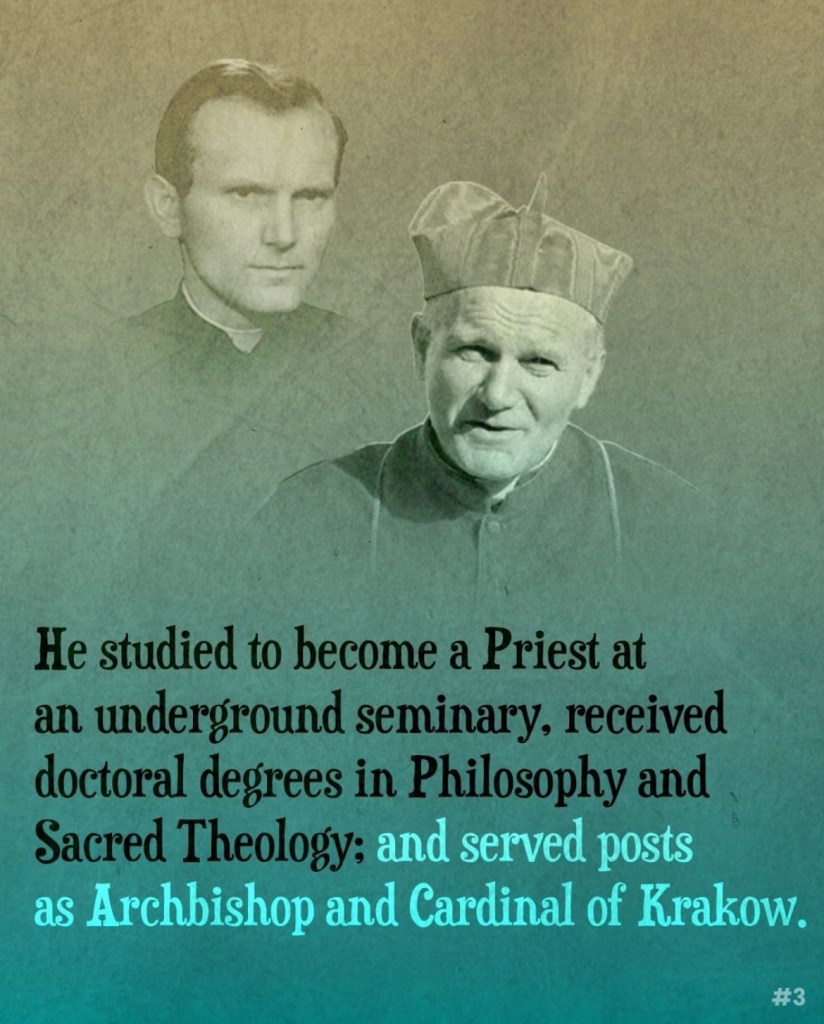
Saint John Paul II served as Pope for 27 years up to the time of his death at the age of 84 on April 2, 2005. He was beatified by Pope Emeritus Benedict XVI on May 1, 2011, also on a Divine Mercy Sunday.

The process for his beatification was the fastest on record as never before has a Pope been beatified by his immediate successor.

Waiving the five-year waiting period, the process started about two months after his death after a French nun, Sr. Marie Simon-Pierre’s miraculous cure from Parkinson’s disease after she prayed to him.

The first non-Italian Pope in 455 years after having been elected to the papacy on Oct. 16, 1978, the Vatican newspaper refers to Saint John Paul II as “a passionate witness to Christ from his childhood to his last breath.”

His pontificate of more than 26 years was the third longest in history. As part of his effort to promote greater understanding between nations and between religions, he undertook numerous trips abroad, traveling far greater distances than had all other popes combined!


Facts

Feastday: October 22
Patron: of World Youth Day (Co- Patron)
Birth: 1920
Death: 2005
Beatified: May 1, 2011 Saint Peter’s Square, Vatican City by Pope Benedict XVI
Canonized: April 27, 2014 Saint Peter’s Square, Vatican City by Pope Francis

Source: Instagram – Archdiocese of Bombay