
There is a quiet kind of exhaustion that comes from replaying things you cannot change. Conversations that already ended. Decisions already made. Outcomes already set in motion. Your hands are empty, but your mind keeps gripping anyway.
We tell ourselves we are being responsible. That if we think about it long enough, worry hard enough, revisit it one more time, something might shift. As if mental effort could reach back into the past or lean into the future and bend it our way. But most of the time, that effort only drains us. It steals sleep. It dulls joy. It turns ordinary moments into background noise while our thoughts are somewhere else entirely.
There is a difference between caring and carrying. Caring is human. Caring is love, commitment, hope. Carrying is when you take responsibility for things that no longer belong to you. Carrying is when your mind keeps clocking overtime for a job you were never hired to do.
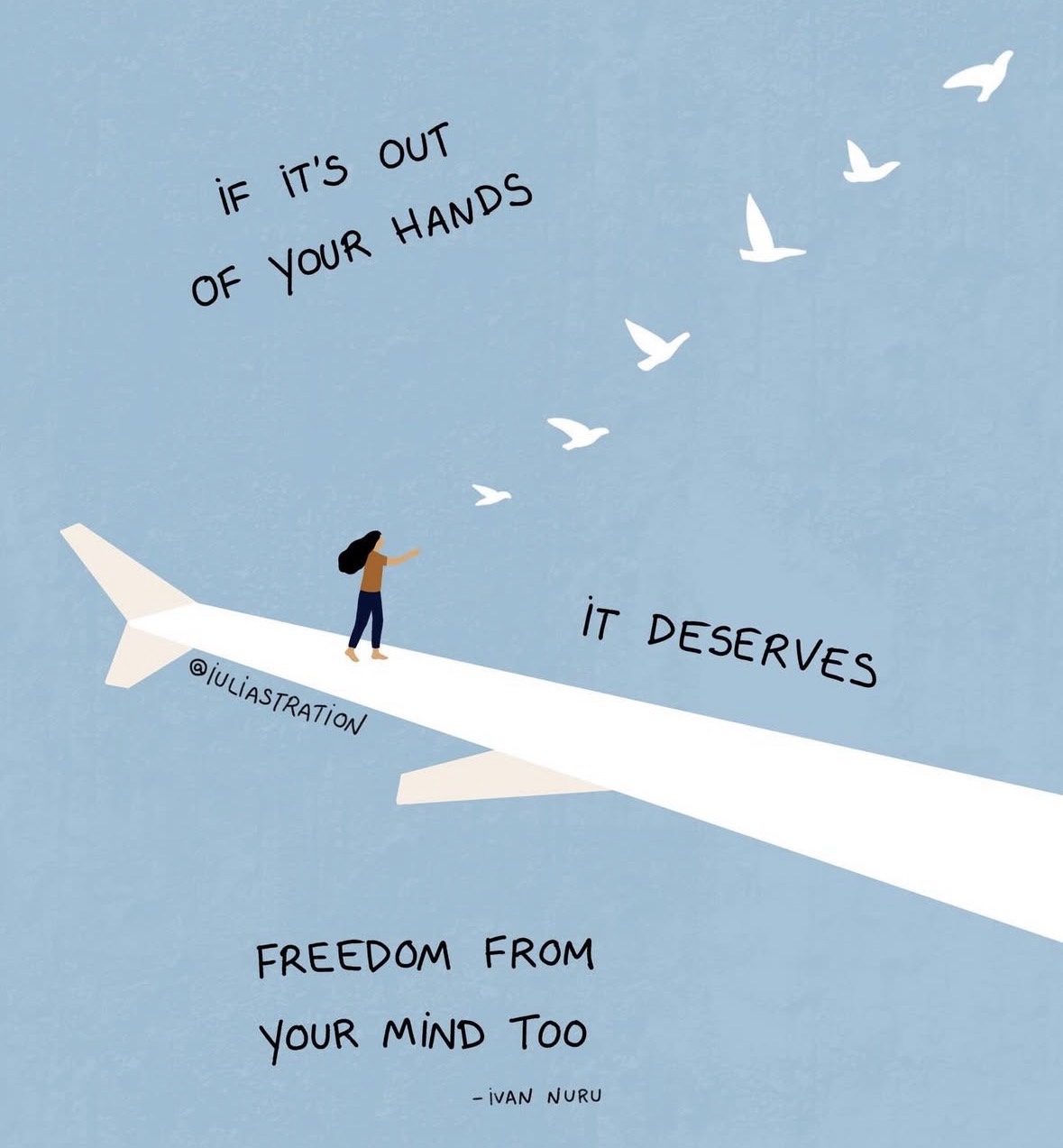
If it is out of your hands, it deserves freedom from your mind too. That is the second letting go. The harder one.
The first letting go is practical. You did what you could. You showed up. You tried. You spoke your truth. You made the call with the information you had. That part is often clear, even if it was painful. The second letting go is emotional. It is deciding not to rehearse the same worry again tomorrow. Not because it does not matter, but because your constant attention will not improve the outcome.
This is where a simple prayer has helped me more than any overthinking ever has.
God, grant me the serenity to accept the things I cannot change,
courage to change the things I can,
and wisdom to know the difference.
There is something grounding about those words. They gently separate life into two piles. What is mine to act on. And what is mine to release. Most of my anxiety comes from mixing the two.
When I slow down and really sit with that prayer, I realize how often I am asking for courage when what I actually need is serenity. How often I am trying to fix what is not fixable, instead of investing my energy where it can actually make a difference.
This does not mean pretending you do not care. It means respecting the boundary between effort and obsession. Between influence and illusion. Between what is yours to solve and what is simply yours to accept.
Most of our stress lives in that illusion. The belief that if we keep something in our mind, we are still somehow in control of it. But control does not come from fixation. It comes from clarity. And clarity often arrives only after you loosen your grip.
Think about how much mental space is quietly occupied by things that are already decided. Someone else’s opinion. A response you cannot force. Timing you cannot rush. A path that closed. A version of events that will never be rewritten. Your mind keeps visiting these places, not because it is productive, but because it is familiar.
Familiar does not mean helpful.
There is relief in saying, I have done my part. There is strength in choosing peace over constant analysis. There is humility in admitting that not everything requires your intervention.
What you can control is how gently you treat yourself now. How fully you show up for the people in front of you. How honestly you listen to what your body and heart are asking for. How willing you are to let today be about today.
Freedom of mind is not indifference. It is trust. Trust that life does not need you to micromanage every outcome to move forward. Trust that what is meant to stay will stay without force. Trust that what leaves is making space for something else, even if you cannot see it yet.
So when your thoughts circle back to something beyond your reach, pause. Say the prayer again if you need to. Ask for serenity before courage. Ask for wisdom before action. Then release it, not with frustration, but with intention.
If it is out of your hands, it deserves freedom from your mind too. And so do you.
 Kenrick Vaz