
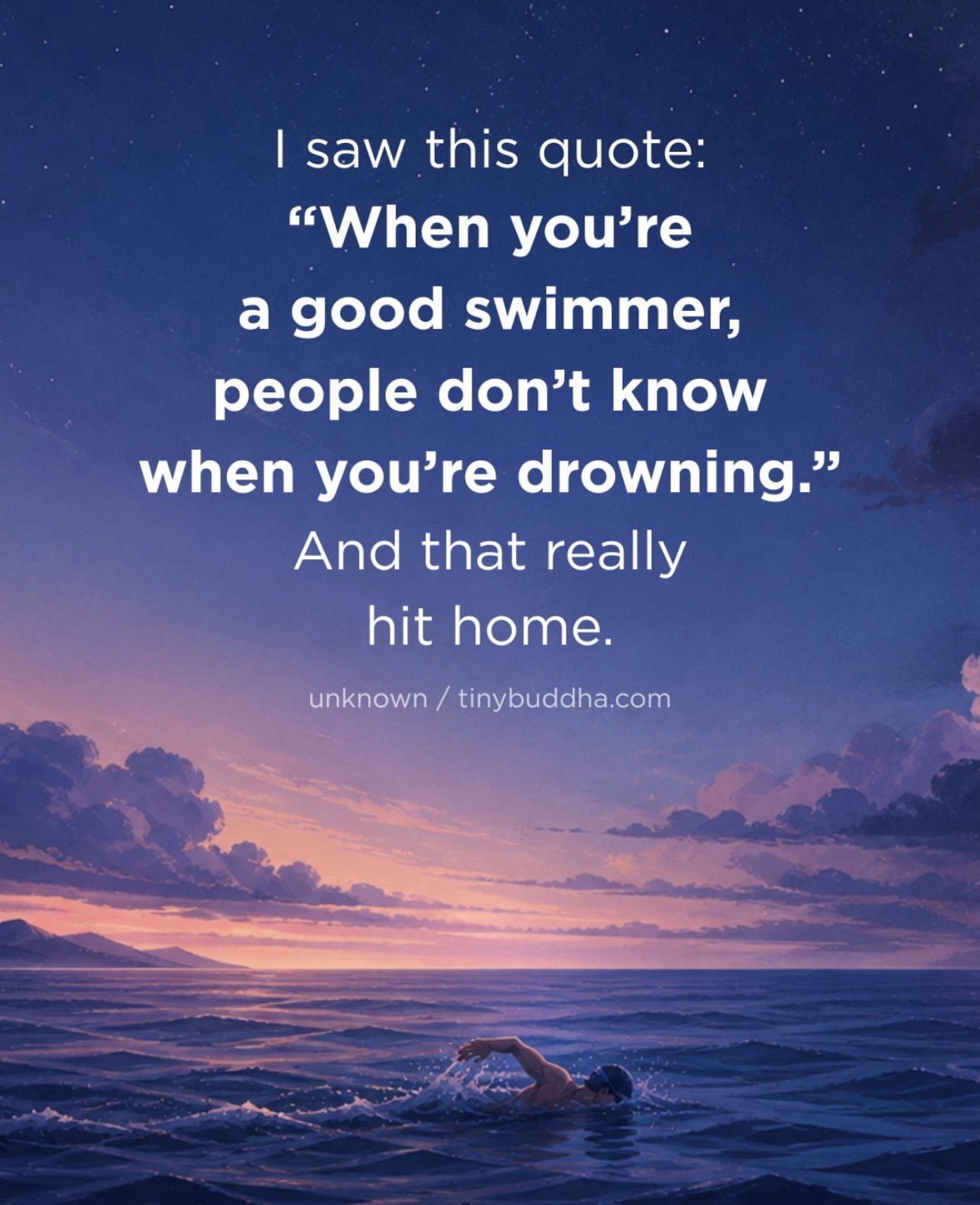
I saw this quote:
“When you’re a good swimmer, people don’t know when you’re drowning.”
And that really hit home.
Maybe because so many of us have become experts at staying afloat.
We answer the messages. We show up to work. We make dinner, attend meetings, pay bills, smile in family photos, remember birthdays, and ask other people how they’re doing. We keep moving because life doesn’t stop long enough for us to say, “Actually, I’m not okay.”
The people around us see capability. Strength. Reliability.
What they don’t always see is exhaustion.
They don’t see the nights spent staring at the ceiling, replaying conversations and worrying about tomorrow. They don’t see the mental load of carrying everyone’s expectations while quietly wondering who would notice if your own shoulders are getting tired. They don’t hear the internal negotiations: Just get through today. You can rest later.
The stronger you appear, the less likely people are to ask if you need help.
Not because they don’t care.
Because they assume you’ve got it handled.
You’ve always had it handled.
The friend who always checks in on everyone else may be hoping someone asks how they’re really doing. The colleague who never misses a deadline might be running on empty. The parent who seems endlessly patient may be fighting battles they haven’t spoken about to anyone.
Competence can become camouflage.
We live in a culture that applauds resilience but doesn’t always make room for vulnerability. We admire people who carry heavy loads with grace, often forgetting that carrying something well doesn’t make it weightless.
Being capable doesn’t mean you’re never overwhelmed.
Being dependable doesn’t mean you don’t need support.
Being strong doesn’t mean you never get tired.
Sometimes the strongest thing a person can say is, “I need help.”
And sometimes one of the kindest things we can do is ask the people who seem fine if they really are.
Not the casual, “How are you?” asked while walking past.
But the pause. The eye contact. The follow-up.
“How are you, really?”
You may not get an honest answer every time. Some people have spent years convincing themselves that struggling is something to hide. But every genuine check-in sends a message: You don’t have to earn care by falling apart in public.
And if you’re the one reading this while quietly treading water, trying to keep everyone else reassured while your own energy disappears beneath the surface, remember this:
You don’t have to wait until you’re sinking to let someone know you’re tired.
You don’t lose your strength by admitting that you’re human.
Even the best swimmers need to rest.
Even the strongest people need someone to reach back for them.
Sometimes the bravest thing isn’t proving you can carry it all.
It’s trusting that you don’t have to carry it alone.

