
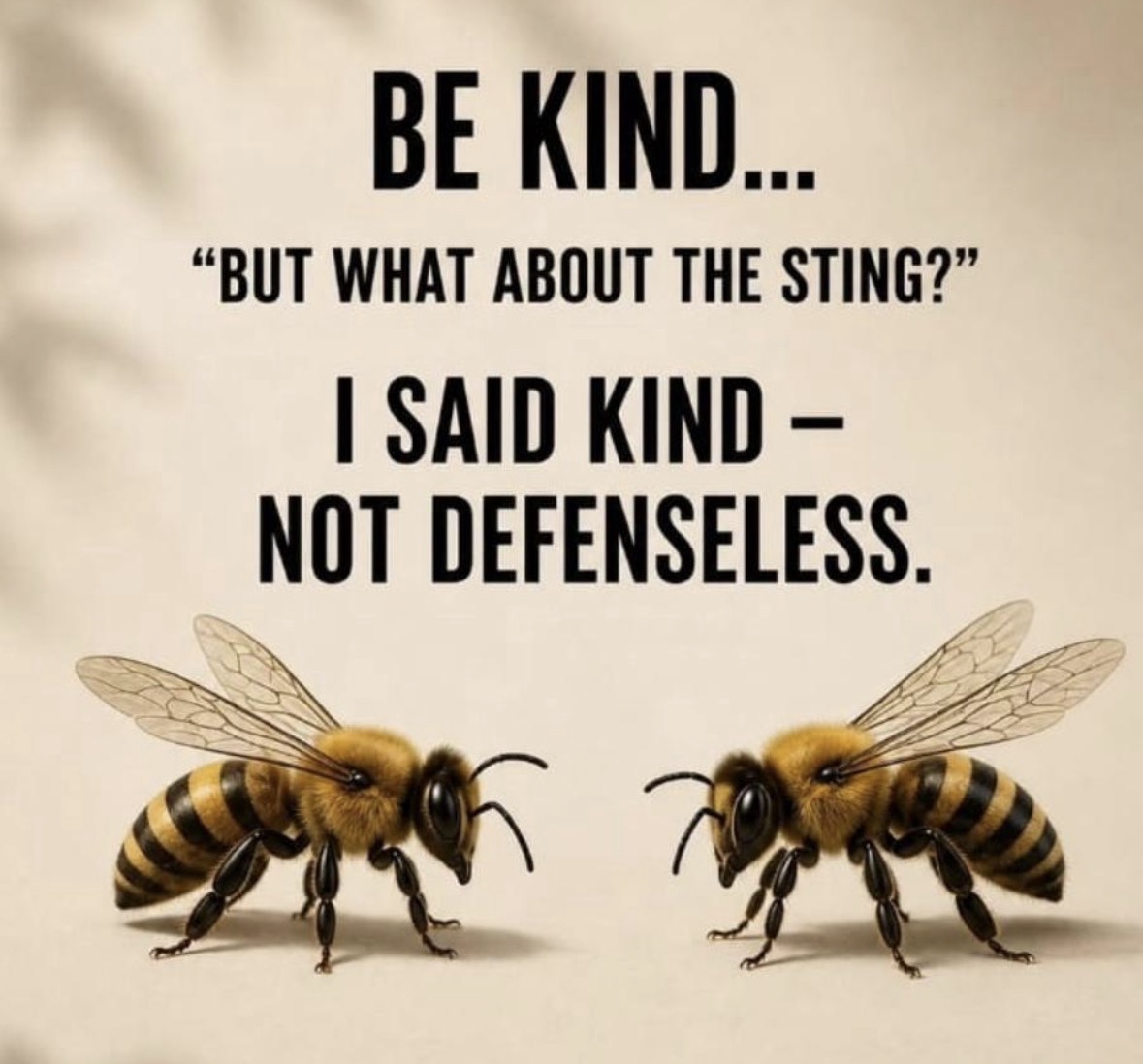
“Be Kind”
It’s simple advice. The kind that fits neatly on coffee mugs, greeting cards, and social media graphics. Most of us agree with it in principle. We want to be the people who are patient, generous, understanding, and compassionate.
Then life happens.
Someone takes advantage of your willingness to help.
Someone mistakes your silence for weakness.
Someone repeatedly crosses lines you’ve clearly drawn.
And eventually, a voice inside you asks, “But what about the sting?”
What about the betrayal? The disrespect? The exhaustion that comes from giving people the benefit of the doubt over and over again?
For a long time, I thought kindness meant absorbing all of it. Keeping the peace. Avoiding conflict. Smiling through discomfort. Saying yes when I wanted to say no. Offering understanding without expecting accountability.
I confused kindness with self-sacrifice.
But they’re not the same thing.
Being kind doesn’t mean you hand over access to every part of yourself. It doesn’t require tolerating behavior that hurts you. It doesn’t ask you to stay in situations that diminish your dignity.
Kindness without boundaries eventually turns into resentment.
The truth is, some of the kindest people you’ll ever meet are also the clearest about what they will and won’t accept.
They’ll help you when you’re struggling, but they won’t enable destructive patterns.
They’ll forgive, but they won’t pretend nothing happened.
They’ll listen, but they won’t allow themselves to be spoken to without respect.
They’ll wish you well and still decide they need distance.
That’s not cruelty.
That’s wisdom.
There’s a misconception that strength looks hard and kindness looks soft. But real life isn’t that binary. Sometimes strength is expressed through gentleness. Sometimes love says, “I understand,” and other times it says, “This isn’t okay.”
You can have a good heart and still protect your peace.
You can be compassionate and still say no.
You can choose grace without surrendering your self-respect.
The people who sting you don’t get to redefine who you are. Their actions don’t require you to become cynical, bitter, or guarded against the entire world. You don’t have to abandon your values just because someone failed to honor them.
Stay kind.
Just don’t confuse kindness with permission.
A tree doesn’t stop being a tree because it grows bark. The bark isn’t evidence of bitterness; it’s protection that allows it to continue growing.
Maybe that’s what maturity teaches us.
Not to love less, but to love more wisely.
Not to trust blindly, but thoughtfully.
Not to close our hearts, but to understand that an open heart still needs a gate.
So yes, be kind.
Offer encouragement. Extend grace. Choose empathy where you can. Give people the chance to surprise you with their goodness.
But remember the rest of the sentence.
“I said kind — not defenseless.”
Because kindness isn’t about becoming an easy target.
It’s about remaining soft-hearted in a world that often rewards hardness, while being strong enough to know when to step back, speak up, and protect what matters.
And sometimes, the kindest thing you can do isn’t only for others.
It’s being kind enough to yourself to stop accepting the sting.

