
“Tell me about your strengths.”
It’s a question we’ve all answered at some point.
We talk about leadership, communication, problem-solving, technical expertise, certifications, years of experience, and accomplishments. We carefully craft resumes and LinkedIn profiles to showcase what we can do.
And those things matter.
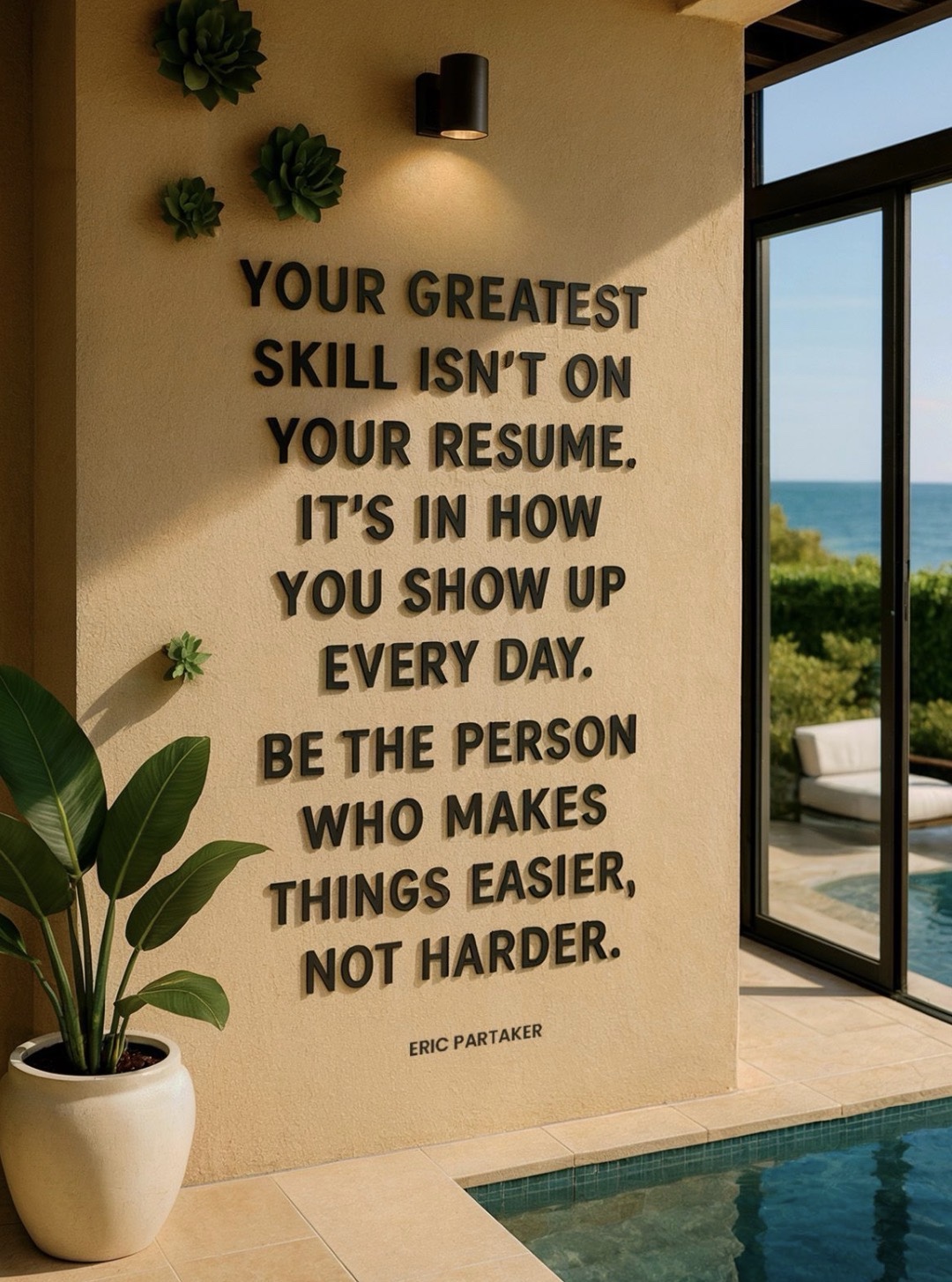
But the older I get, the more I realize that the most valuable skill a person has is usually the one that never appears on a resume.
It’s how they show up every day.
We’ve all worked with incredibly talented people who somehow made every project harder. Every conversation became complicated. Every problem came with drama. Every decision took longer than it needed to. Their expertise was undeniable, but being around them felt exhausting.
And then there are the people who have a completely different effect.
When they join a meeting, things become clearer.
When a problem appears, they focus on solutions instead of blame.
When someone is struggling, they offer help without being asked.
When tensions rise, they bring calm instead of adding fuel to the fire.
Their presence makes everything work a little better.
That’s a skill.
A powerful one.
The truth is that organizations rarely succeed because of individual brilliance alone. They succeed because people work together effectively. They succeed because someone takes ownership when nobody else wants to. They succeed because someone communicates clearly. They succeed because someone chooses collaboration over ego.
Those actions don’t always get recognized immediately.
There isn’t usually an award for making a teammate’s day easier.
No one updates their resume with, “Helped reduce stress levels across the team.”
There isn’t a certification for being dependable when things go wrong.
Yet those qualities often have a bigger impact than any technical skill.
Think about the people you genuinely enjoy working with.
Chances are you don’t remember them solely because they were the smartest person in the room.
You remember them because they were reliable.
Because they listened.
Because they followed through.
Because they made challenges feel manageable.
Because after interacting with them, you felt supported instead of drained.
That’s the kind of influence that stays with people.
Years later, most people won’t remember every project you completed or every title you held.
But they’ll remember how you made them feel while working alongside you.
They’ll remember whether you created clarity or confusion.
Whether you brought solutions or complaints.
Whether you made things easier or harder.
In a world that constantly encourages us to stand out, sometimes the greatest contribution is simply making life better for the people around us.
Showing up prepared.
Keeping your word.
Being kind under pressure.
Helping without keeping score.
Treating people with respect when there’s nothing to gain.
Those habits may seem small on any given day.
But over months and years, they become a reputation.
And reputation is built far more by daily behavior than by occasional achievements.
Your greatest skill might not be your degree, your experience, your title, or your expertise.
It might be your ability to bring calm to chaos.
To simplify what feels complicated.
To lift others up.
To make progress easier.
To make people glad you’re on the team.
That’s the kind of skill that opens doors, builds trust, and creates opportunities long after specific accomplishments are forgotten.
Because at the end of the day, people may admire talent.
But they remember how you showed up.
And the people who make things easier will always be welcome in more rooms than the people who make things harder.

