
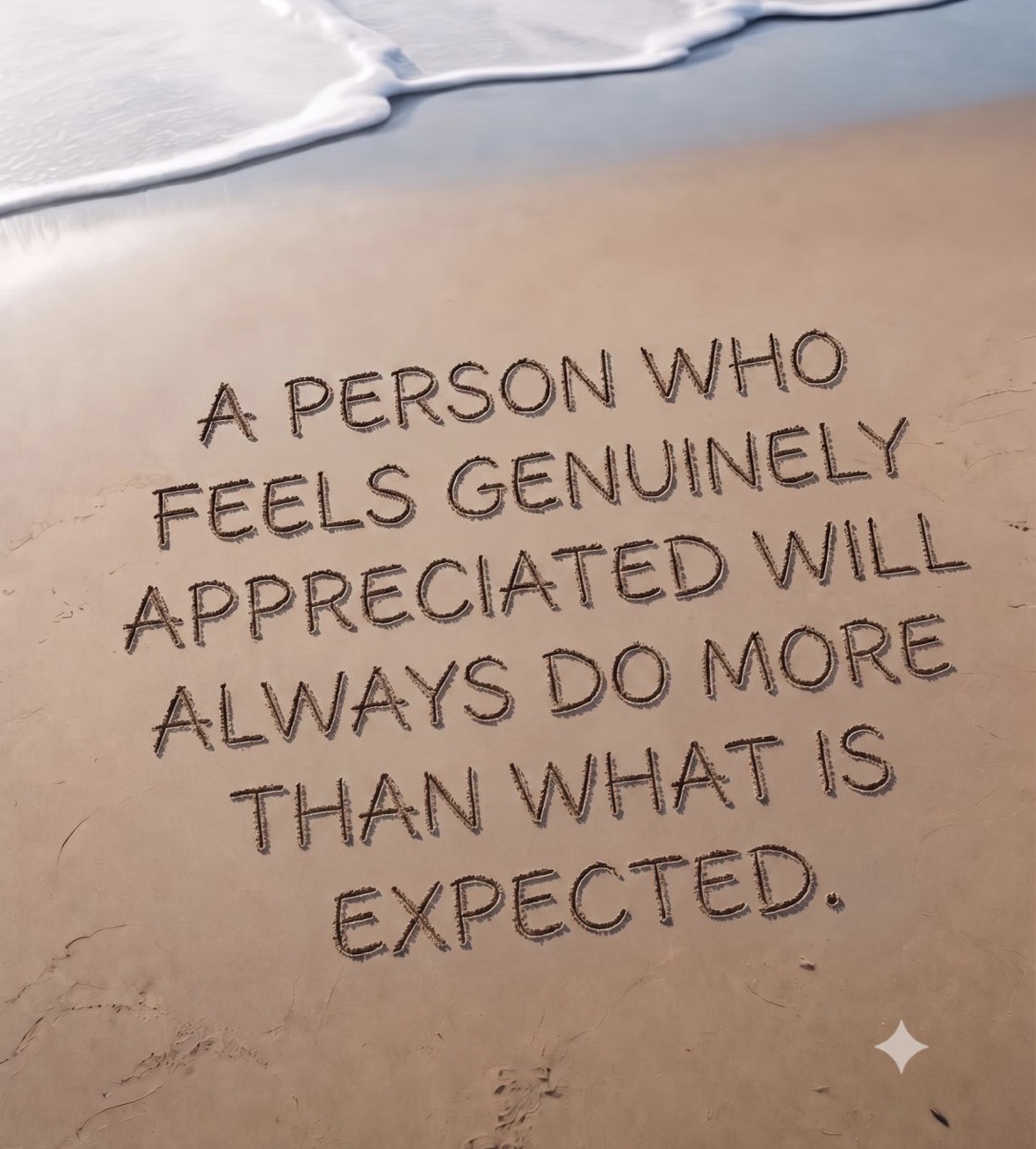
Most people think bigger salaries, better perks, or stricter targets are what push people to give their best. They help, but they are rarely the reason someone stays late to solve a problem, steps in without being asked, or cares about the outcome as if it were their own.
Feeling appreciated changes everything.
Think about the people who have made the biggest difference in your life. A teacher who believed in you before anyone else did. A manager who noticed the work nobody else saw. A friend who thanked you for something you assumed had gone unnoticed. Chances are, you still remember those moments years later.
Appreciation sticks because it answers a question everyone carries around.
“Does what I do actually matter?”
When the answer is yes, effort becomes personal.
You stop doing the minimum because someone is watching. You start doing more because you care about the result. That’s a completely different kind of motivation.
The funny thing is that appreciation costs almost nothing. A genuine “thank you.” Calling out someone’s idea in a meeting. Sending a quick message after a difficult project. Giving credit publicly instead of quietly taking it for yourself.
Small actions. Lasting impact.
People don’t need applause every day. They need to know their work isn’t disappearing into a black hole. They want to know someone noticed the extra hour they spent fixing an issue, the patience they showed with a customer, or the way they helped a teammate without expecting anything back.
When that happens consistently, something shifts.
People become more willing to take ownership. They share ideas instead of keeping them to themselves. They solve problems before anyone asks. They look for ways to make things better because they feel like they belong.
The opposite is just as powerful.
Ignore someone’s effort long enough and they begin to wonder why they’re trying so hard. They stop volunteering. They stop suggesting improvements. Eventually, they do exactly what the job requires and nothing more.
Not because they’re lazy.
Because nobody made them feel that their extra effort mattered.
Appreciation isn’t about handing out compliments to keep people happy. Empty praise is easy to spot. Real appreciation is specific. It tells someone exactly what they did and why it made a difference.
“I noticed how calmly you handled that customer. You turned a bad situation into a positive one.”
“I saw you stay back to help the new team member. That made their first week much easier.”
Those words carry weight because they’re true.
The best leaders understand this. The best parents do too. So do the best friends, partners, and teammates.
People rarely forget how you made them feel about themselves.
The next time someone goes out of their way, don’t assume they already know you value it. Tell them. Say it while the moment is still fresh. You might spend thirty seconds saying thank you, but the effect can last for months.
A person who feels genuinely appreciated almost never asks, “What’s the least I can do?”
They’re already thinking about how they can do a little more.

