
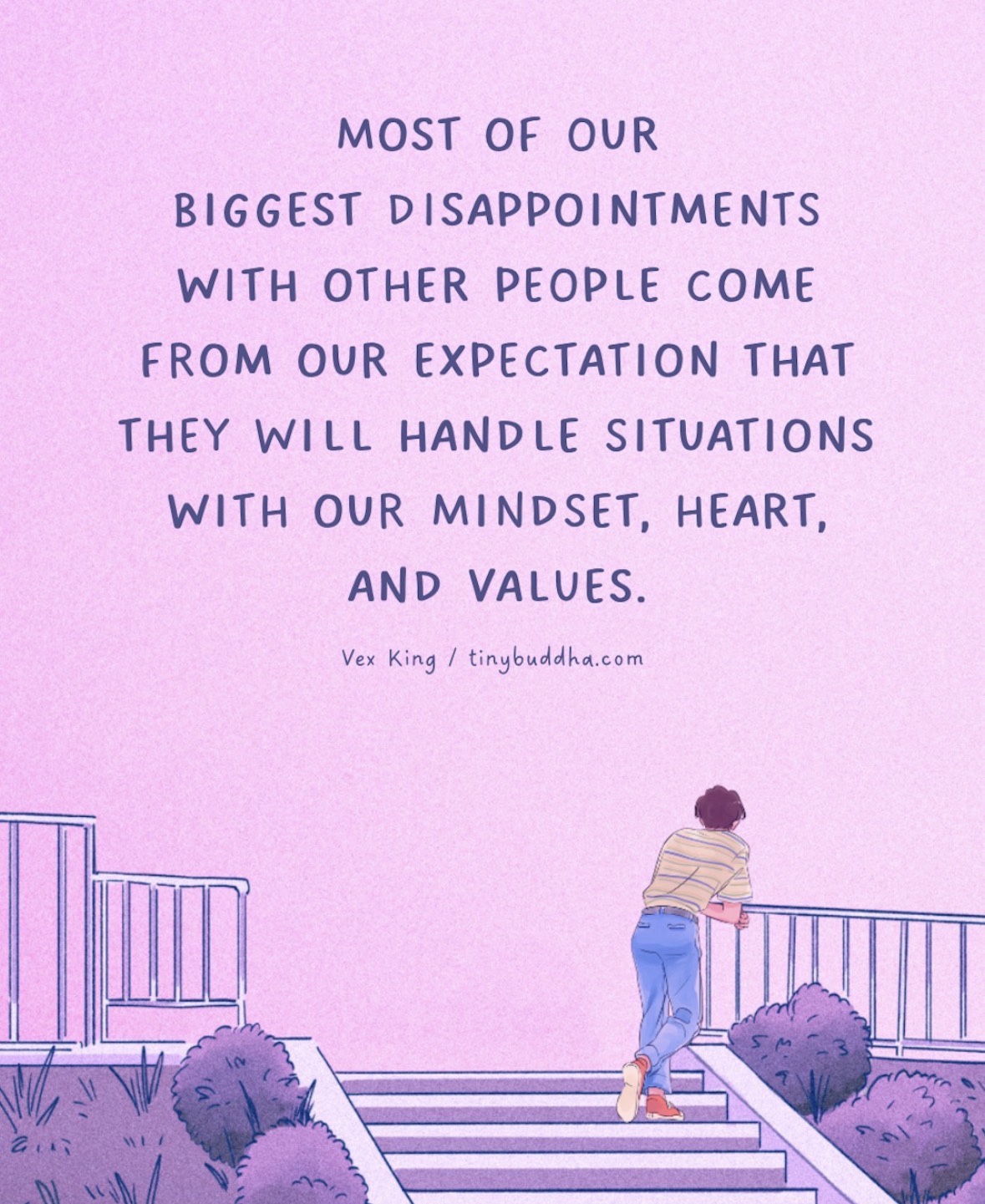
The biggest letdown isn’t always what someone did. It’s what you believed they would do.
You expected them to speak up because that’s what you would have done. You thought they would apologize because you would never leave things unresolved. You assumed they would notice your effort, return your kindness, or remember what mattered to you.
Then they didn’t.
That gap between expectation and reality is where disappointment usually lives.
It’s easy to believe that people think the way we do. If honesty comes naturally to you, you expect honesty from others. If you’re the person who checks in on friends, remembers birthdays, or stays late to help a teammate, you quietly assume the people around you value those things too.
Most don’t.
Not because they’re bad people. Because they’re different people.
Everyone is running on a different operating system built from childhood, culture, experiences, fears, priorities, and habits. The same situation passes through completely different filters.
You see a difficult conversation as respect. Someone else sees it as conflict to avoid.
You think keeping your word is non negotiable. Someone else treats commitments as flexible.
You believe silence means something is wrong. Another person thinks silence simply means they’re busy.
Neither response feels strange to the person living it.
The trouble starts when we mistake our values for universal rules.
A manager thinks public praise motivates everyone because it motivates them. An employee would rather receive quiet feedback and skip the spotlight.
One partner believes love is shown through thoughtful actions. The other believes saying “I love you” every day is enough. Both feel they’re giving. Both feel unseen.
The same mismatch plays out in friendships, families, and workplaces every day.
We don’t just expect actions. We expect people to arrive at those actions for the same reasons we would.
That’s where reality pushes back.
Understanding this doesn’t mean lowering your standards. It means separating values from assumptions.
If honesty matters to you, keep expecting honesty. If respect matters, don’t settle for disrespect.
But don’t expect someone to express honesty, care, ambition, or loyalty in exactly the same way you do.
Ask instead of assuming.
Notice patterns instead of filling in the blanks.
Watch what people consistently do, not what you believe they should do.
Some people show care by solving your problems. Others simply sit beside you while you struggle. Some remember every important date. Others will drop everything to help when you call, even if they forgot your birthday.
Different doesn’t always mean wrong.
Of course, there are moments when differences aren’t the issue. If someone repeatedly lies, manipulates, or breaks trust, that’s not a difference in personality. That’s a pattern you shouldn’t explain away. Understanding people doesn’t require accepting behavior that damages your peace.
The real shift happens when you stop expecting mirrors.
The people around you were never meant to think exactly like you. They have different stories, different fears, different definitions of what matters.
The less time you spend trying to make everyone fit your inner blueprint, the more clearly you see who they actually are.
And once you see people as they are instead of who you imagined they would be, disappointment loses much of its grip.
 Kenrick Vaz